
‘Chilling effect’: Kansas professors alarmed by new Regents definitions of CRT, DEI
AI-generated summary reviewed by our newsroom.
- KBOR defined DEI as classroom material that intentionally promotes preferential treatment.
- KBOR defined CRT as presenting racism as systemic within laws, policies or institutions.
- Professors warn the definitions’ ambiguity could create a chilling effect in classrooms.
Definitions of critical race theory and diversity, equity and inclusion, recently approved by the Kansas Board of Regents, worry some Kansas professors and academic freedom advocates who say they could create a chilling effect in classrooms.
Kansas lawmakers this year passed a provision attached to a large budget bill that prohibits state universities from requiring students to enroll in a “DEI-CRT” course. That means state universities must remove such classes from their required courses before the 2028-29 school year.
But the Legislature chose not to define what a “DEI-CRT” course is, instead leaving that task to the Kansas Board of Regents, the governing body that oversees the state’s public universities.
The board of regents approved the definitions last month:
It defined DEI as classroom material that “intentionally establishes and promotes the preferential treatment of groups based on race, color, gender, ethnicity or national origin.”
CRT, according to the board’s definition, “presents racism as systemic within laws, policies or institutions.” A course that violates the provision “promotes acceptance of that viewpoint rather than presenting it as a subject of scholarly, historical or legal study.”
“That definition was not easy to get to,” said regents’ general counsel John Yeary at a June meeting. “There were lots of competing ideas and interests, but those have all been weighed and vetted.”
The new rule will still allow courses discussing DEI and CRT to be taught, but they can’t be required for graduation. Regent Peter Johnston said that was a critical part of the law.
“It is very important to me that professionals be able to study difficult topics,” Johnston said.
‘We shouldn’t be harassed for doing our jobs’
Some professors, however, say the definitions are too ambiguous, and could create a chilling effect that stops classroom discussion of race and social equity.
During last month’s board of regents meeting, University of Kansas Chancellor Douglas Girod said he generally approved of the definitions, but was concerned with the use of the word “promotes” instead of “requires” when evaluating what classes would violate the law.
“Anywhere there’s ambiguity, there’s real risk,” Girod said. “Promotes can be defined a whole lot of different ways, and if you’re a faculty member trying to teach a course, I think that creates ambiguity.”
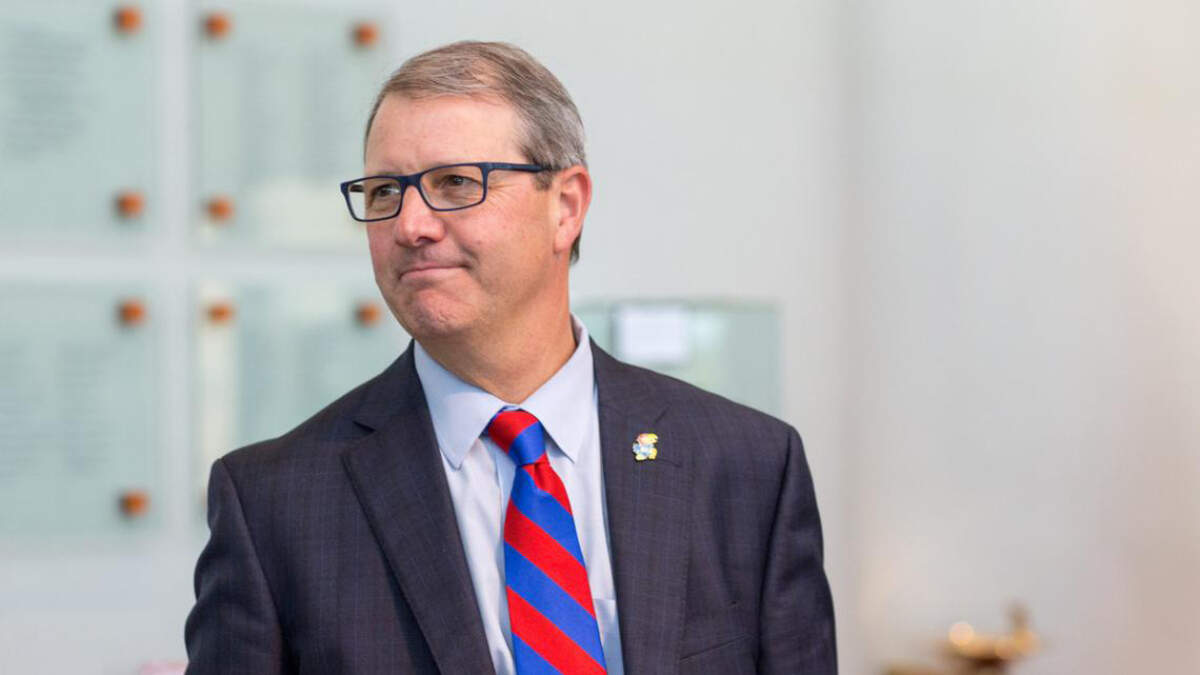
The board of regents left significant wiggle room in its definitions, which “shrouds everything in ambiguity,” said Ron Barrett, an aerospace engineering professor at KU.
Barrett’s own courses are a good example, he said. While most people would assume DEI and CRT courses are found primarily in majors like political science or gender studies, Barrett said he handles issues of diversity all the time in his aerospace engineering classes. In fact, he said it’s a requirement of the board that provides accreditation for engineering and technology programs.
The American Institute of Aeronautics and Astronautics’ code of ethics includes a section requiring the treatment of all people with fairness and equity. It includes a call to “promote fair and unbiased opportunities for all.”
“I will absolutely err on the side of defending my students, the accreditation of their program and doing what’s right for our society every time,” Barrett said. “It’s fundamentally insulting and counterproductive to have these kinds of gag orders pushed down upon us. ... We shouldn’t be harassed for doing our jobs.”
Barrett said rather than considering the best interests of students, the new law is a way for Republican lawmakers to score political points with their base.
The Kansas Legislature has repeatedly targeted DEI in recent years.
Last year, lawmakers passed a provision requiring the removal of positions and programs related to DEI and mandating state employees remove pronouns from their email signatures.
In 2024, the Legislature withheld $35.7 million from public universities until the board of regents confirmed universities had complied with a law forbidding employment and admissions decisions based on diversity, equity and inclusion policies.
Kansas Rep. Kristey Williams, an Augusta Republican, has long been an outspoken critic of DEI and CRT, especially in schools. She said she was pleased with the definitions crafted by the board of regents, but that regular checks would need to be conducted to ensure universities had made the required changes.
“When we hear the word ‘diversity,’ it usually does not include diversity of thought,” Williams said. “We want more students to be taught to think critically, not be told what to think. I’m optimistic that we are moving in the right direction.”
Michael Smith, a political science professor at Emporia State, serves as the university’s American Association of University Professors chapter president. He said the definitions created by the board of regents had good and bad, but he wishes the bill hadn’t passed at all.
He worried about the possibility of anticipatory obedience, where universities and professors start limiting classes or topics by assuming what may cause retaliation, rather than strictly following the letter of the law.
“Whatever these definitions are, they need to be followed in a way that is extremely literal and by the book,” Smith said. “And we will be quite vigilant with our administrators about not doing anything extra to try to please politicians.”
Concerns for free expression
Tyler Coward, the lead counsel for government affairs at the Foundation for Individual Rights and Expression, a free-speech advocacy group, said Legislature was treating certain ideas as inherently suspect.
That can make it difficult for professors to parse how to handle a classroom, he said. Even if a required course has been approved as avoiding content about DEI and CRT, professors could fear classroom conversations gone awry might put them in hot water.
“When the Legislature does this, it has to be very careful,” Coward said. “Particularly when these ideas are kind of vague, and professors in required courses might be left guessing whether or not even bringing up some of these topics in a course, whether that triggers some sort of review by the institution.”
Coward said he generally thinks it is a bad idea to prohibit certain ideas from being taught in required courses. In this case, the vague nature of terms like DEI and CRT can have an even steeper negative impact on classrooms by creating uncertainty among faculty.
“Students should expect to be exposed to these wide ranges of ideas, and treating them as inherently suspect, I think, does a disservice to the overall learning environment of the university,” Coward said.
PEN America, an organization advocating for free expression had originally called for Gov. Laura Kelly to use her line-item veto power on the measure, but she did not.
“The passage and signing of this provision as part of Kansas’s budget bill is, sadly, proof of the dangerous normalization of educational censorship, even in a state with a Democratic governor,” said Amy Reid, the program director for PEN America’s Freedom to Learn program.
Union protection?
Barrett, the KU professor, said some universities in Kansas may have more protection than others because they’re unionized.
Faculty at KU, Johnson County Community College, Pittsburg State and Fort Hays State have unions that could come to their defense if they are investigated under the new law, Barrett said.
But he said the same may not happen for professors across the state. At Emporia State, Kansas State and others, faculty may be left to defend their courses alone.
“It’s kind of like the big guy that wants to pick on somebody,” Barrett said. “Are they gonna pick on somebody that fights back? That’s not what bullies do. Bullies pick on people who are blindsided and relatively defenseless.”