Here’s what Gov. Kehoe’s funding cuts will mean for WWI Museum and Memorial in KC
AI-generated summary reviewed by our newsroom.
- WWI Museum and Memorial turns 100 in 2026. President Calvin Coolidge dedicated it in 1926.
- Gov. Mike Kehoe cut the $500,000 appropriation for the museum.
- Missouri has provided more than $18.5 million since Fiscal Year 2024, Kehoe said.
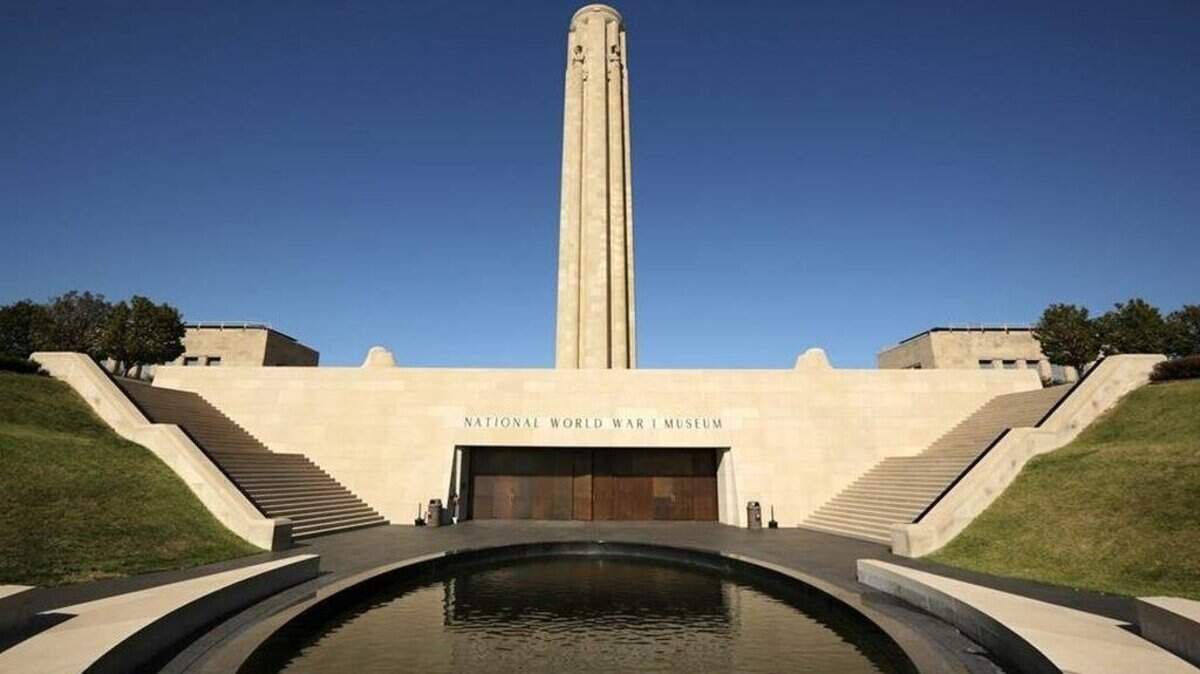
As America celebrates its 250th birthday, the National World War I Museum and Memorial is celebrating a milestone of its own — 100 years since President Calvin Coolidge dedicated the signature limestone tower memorial in the heart of Kansas City.
But the museum, which houses the largest repository of WWI objects and documents in the world, found itself on the wrong side of Missouri Gov. Mike Kehoe’s veto pen on Tuesday.
The Republican chief executive slashed $493.3 million from the state budget, including more than $52 million in projects that lawmakers had already approved. One such casualty was $500,000 that had been earmarked for the WWI museum and memorial.
Kehoe described the sweeping cuts as an important “course correction” to ensure Missouri’s long-term financial stability.
“While this may be a worthwhile project, for the aforementioned reasons, we must control new spending and cannot prudently justify this expenditure at this time,” Kehoe wrote in his veto message, which noted that the state budget still includes $150,000 for the museum.
“The state has provided more than $18.5 million for the (World War I Museum and Memorial) since Fiscal Year 2024,” Kehoe wrote.
In a statement, Matthew Naylor, who serves as president and CEO of the nonprofit museum and memorial, said the organization is grateful for the Missouri General Assembly’s “extraordinary partnership” in recent years.
“In partnership with private philanthropy, these funds have helped prepare the Museum and Memorial for its second century of service,” Naylor said.
“While we’re disappointed this year’s $500,000 appropriation didn’t survive the governor’s final review, we remain deeply grateful for the state’s sustained investment in this national treasure,” he added. “We remain committed to honoring those who served and learning from their sacrifice. We look forward to an ongoing partnership in the years ahead.”
Karis Erwin, a spokesperson for the museum, said she doesn’t anticipate that the budget cut will result in the museum scaling back any programming that had already been announced.
“We had not yet budgeted for this appropriation, so the loss of it has no bearing on our operating revenues,” Erwin said.
Lawmaker questions funding priorities
Rep. Emily Weber, a Kansas City Democrat, said it’s “unfortunate” that Kehoe chose to scale back the state’s commitment to the museum. She said it serves an important community function beyond memorializing the millions of lives lost in the global conflict.
“The World War I museum has always been an amazing museum here in KC,” Weber said. “They hold a lot of different events, festivals. Right now, it’s the World Cup Fan Fest and Fourth of July events. They do a lot of community events for us.”
Webber questioned Kehoe’s logic in choosing to cut certain programs and projects while leaving funding for others intact, including $21 million for road improvements near the site of the Missouri State Fairgrounds in Sedalia.
“We know that this was a really tough budget year. We know that there are going to be more tough budget years here in Missouri,” Weber said. “But the fact is, he cut $52.7 million and he cut a lot of really good programs that are needed.
“We sit here and talk about how we need more teachers and teachers need to get paid, and he literally cut their salary program,” she said. “And a lot of this could have been funded if he would have cut the $20 million for literally a road to the state fair.”