
This Kansas town courted a data center. So voters filed a petition to ban them
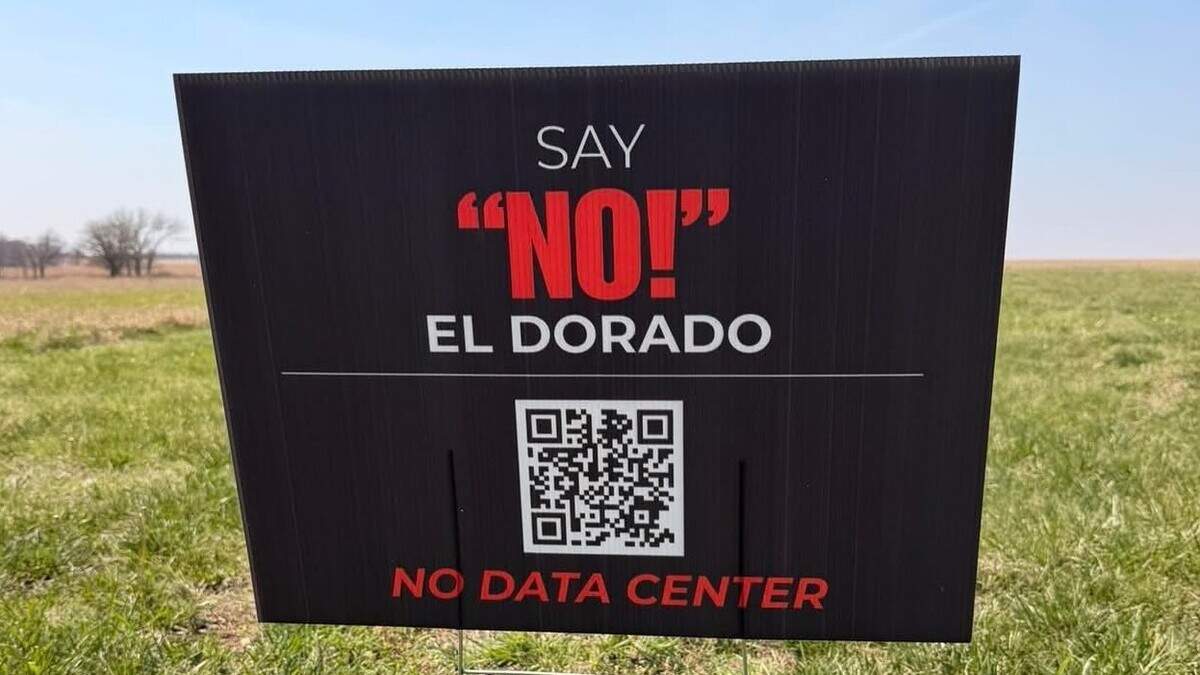
Residents in a small Kansas city are seeking to ban data centers and battery energy storage systems after they say city officials misled them and failed to address concerns in new zoning regulations passed earlier this month.
Citizens in El Dorado, a city of around 13,000 about 30 miles east of Wichita, handed in a petition to the city with more than 335 signatures collected over three days. If the signatures are certified by the Butler County clerk, the City Commission must pass the ordinance within 20 days or call a special election to submit the proposed ban to El Dorado voters.
Or, as has been the case in Wichita, something else could happen.
Cities in Kansas often head off citizen-led initiatives in court, as Wichita did with the 2020 Save Century II petition that resulted in the Kansas Court of Appeals tossing out more than 17,000 signatures two years after they were filed with the city. The state also has authority to intervene, as it did when Wichita voters approved an initiative to decriminalize simple possession of marijuana in 2015 following a petition submission. The Kansas Supreme Court voided the city election results because the petition organizers failed to staple a copy of the proposed ordinance to the signatures.
The El Dorado initiative comes after the City Commission voted earlier this month for a regulatory framework that allows the city to rezone areas for large-scale data centers under a special use permit.
City officials said without the special use permit regulations hyperscale data centers could be interpreted as being allowed “by right” in certain industrial districts instead of on a case-by-case basis in other zoned areas. The city’s staff report on the existing regulation, passed June 1, offers some insight into El Dorado’s thinking on the potential ban.
“Staff does not recommend simply saying no to broad categories of uses before any actual project is presented,” the report says. “Many of these uses can vary significantly based on size, location, design, technology, utility demand, building configuration, outdoor equipment, operations, and surrounding land uses. A blanket prohibition may block projects that could fit the City’s economic development strategy, provide jobs, add tax base, reuse industrial land, or make practical use of existing infrastructure. At the same time, allowing these uses by right may not provide enough public review. The Special Use Permit process provides a better middle ground.”
But some say the regulations don’t go far enough and that the commission ignored nearly 50 members of the public at a June 1 meeting who spoke out against the proposed regulations.
“The pleas of the community fell on deaf ears that night,” Danica Dickson, who helped lead the petition drive, said. “It’s just been very clear that our commission and mayor have not been honest, they have not been transparent, they are not listening to the people that elected them, and they are not representing the people that elected them. So we truly felt that our community was in grave and immediate danger and that we needed to act as soon as possible to try to protect ourselves, since they’re not protecting us.”
Dickson said El Dorado officials have lost the trust of the public over data center development.
In May, emails obtained through Kansas Open Records Act by a group of concerned citizens called Protect the Heartland showed that city officials had been courting a data center developer behind the scenes for months and some had signed a nondisclosure agreement. City officials had frequently told the public that no applications had been filed, which was and is true, but they did not say they were working to land a data center in or near the city.
The KORA emails also show El Dorado Inc. and the El Dorado city manager preparing an “info campaign” as early as January to “take charge of the message and early conversations by capitalizing on negative noise in” other counties to position El Dorado as a potential site for a data center, according to an email discussion between the manager and an El Dorado Inc. leader.
Soon after Protect the Heartland posted the records online, the city moved to hold public hearings and discuss potential regulations on data centers, eventually passing a special use permit program on June 1.
The citizen-led petition could overrule that decision and impose an outright ban on large-scale data centers and battery storage systems.
The proposed ballot question, according to the petition, would be “Shall the following ordinance be adopted? “An ordinance of the City of El Dorado, Kansas prohibiting the installation and operation of High Impact Data Centers and Type 2 and Type 3 battery energy storage systems to protect the health, safety, and welfare of the residents of El Dorado, Kansas.”
El Dorado city officials did not immediately respond Tuesday to questions about the petition. Commissioner Leon Leachman was the only member of the commission to respond.
“I will have a better feeling about what I would like to see done after our next planning meeting,” Leachman said. “We are elected by the people and cannot ignore the wishes of the people.”
El Dorado Inc., a public-private partnership that aims to boost economic development in El Dorado and has been involved in discussions surrounding recruiting a data center to the area, also did not respond to questions.
This story was originally published June 24, 2026 at 4:35 AM with the headline "This Kansas town courted a data center. So voters filed a petition to ban them."