KC congressional candidate was once accused of grooming. Here’s what he says now
AI-generated summary reviewed by our newsroom.
- Levine denies the explicit messages came from his Facebook account.
- A judge dismissed the case in 2013 citing a speedy-trial violation.
- Levine says his record was expunged and he remains in the race.
Matthew Levine is campaigning as a Democrat to represent a broad swath of northern Missouri in Congress.
Ten years ago, he was in the midst of a lawsuit alleging police defamed him when they accused him of asking a 15-year-old former student for naked photos over Facebook. Levine, who says the account that sent the messages didn’t belong to him, was previously a substitute teacher for the student in 8th-grade math and science.
“Just sayin some of your pics are hot,” the account wrote to the former student on March 18, 2011, at 10:51 p.m.
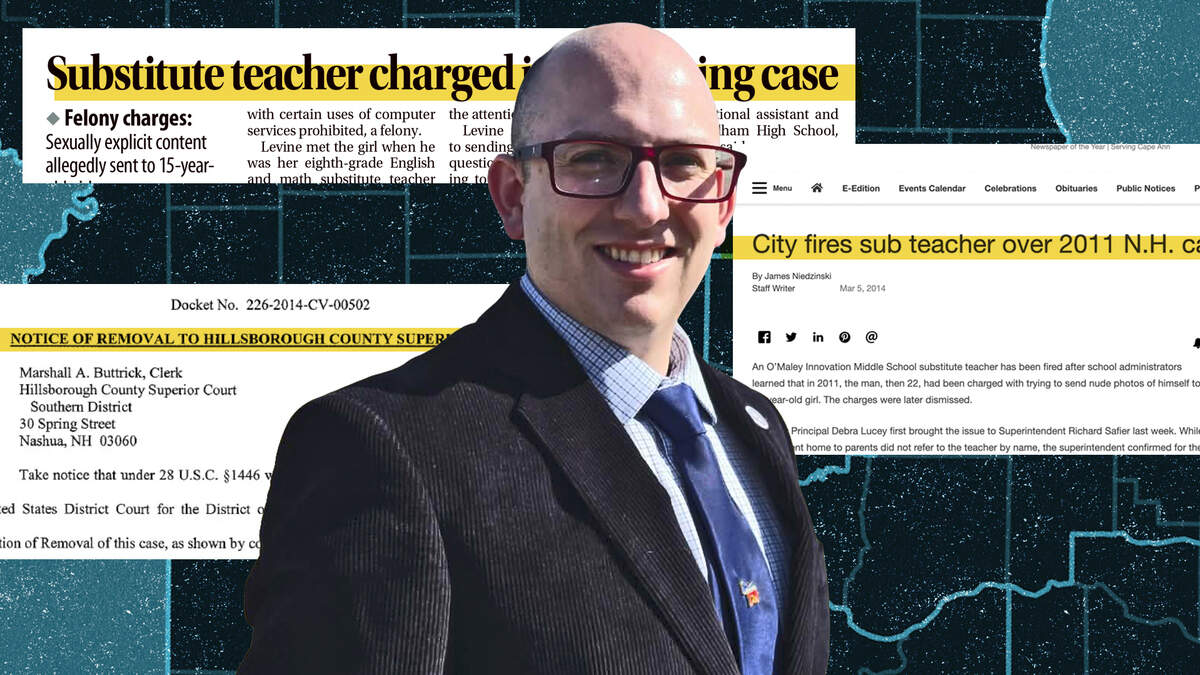
Levine, a long shot candidate running for Missouri’s 6th Congressional District, which includes Kansas City’s Northland, was arrested in 2011. Police said Levine allegedly sent inappropriate messages to the former student when he was a 22-year-old student substitute teacher in the Pelham School District in New Hampshire.
A judge dismissed the case in 2013 after prosecutors failed to obtain evidence from Facebook, ruling it violated Levine’s right to a speedy trial.
The decade-old controversy threatens to upend Levine’s campaign for a heavily Republican district currently represented by Republican U.S. Rep. Sam Graves, who is retiring. But the Democratic hopeful firmly maintained his innocence in an interview with The Star and has vowed to remain in the race.
Matthew Levine runs in Missouri’s 6th District
As Levine mounts his campaign, The Star reviewed 358 pages of court records and attempted to contact numerous individuals connected to the case. Those interviews and records paint a blurry portrait of Levine’s history as he attempts to court voters in the Aug. 4 primary.
“I was arrested in 2011 for something I didn’t do. I’ve denied it over and over and over,” Levine said. “I’ve passed multiple FBI background checks, and I’ve passed national security clearance, so I know there is nothing there.”
Levine is one of three Democrats seeking the party’s nomination in the August primaries for Graves’ seat, a Republican stronghold that includes Clay, Platte and Buchanan counties and stretches across northern Missouri.
.jpg "1000065714 (1).jpg")
New Hampshire case not forgotten
The Star received an anonymous tip with a link to a news article from 2011 about Levine’s arrest. The news article reported that Levine admitted to police that he sent the messages, which Levine denies.
“Despite me saying that I did not do it, a member of the Pelham Police Department wrote in a report that I agreed to making the communications,” Levine said. “I never said it.”
The story followed Levine for years after the charges were dismissed. In 2014, while working for a school district in Gloucester, Mass., he was suspended from the school and the state put his pending educator license on hold.
During the campaign, he’s been denied invitations and county-level Democratic parties have distanced themselves, according to Levine’s campaign manager Daryl Adaya.
“A few speaking events got canceled, and a couple of Democratic parties around the area have kind of tried to distance themselves from him,” Adaya said. “You can also report that somebody from another campaign came and asked us to drop out of the race.”
Levine has been forced to address the issue in public. He said he has spoken about the issue while campaigning, and even posted a TikTok about the allegations, which is pinned to the top of his profile.
“As we Google somebody, people don’t do their own research and they just take what’s on the internet. I’m here to clear the air,” Levine said in the TikTok video. “In 2010, a person unknown to me created a social media account using my photograph and used it to solicit a minor.”
Working in Park Hill School District
Currently, Levine is a part-time educator in the special needs program in the Park Hill School District and a transportation security officer at the Kansas City International Airport, according to his campaign website. The Park Hill School District confirmed that he’s a substitute teacher in the district, and said that all employees must pass pre-employment background checks.
Levine hasn’t spoken with the media about the charges in the months since he announced his campaign, but said he expected it to resurface.
“I was expecting it, I wasn’t expecting it to take as long as it did,” Levine said.
Levine denied any wrongdoing in the criminal case against him. The case was dismissed after prosecutors failed to secure forensic evidence from Facebook that could have exonerated him.
Hillsborough County Superior Court Judge Jacalyn Colburn ruled Levine’s right to a speedy trial had been violated when she dismissed the case.
“The court previously provided the state with a number of continuances in order to obtain the Facebook records where the state indicated that such evidence was immediately forthcoming, but without any success,” Colburn wrote in a rejection to the state’s motion to reconsider.
David Tencza, who was an assistant county attorney who tried Levine’s criminal case, recently said he had no independent recollection of it. As did Dennis Manion, the police officer who fielded the initial report about the messages. Manion is now a Republican member of the New Hampshire House of Representatives.
The father of the minor to who received the explicit messages said that he gave all the information he had about Levine to the Pelham Police Department.
The Star generally does not name victims of sex-related crimes and is not naming the father to avoid identification of the minor.
“We had provided all the info to the Pelham PD back then about a Matt Levine. I don’t know if it is the same person,” said the father.
A reporter asked the father to share his thoughts on Levine running for Congress and the town’s contention that Levine was guilty.
The father replied that, “it sounds like you already got your answer from the town officials.”
Levine said he had the court records from the criminal case expunged. However, some details about the incident can be gleaned from a 2014 lawsuit he filed against the Pelham School District, Town of Pelham and its Police Department.
Who sent the messages?
The messages were sent over four days in March 2011 and three days in August 2011.
“Just know that if you want to see mine, all you need to do is ask,” the account wrote on March 20 at 9:44 p.m.
“Okay, I know I shouldn’t ask this but I am curious, do you shave or trim?” the account said on March 20 at 9:51 p.m.
“Well I just wanted to say I just checked out some of your pictures and damnnn you have some nice boobs! I know you say its ‘illegal’ or what not but at your age you give consent its not illegal, and also if no one catches or says anything I don’t see a problem, just sayin,” the account said on Aug. 18 at 9:55 p.m.
Levine said that during the criminal case, it became clear to him that the account didn’t belong to him. Police showed him photos of the messages when they arrested him.
“When we got the discovery, and we saw the Facebook, the name matched my name, the profile picture matched my profile picture, but everything else was different,” Levine said. “It was a fake Facebook account.”
.jpg "1000065262 (1).jpg")
Similar claims were made by his lawyer after Levine was fired by Gloucester Public Schools, according to news reports at the time.
It was also mentioned in initial court filings in Levine’s civil case. But court documents show that Levine’s assertion that the messages didn’t originate from his Facebook account was not accepted by his opponents in the civil lawsuit.
“For his part, the Plaintiff does not now dispute that the messages sent to the teenager came from his Facebook account – he claims that they were sent by some unidentified person who had access to his laptop,” Brian Cullen, the Town of Pelham and Pelham Police Department’s attorney, wrote in motion for summary judgment in the civil suit.
The civil lawsuit includes the transcript of a deposition from March 7, 2016. When questioned by opposing counsel, Levine said he believed one or more individuals hijacked his account and wrote the messages.
“Is that what you believe happened, is somebody else got on your Facebook account and sent these messages to CT (the minor student)?” the lawyer asked, according to court records.
“Yes,” responded Levine, after his lawyer objected to the question.
Levine said the deposition was cynically used by opposing lawyers, who snipped a small portion of a long deposition to paint a disingenuous narrative. Only 42 pages of the 77-page deposition are included in public court records.
Levine admitted in the deposition that he messaged the minor once in April 2011, when she requested a ride and he declined, according to Levine.
The attorney’s questions, Levine said, were intentional efforts to conflate the messages he admitted he sent and those he denied sending. The messages from April weren’t included in the string of messages the minor’s father sent to the police.
“The deposition excerpts actually reinforce that distinction. When asked about the August messages, I denied they were mine,” Levine said. “The rest of the questioning was counsel attempting to force me into speculating about how they could have appeared, while my attorney repeatedly objected to the form and foundation of those questions.”
But Levine’s attorney Stanley Helinski didn’t challenge the town’s assertion that Levine believed the messages originated from his personal Facebook account. In court documents after the town made the claim, he argued that Levine’s belief about the origin of the messages is unrelated to whether the Pelham Police Department had probable cause to arrest him.
“The defendant’s present day claims regarding the Plaintiff’s present day subjective belief as to liability is wholly irrelevant. The Plaintiff’s personal belief, when asked today, of his understanding as to how these social media messages were sent is insufficient,” Helinski wrote.
Helinkski didn’t respond to a voicemail left at his law firm. Helinski Law Offices in Boston is temporarily closed, according to a business profile on Google. His other former attorney, Mark Stevens, didn’t respond to calls to his office or messages submitted through his website.
Each of Levine’s charges in the civil case was dismissed. He accused the Town of Pelham and Pelham Police Department of false arrest, false imprisonment, malicious prosecution and negligence, and Pelham Public Schools of breach of contract and negligence.
The charges of false imprisonment, false arrest and negligence were dismissed for falling outside of a statute of limitations on such claims. The breach of contract claim was dismissed by the court. The malicious prosecution claim was dismissed after Levine’s attorneys failed to object to a motion for summary judgment to dismiss the final charge.
Levine’s defense
Levine shared a letter with The Star from an unidentified person purporting to take responsibility for sending the messages. He said he received the letter in 2012, while his criminal case was ongoing.
“I am so terribly sorry. I was so jealous of you that I wanted to do something to you, but was not expecting anything like this,” the handwritten letter, which includes an illegible signature, said. “You were always a great coach and better math teacher. I hope that some day you’ll be able to move past this and find happiness again.”
The letter is not referenced in the case file during his civil case against the Town of Pelham. Levine said it wasn’t brought to court because his lawyers were waiting for a strategically optimal time to introduce it.
The criminal case was dismissed a week before a jury setting conference, when any discovery would have to be submitted to the court.
Levine said internet protocol records, which include the geographic location of an internet user, would have exonerated him.
When one of the messages was sent, Levine said he would have been playing baseball out of state for the University of Maine Farmington. An archive of the team’s statistics showed that Levine began a game at 4 p.m. on a day when a message was sent at 4:45 p.m.
He also said police had access to his phone and computer, and should have been able to use that as evidence.
“All I knew is they illegally seized my cell phone and didn’t find anything. They said they were going to send it off to a forensic guy, and then nothing,” Levine told The Star.
Levine’s lawyer denied he sent the messages just days after he was arrested on Aug. 24, 2011, according to a news report at the time, rebuffing police who said he confessed during his arrest. Levine declined a request from the arresting officers to record the disputed interaction, according to his deposition.
“I’m open about it, because I’m innocent. I didn’t do anything. The case was thrown out, my record was expunged,” Levine said. “I’ve passed multiple FBI background checks. I have passed a national security clearance, so that I can work for TSA. I work in a public school district. If this was really true, and I admitted to it, I’d be in prison.”
Campaign unlikely to succeed
Levine is campaigning for a seat that has little chance of being taken by a Democrat.
In 2024, Graves, the incumbent Republican, received over 70% of the vote. At the end of March, Levine’s campaign had just $585.56 of cash on hand according to the Federal Elections Commission, after raising about $40,000 from April 1, 2025, to March 31, 2026.
Josh Smead, one of Levine’s Democratic opponents in the primary, responded to the allegations against Levine with a statement saying the allegations are “not representative of a Democrat, let alone an American.”
“In the era of Epstein, we must have zero tolerance and full accountability when it comes to protecting our children,” Smead said in a statement.
Kansas City Council Member Nathan Willett, a Republican seeking to represent the seat in Congress, didn’t specifically respond to the allegations but did say that North Missouri “cannot take any risk of a chance of having a crazy Democrat represent us.”
Despite the challenges of running a political campaign followed by dark accusations, Levine remains committed to running for the district.
“I’m running for Congress to show people that although this has happened to me, I’m still fighting for the people, because we’ve had a member in Congress for over 20 years that hasn’t helped his people of District 6,” Levine said. “People may think that I’m guilty. That’s on them. I am not like, I’m not like the Epstein Files.”