Has Kansas prosecuted anyone for using restrooms under law targeting trans people?
AI-generated summary reviewed by our newsroom.
- Kansas AG's’office has not investigated or prosecuted anyone under the new law.
- The law mandates use of government restrooms according to sex assigned at birth.
- Several civil disobedience events tested the law and resulted in no charges.
The Kansas Attorney General’s office so far hasn’t prosecuted anyone for violating a new law that polices transgender identity and public restroom usage in government buildings.
The law, which AG Kris Kobach is personally defending against a legal challenge in Douglas County, tasks his office with investigating alleged violations that occur on state property and resolving disputed claims of violations in schools and local government facilities.
The Star filed an open records request seeking copies of every complaint investigated by the AG’s office since the legislation became law over Gov. Laura Kelly’s veto in late February.
“At this time, the Office of the Attorney General does not possess any records responsive to your request,” the official response noted.
One staff member in Kobach’s office said that wasn’t what he was expecting to find.
“It kind of surprised us, let me tell you,” said Matt Bingesser, the office’s records custodian, in a phone call on Monday. “(We checked) on Friday and we were just like, ‘Is this right? Are we sure?’ Yeah, I guess we’ve got nothing.”
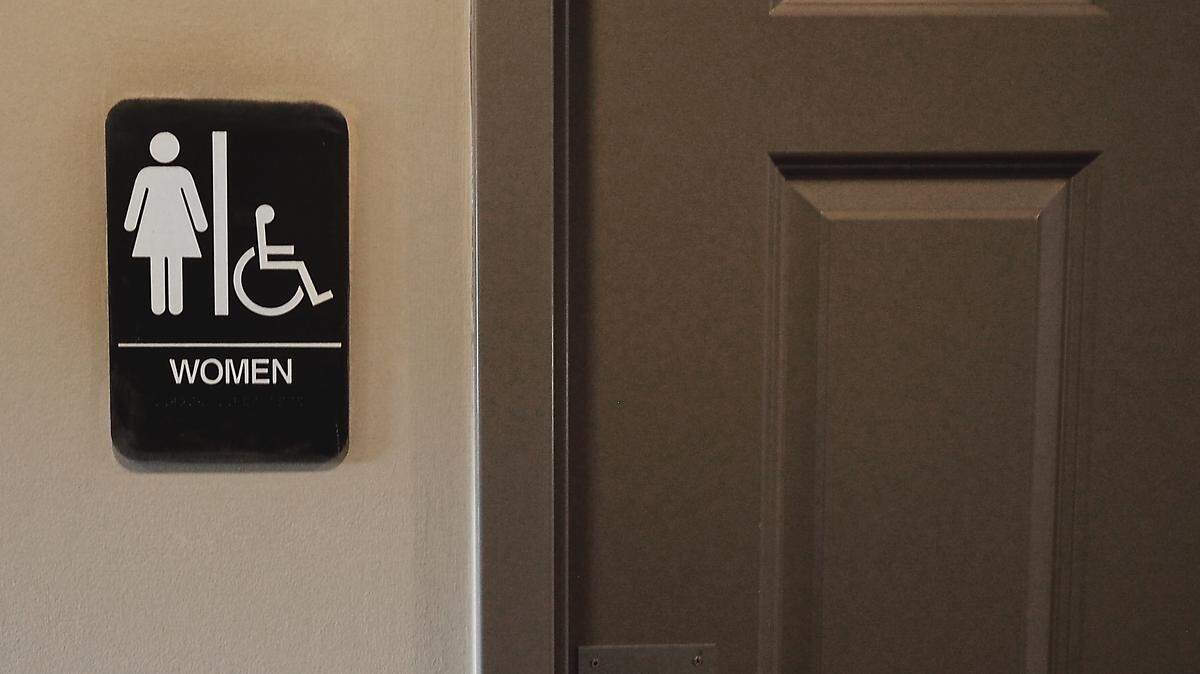
The law requires government entities to designate all multi-occupancy private spaces as either male or female spaces. People must use restrooms, locker rooms and other facilities in accordance with their sex assigned at birth, it says.
Anyone found to have improperly entered a private space in a government building will receive a written warning for a first violation. Second violations carry a $1,000 fine, and each subsequent violation is considered a misdemeanor offense punishable by another fine and up to six months in jail.
Critics of the law, including trans advocacy groups and Democratic lawmakers, say it creates a bounty system that encourages overzealous gender policing by allowing people to seek $1,000 in damages if they believe someone of the opposite sex used the restroom in their presence.
Although the AG’s office says it hasn’t investigated any alleged violations, tracking the law’s enforcement across a patchwork of local jurisdictions isn’t straightforward.
A spokesperson for the Wyandotte County District Attorney’s Office said prosecutors there have not pursued charges against anyone for violating Senate Bill 244. A spokesperson for the Johnson County District Attorney’s Office declined to comment and did not respond to a request for an explanation.
Testing Kansas’ anti-trans law
The legislation that Republican supermajorities passed on emergency final action in January was introduced at Kobach’s urging. Originally, its sole focus was forcing trans Kansans to confiscate and replace their driver’s licenses and birth certificates if the gender markers on the credentials had been updated to reflect their identity.
The restroom restrictions were added as an amendment in the House judiciary committee in January and received no public hearing before a marathon debate and vote. Rather than wait until July 1 to add the new law to the statute book, lawmakers opted to implement it immediately upon overriding Kelly’s veto.
Since then, several acts of civil disobedience have attempted to publicly test the enforcement of the law.
On March 31, Samantha Boucher, a Denver-based activist and the founder of the Trans Liberty nonprofit group, entered the Kansas Statehouse and informed officers with the Kansas Highway Patrol’s Capitol Police division that she planned to unlawfully use the women’s restroom.
At Boucher’s request, Lt. Grady Walker followed her to the bathroom and filmed her entering and exiting three times. He then questioned her in private.
“I was released without arrest — in part, I believe, because the law is so poorly written that it is unclear even to law enforcement who work down the hall from the Attorney General’s office how they are expected to enforce it,” Boucher said in an email statement to The Star.
She said she has not received any summons or follow-up from law enforcement regarding her demonstration.
“Should Attorney General Kobach have the courage to follow through in bringing misdemeanor charges, as the law would seem to require, I look forward to seeing him in court,” Boucher said. “Should he not, I hope that this creates a precedent about selective enforcement that may protect other members of our community from this useless and politically motivated law, and encourages the state legislature to repeal it entirely.”
April McCollum, a spokesperson for the Kansas Highway Patrol, said in an email that the agency submitted a report about the incident to the Department of Administration in April.
Another test of the law came at an April 18 legislative coffee event on the campus of Garden City Community College, where a transgender man challenged three GOP lawmakers to bear witness to his protest, a TikTok video of the exchange shows.
“I was just wondering if any of you wanted to follow me to the bathroom and report me to the attorney general. Thank you,” said the man, who identified himself only as Ray.
“Point well-made, Ray. Thank you,” responded Sen. Bill Clifford, a Garden City Republican.
Minutes later, the man returned to ask a follow-up question.
“I literally just went and broke a law that you guys and your leadership said was an emergency and pushed final action on it,” Ray said, going on to question whether the lawmakers really believed the statute to serve an important purpose.
“This is not a setting in which to get into a debate,” responded Rep. Lon Pishney, a Garden City Republican.
“However, the crux of that bill was not specifically around bathrooms,” he continued. “Although it got labeled as a bathroom bill, the crux of that bill was to keep, in my case, my three granddaughters safe when they go into a locker room, a public restroom, and so forth and so on. It was the safety of the young women.”
Data from the Williams Institute at UCLA School of Law shows that transgender people are over four times more likely than cisgender people to be victims of violent crimes.
To stay or to go
Matthew Neumann, founder of the LGBTQ Foundation of Kansas, said that regardless of if the new law is being enforced, it has resulted in trans people across the state questioning their safety here.
“I worry that a large part of this was done to cause fear and chaos,” Neumann said in an interview.
He said in the months since the law went into effect, two to three trans people have approached his organization each week to seek assistance relocating to a more welcoming state.
“We’ve had law after law. And we had people leaving before, but now, after SB 244, there’s been a pickup in people who want to relocate,” Neumann said.
“But there is an even bigger number that want to stay,” he added.
The LGBTQ Foundation is working to equip trans people with the resources they need to feel safe if they do choose to stay in Kansas, Neumann said. That means connecting people with queer-safe doctors, therapists and lawyers, and even helping out with rent and car payments, he said.
“People are getting together to make sure each other are safe. We’re teaching them how to watch out for each other, speak to police,” Neumann said.
He said civil disobedience aside, trans people navigating an increasingly hostile world are just trying to do their business in peace. As a trans man with a bushy beard and masculine presentation, he said he draws unwanted attention if he attempts to use a women’s restroom.
“Each time a trans person has to go out into the world, they have to make that decision of which bathroom — to either do a protest of using the bathroom that aligns with them or … to follow the law because we are receiving threats,” Neumann said.
This story was originally published May 7, 2026 at 10:48 AM.