Citing ‘false promise’ of property tax relief, Kansas governor vetoes GOP reform
AI-generated summary reviewed by our newsroom.
- Gov. Laura Kelly vetoed a second, modified GOP protest petition bill.
- The bill required 10% of most recent Secretary of State election voters to sign petition.
- Because the Legislature adjourned, lawmakers won’t attempt a veto override this year.
Kansas voters won’t be given a chance in 2026 to unilaterally reject city and county budgets when they believe their property tax dollars are being spent irresponsibly.
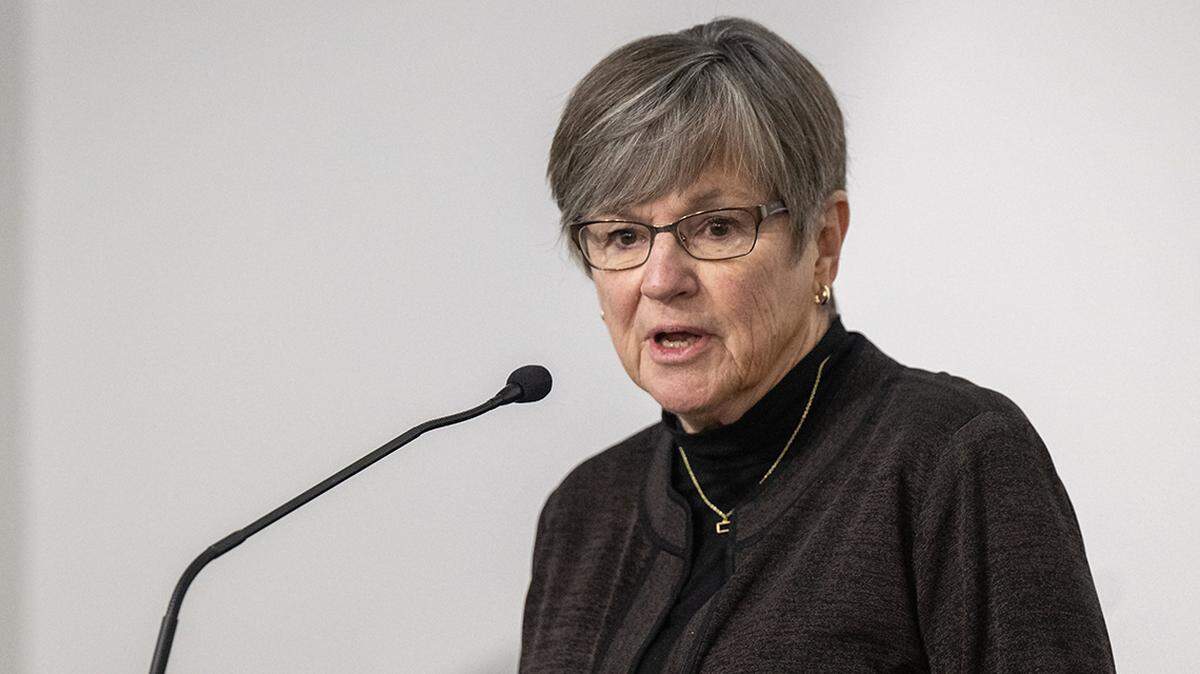
Democratic Gov. Laura Kelly on Monday vetoed a second version of Republican lawmakers’ protest petition bill, which would have empowered a fraction of voters to throw out local budgets that grow by more than the rate of inflation.
“For the last several years, the Legislature has promised to solve the property tax issue for Kansans. This has always been a false promise,” Kelly said in her veto message, which criticized GOP leaders for not entertaining the tax reform package that she rolled out on the eve of the veto session earlier this month.
“Knowing that legislators were anxious to tell their constituents they had done something to alleviate their property tax burden this session, I offered a three-pronged, workable approach: a one-time $250 reduction on their car tax; a permanent increase from $75K to $150K exemption from the state mill levy for schools on their home; and a $60 million fund to help counties mitigate property tax increases,” Kelly said.
Instead, Republican supermajorities in the House and Senate passed a modified version of the protest petition bill that Kelly had already vetoed over concerns that it could leave local governments without the resources they need to fund infrastructure and public safety priorities.
Because the Legislature has already gaveled out for the year, lawmakers won’t have an opportunity to attempt a veto override.
House Speaker Dan Hawkins, a Wichita Republican who’s running for insurance commissioner, was unsparing in his criticism of Kelly’s decision to nix the one piece of substantive tax reform approved in 2026 by a Legislature bitterly divided over the best approach to delivering tax relief.
“This veto makes one thing clear: there was never any intention for this governor to come to (the) table on property tax relief,” Hawkins said.
He characterizes the vetoed legislation as “straightforward reform that empowered taxpayers by allowing them to push back when property tax collections grow faster than families can afford.”
Kansas property tax reform stalemate
The legislation would have only allowed local budgets to grow by 3% or the rate of inflation — whichever is lower — from one year to the next without risking a protest petition challenge.
If 10% of the number of voters who cast a ballot in the most recent Secretary of State election signed a protest petition, local officials would have been forced to adopt a new budget that limited spending to the previous year’s level, accounting for an inflationary adjustment.
Unlike the first version of the bill that Kelly vetoed, the second piece of legislation included exemptions that would have allowed local governments to tax new construction and growth without counting against their spending limits.
Those changes were enough for the ranking Democrat on the House tax committee, Rep. Tom Sawyer of Wichita, to vote for the second iteration of the protest petition bill.
“This is property tax relief,” Sawyer said during floor debate on the bill earlier this month. “We need to encourage local governments to hold down spending, and this does that.”
Sawyer was one of nine House Democrats to support the amended protest petition bill. Senate Democrats were united in their opposition to it. Ten House Republicans and four Senate Republicans also voted against the legislation.
“We cannot honestly say to our constituents we’re passing meaningful property tax relief,” said Senate President Ty Masterson, an Andover Republican who’s running for governor, before reluctantly voting for the protest petition bill.
In a statement to The Star, Masterson called Kelly’s veto “out of touch” and said it underscores the state’s “desperate need for a Republican governor.”
“At every turn, the Democrats sabotaged all our attempts for real property tax relief this year,” Masterson said.
Republican infighting was also a major factor in the tax stalemate.
Masterson’s last-ditch effort to coax a property tax relief constitutional amendment proposal through the Legislature came up short when the House failed to muster enough votes to place the measure on the August ballot.
In her veto message, Kelly called on lawmakers to partner with city and county officials to develop a plan for reducing the property tax burden on residents whose valuations have soared in recent years.
The average residential appraisal increase for Johnson County was approximately 6% in 2026, and the average increase for Wyandotte County homes was roughly 8.5%.
“I don’t dispute that property taxes in Kansas are too high,” Kelly said. “I have been saying that since 2012, when the disastrous ‘tax experiment’ focused on income tax reduction that primarily benefitted those at the top.”
She said those tax cuts, championed by former Republican Gov. Sam Brownback and later repealed by the Legislature, ultimately left cities and counties more reliant on property taxes to fund local needs.
“Those ill-advised cuts drastically reduced revenues coming into state coffers,” Kelly said. “The state responded by, among other things, cutting support to local communities for vital services, leaving our counties and cities to pick up the slack. Those additional burdens make it very difficult for our municipalities to hold the line on property taxes.”
The debate over systemic property tax reform will now spill into campaign season, as voters prepare to choose their next governor and decide which of the 125 House lawmakers to send back to Topeka in 2027.
This story was originally published April 28, 2026 at 1:37 PM.