Missouri voters to decide to eliminate income tax, raise sales and use taxes
AI-generated summary reviewed by our newsroom.
- Missouri House passed a proposed constitutional amendment 95-59 to the governor.
- Voters will decide whether to let lawmakers expand sales and service taxes.
- The amendment is a step closer to Gov. Mike Kehoe’s promise of eliminating income taxes.
Missouri Gov. Mike Kehoe campaigned on the elimination of state income taxes, and lawmakers delivered a bill that could fulfill that campaign promise if voters approve and lawmakers raise enough money from new sources.
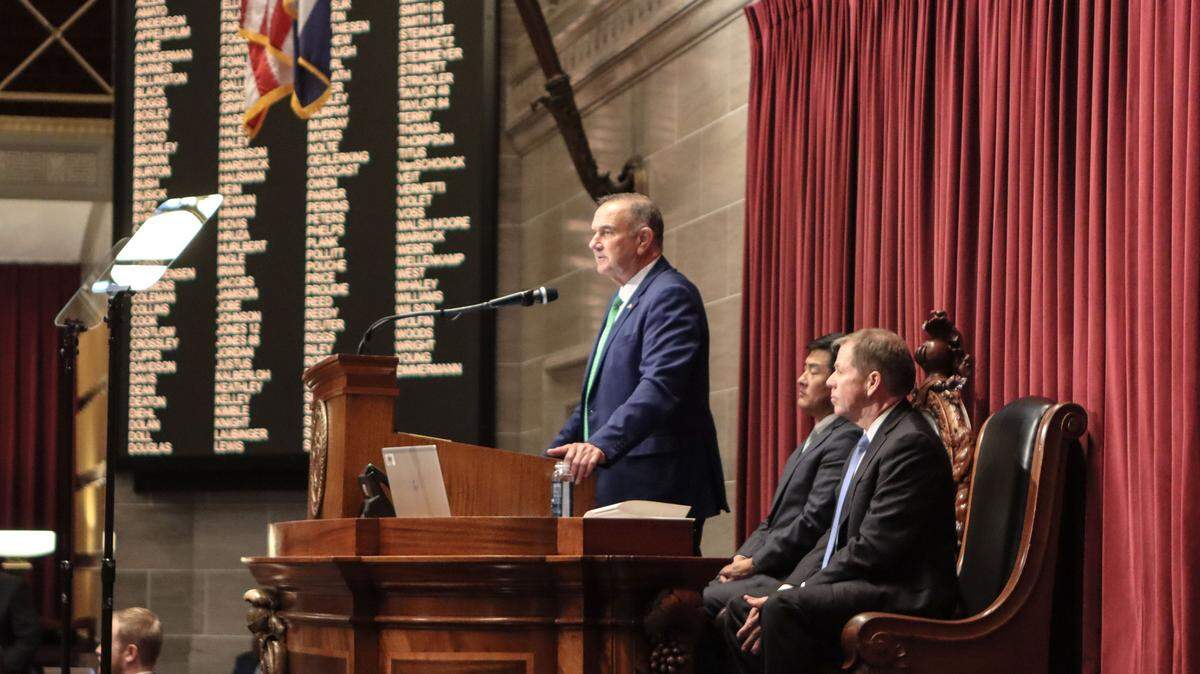
On Tuesday, the Missouri House agreed with Senate amendments to a proposed constitutional amendment that serves as a first step in repealing the income tax. The bill, which passed 95-59, will now go to the ballot.
“This is the first step in keeping our promise to make Missouri more competitive, attract jobs and investment, and let families keep more of what they earn from the start,” Kehoe said in a statement. “We look forward to continuing this important conversation with Missourians in every corner of our state.”
Missouri voters will be asked to approve the amendment, which grants lawmakers broad authority to increase sales taxes and implement taxes for services with the goal of reducing the income tax.
During the two hours of debate in the House on Tuesday, the bill’s supporters declared that income tax is the most destructive tax that penalizes productivity. It embeds hidden costs for goods and services, doesn’t capture money from out-of-state visitors and prevents businesses from investing in the state.
Some said the elimination of income taxes would serve as a meaningful fix-all for the state’s stagnant population and economy.
“Why are out-of-state businesses and visitors getting off free while our constituents pay the burden? Why do we have a tax code 100 that’s years old? Why are we losing population, GDP and our youth? The common denominator in all of this is the income tax,” said Rep. Brad Christ, a St. Louis Republican, on Tuesday.
But opponents countered that the elimination of income taxes will just shift the burden elsewhere, and that higher sales taxes will primarily impact low and middle-income people who spend a greater share of their money on goods.
“The Republican supermajority does not need the voters’ permission to eliminate your income tax,” House Minority Leader Ashley Aune said during floor debate on Tuesday.
“They do need your permission, however, to raise your sales taxes and nullify constitutional prevention sales taxes on services and real estate,” said Aune, a Kansas City Democrat.
Throughout the debate, supporters pointed to high-growth states like Texas, Florida and Tennessee, which eliminated income taxes. Democrats chipped at the comparison, saying Missouri can’t recreate those states’ successes just by removing the income tax.
Which taxes are levied or raised would be decided over the next five years, under the constitutional amendment. In his State of the State address in January, Kehoe said the measure shouldn’t levy new sales taxes on agriculture, health care or real estate, but there are no exemptions in the current language.
Voters will decide whether to accept the changes to the Missouri Constitution on November 3, unless Kehoe decides to move it to the Aug. 4 Primary.
About two-thirds of Missouri’s general revenue comes from income taxes, and about one-fifth comes from sales and use taxes. Replacing the nearly $8.7 billion of income tax revenue would take substantial expansion of what services are taxed, or increases in the base state sales tax rate.
The Missouri Budget Project, a left-leaning policy research organization, released an analysis that showed the proposal would lead to a tax increase for 60-80% of Missourians.
The wealthiest 20%, who earn above $300,000 per year, would see a decrease in taxes while a middle-income Missourian earning $65,000 per year would have a net tax increase, the analysis said.
A St. Louis University poll conducted in February found that Missourians generally prefer the state relying on sales tax over income taxes, but are against expanding sales taxes to any new services to achieve that goal. More recently, Torchlight Strategies polling suggests that only 37.3% of likely voters would support the amendment, and 49.1% are against it.