Kansas governor vetos anti-trans bill, says bathroom usage shouldn’t be policed
AI-generated summary reviewed by our newsroom.
- Governor Laura Kelly vetoed SB 244, saying it would police bathrooms and family visits.
- Republican supermajorities passed the bill; lawmakers could seek an override next week.
- SB 244 would bar gender-marker changes, impose fines, and create complaint bounties.
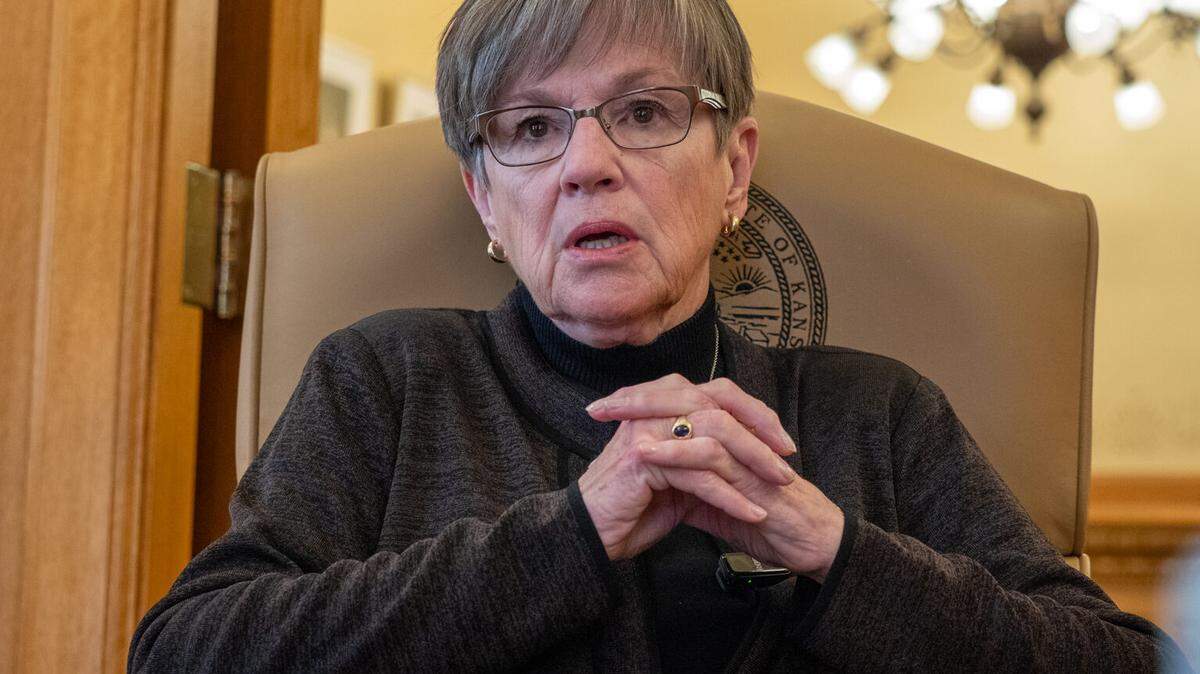
Kansas Gov. Laura Kelly vetoed a bill Friday that aims to police the use of bathrooms and other private spaces in government buildings. It would also revoke driver’s licenses that reflect transgender Kansans’ identities.
Kelly used her veto message to denounce SB 244 as “poorly drafted legislation” that would have “numerous and significant consequences” beyond limiting trans people’s ability to “use the appropriate bathroom.”
“Under this bill: if your grandfather is in a nursing home in a shared room, as a granddaughter, you would not be able to visit him,” Kelly said.
“If your wife is in a shared hospital room, as a husband, you would not be able to visit her,” she continued, adding that college dorm rooms and government-owned sports facilities would also fall under the bill.
Republican supermajorities in the House and Senate adopted the measure late last month after employing a series of legislative maneuvers to expedite its passage without providing an opportunity for public feedback on key provisions, including the requirement that people use public restrooms and other private spaces in accordance with their sex assigned at birth.
It’s the latest in a series of bills the Kansas Legislature has passed in recent years limiting the rights of transgender residents. Each has been enacted into law over Kelly’s veto.
Last year, GOP lawmakers banned trans minors from receiving gender-affirming care and established harsh penalties for physicians caught providing it. In 2023, trans athletes were prohibited from competing in girls’ and women’s sports.
Republicans framed the bathroom and driver’s license bill as an addendum clarifying the intent of a separate 2023 bill barring trans women from accessing female-only spaces.
“I believe the Legislature should stay out of the business of telling Kansans how to go to the bathroom and instead stay focused on how to make life more affordable for Kansans,” Kelly said in her veto statement.
Within minutes of her veto, House Speaker Dan Hawkins, a Wichita Republican, released his own statement saying, “Kansans expect their laws to reflect reality and protect privacy.”
“It’s hard to wrap my mind around why the Governor would veto something so fundamentally common sense,” said Hawkins, who is running for state insurance commissioner. “SB 244 simply recognizes biological reality in state law and ensures that single-sex spaces, such as restrooms and locker rooms in public buildings, are designated accordingly.”
In a statement thanking Kelly for her veto, Human Rights Campaign President Kelley Robinson blasted the bill as “equally bizarre and cruel,” saying it would “green light harassment and violence” against trans people, open the door to “invasive gender policing that affects everyone.”
“The length that Republican lawmakers will go in attacking the transgender community instead of solving real issues facing Kansans is appalling,” Robinson said. “SB 244 is about invading privacy, forcing people into the wrong bathrooms, stripping transgender Kansans of accurate IDs, and inviting government-sanctioned harassment — all pushed through using cynical procedural tricks to silence public opposition.”
What would veto override mean?
Republican lawmakers could attempt to override Kelly’s veto as soon as next week. The bill initially passed 87-36 in the House and 30-9 in the Senate — both above the two-thirds threshold necessary to enact legislation into law over the governor’s objection.
The new law would go into effect almost immediately upon a veto override, which could force local governments and school districts to scramble to come into compliance or face steep fines that would compound daily.
In addition to restricting access to restrooms, locker rooms and showers in government buildings, the bill would also ban unisex multi-occupancy private spaces in buildings owned by the state of Kansas, local governments, and school districts, as well as public colleges and universities.
It would provide no funding to those entities to make necessary renovations or update signage.
SB 244 would also incentivize people to report potential violations — a provision that critics have described as a bounty. Anyone who believes a person entered the wrong restroom in their presence could submit a complaint and seek $1,000.
Anyone found to have improperly used a restroom or other private space in a government building would face a written warning for a first violation. A second violation would carry a $1,000 fine, and each subsequent violation would be a misdemeanor offense punishable by another fine and up to six months in jail.
The bill would also explicitly prohibit the Kansas Department of Revenue from accommodating gender marker change requests on driver’s licenses, state ID cards and birth certificates. Documents that don’t reflect someone’s sex as assigned at birth would have to be revoked and reissued if the bill became law.
This story was originally published February 13, 2026 at 4:57 PM.