Kansas Republican staunchly opposed nationalized voting. Does he back Trump now?
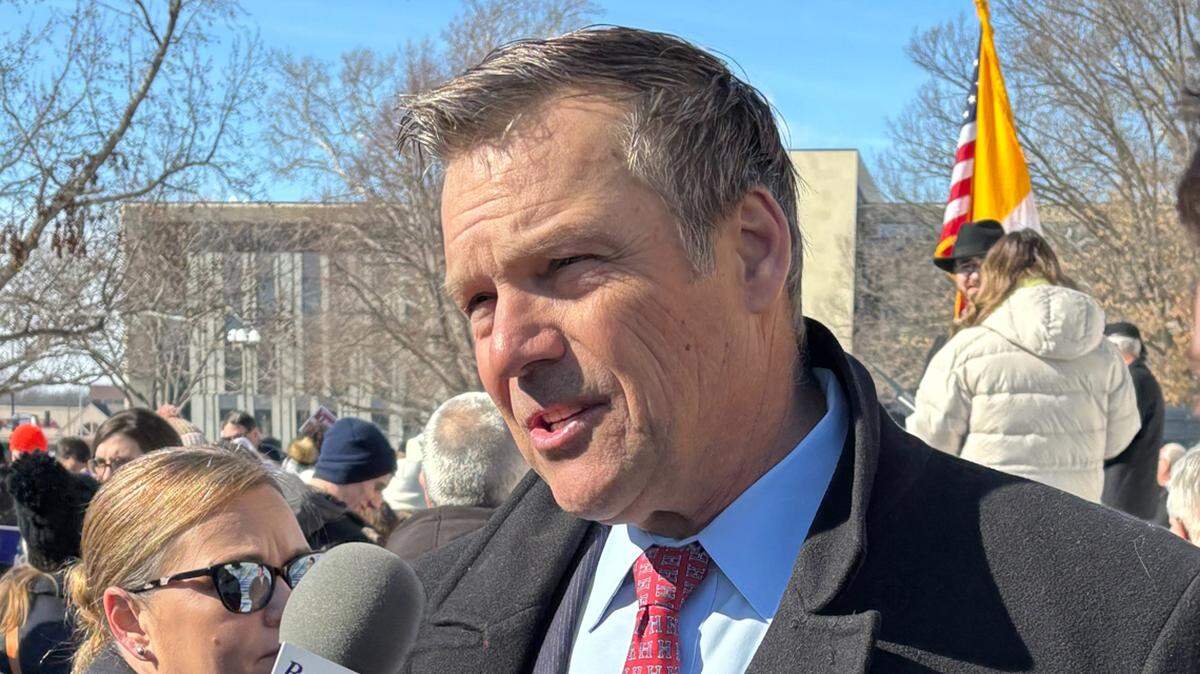
It was early 2013. Barack Obama was fresh off his second inauguration. Missouri had a Democratic secretary of state. And Kris Kobach’s star was rising in Kansas Republican politics.
Kobach, in his first term as Kansas’ top election official, drafted a resolution for the annual National Association of Secretaries of State (NASS) conference, held in Washington. The resolution, which The Star obtained a copy of, sharply opposed federal control of states’ voter registration systems.
“The states are better-equipped to administer and protect the integrity of voter rolls than the federal government is,” the resolution read in part, adding that the U.S. Constitution gave individual states the right to determine “the time, place, and manner of holding elections.”
That was 13 years ago.
Kobach’s proposed resolution, which was not adopted, has taken on fresh scrutiny as President Donald Trump pushes to “nationalize” voting in U.S. elections. Trump has argued that Republicans should take over voting in at least 15 places and claimed that states are agents of the federal government in elections.
Trump’s comments and a series of recent actions from his administration, such as a raid on an elections office in Georgia, have alarmed local election officials across the country who fear there could be federal pressure on voting in the coming months.
The resolution from Kobach, now Kansas’ attorney general and a staunch Trump supporter, is noteworthy and stands in stark contrast to Trump’s recent comments on elections.
Two officials who were at the 2013 conference told The Star that the resolution illustrates Republicans’ conflicting views on the federal government’s role in elections based on who is president.
Jason Kander, a Democrat who served as Missouri’s secretary of state from 2013 to 2017, said his colleagues voted against the resolution because it was considered a partisan stance at the time. Now, he said, the resolution is “the opposite of the Republican position now that they’re in the White House.”
“The chasm between what Secretary of State Kobach wrote in his 2013 proposed resolution and what President Trump is calling for right now could not possibly be wider,” said Kander. “If 2026 Attorney General Kobach has any integrity at all, he should oppose the president’s demands at the top of his lungs.”
Maine Auditor Matthew Dunlap, a Democrat who was his state’s secretary of state in 2013 and attended the conference, echoed Kander’s argument in an interview. He called Kobach’s resolution “ironic” in the wake of Trump’s stance on nationalized elections.
“You can bet your Sweet Petunia pie that if Joe Biden were in office, they would not be saying this about consolidating elections under the federal administration,” Dunlap said. “They’d be saying the exact opposite.”
What does Kobach say now?
Kobach, in a statement to The Star provided by a spokesperson, appeared to reiterate much of the same arguments highlighted in his draft resolution, such as the idea that the Constitution provides states the power to describe the time, place and manner of elections.
Congress, Kobach said, has a more limited role to modify those regulations. He then went a step further.
“Completely federalizing elections would also violate the 10th Amendment, which prohibits Congress from commandeering state election workers,” Kobach said, before adding another caveat.
“That said,” Kobach said in the statement, “Congress does have the ability to use the spending power to incentivize states to make necessary reforms to improve the security of elections, such as photo ID requirements and proof of citizenship requirements.”
In his statement, Kobach did not directly respond to a question about whether he believes Trump’s remarks on federal intervention in local elections to be harmful or counterproductive.
In 2013, the Obama administration was pursuing changes to elections designed to clear voting hurdles — such as long lines, according to a Guardian article at the time. Obama’s efforts came in response to a wave of new voting restrictions in states across the country, POLITICO reported.
Kobach’s resolution was in response to the push from the Obama administration, Kander said in an email. Kander also wrote about his opposition to the resolution in a 2018 memoir, in which he describes how Kobach’s efforts roiled the gathering of top election officials, which was supposed to be nonpartisan.
Kander wrote in the book that his colleagues voted against Kobach’s resolution “in a close vote” on the final day of the conference. A NASS spokesperson said in an email to The Star that the organization does not keep proposed or failed resolutions on file.
Michael Smith, a political science professor at Emporia State University who has studied Kobach’s career closely, said Kobach’s break from Trump on the issue of nationalizing voting is notable.
“Trump expects the people close to him to follow his zigs and zags because their first loyalty is to him,” Smith said. “Kobach has very similar policy views, especially on (immigration). But Kobach has kind of developed this issue independently. It’s not just all about whatever Trump wants, and so there may be a little bit of daylight.”
Smith said Kobach “completely transformed” the Kansas secretary of state office by eschewing the largely nonpartisan approach of his predecessors.
“Of course, his signature issue was this claim that he was never able to back up — even after searching for the whole eight years he was secretary of state — that there were undocumented immigrants voting in Kansas elections,” Smith said.
Trump tapped Kobach during his first term to lead a commission charged with investigating voter fraud, but it was disbanded in 2018 without producing any evidence of widespread fraud. Regardless, Trump has repeatedly blamed his 2020 loss to Joe Biden on noncitizens voting.
Both politicians are fundamentally wrong about voter fraud, Smith said.
“There is no coordinated effort to overturn elections through voter fraud,” Smith said. “It is a false narrative, and promoting that narrative is something that I think all Americans who care about Democracy should be very, very weary of.”
This story was originally published February 12, 2026 at 5:30 AM.