How a KC teacher has helped collect thousands of snacks for kids amid SNAP crisis
AI-generated summary reviewed by our newsroom.
- Volunteers collected over 8,000 individual snacks for Kansas City classrooms
- KC Eats and partners run weekly food distributions and mini food banks
- Schools, churches and businesses donate pantry staples and shelf-stable milk
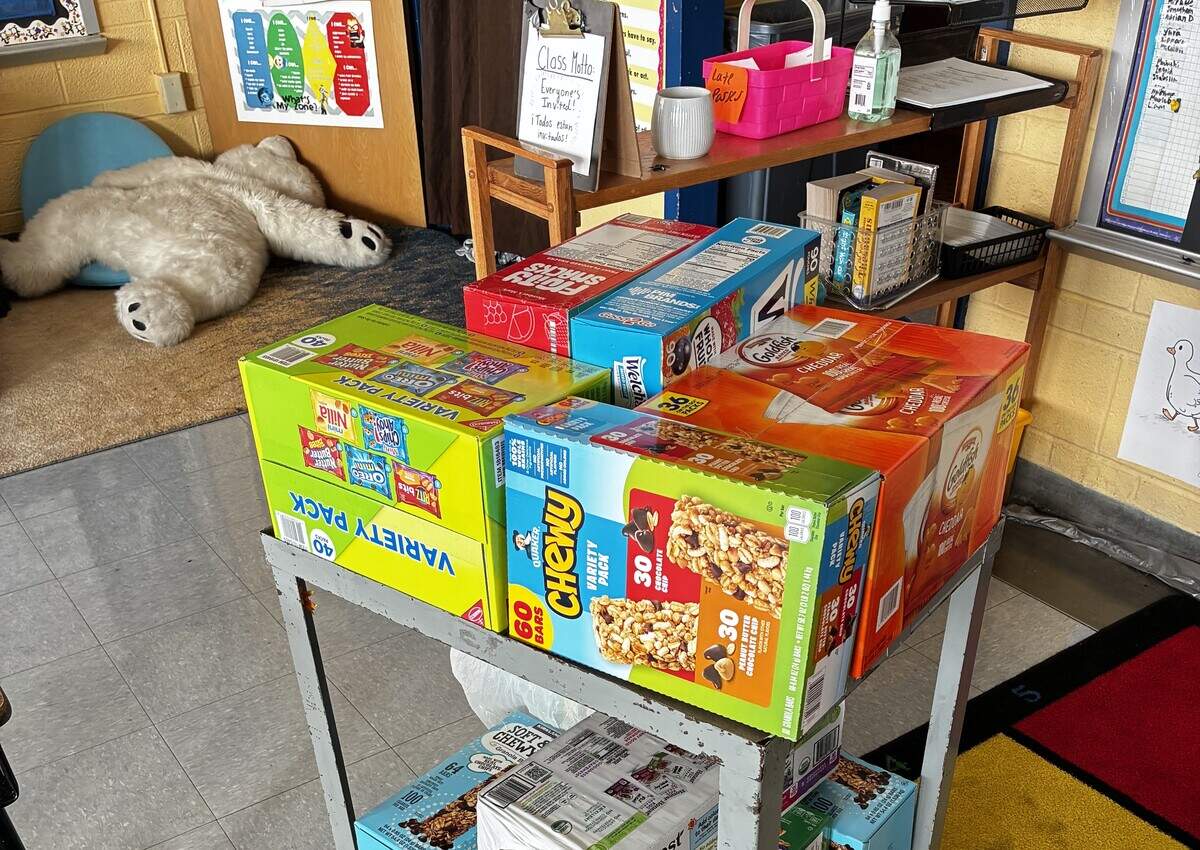
Snack time is a highlight of the day in Carter Taylor’s 2nd grade classroom at Phillis Wheatley Elementary School on Kansas City’s East Side.
It comes at 11:45 a.m., in the hours between the start of school and the students’ late lunch period.
“Asking a 6- or 7-year-old to go without food from about 9 a.m. to (1:45 p.m.) — that’s really hard,” Taylor said. “They’re small. They’re little. They need the extra help and the extra nutrition.”
Kansas City Public Schools already offer students free universal breakfast and lunch. But with food insecurity on the rise in Jackson County and Supplemental Nutrition Assistance Program, or SNAP benefits, in flux, Taylor said providing healthy snacks in classrooms has never been more important.
“I know I have kids who don’t eat at home. I know I have kids who do rely on SNAP benefits,” said Taylor, who serves as legislative chair for the Kansas City Federation of Teachers.
Community partners have long made efforts to provide snacks for elementary schools serving Kansas City’s most impoverished areas. But in years past, free snacks have only been available to students on several days each week, due to limited resources.
This school year, Taylor was determined to change that.
KC Kids Eat
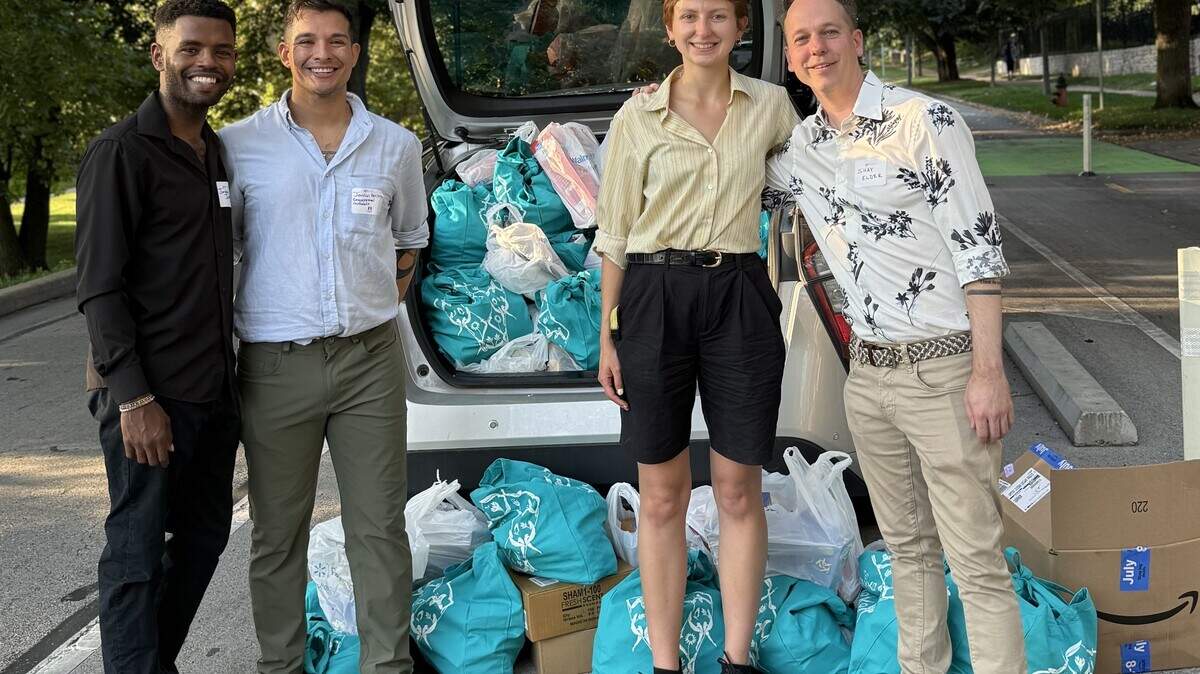
Over the last several months, a small team of volunteers has collected more than 8,000 individual snacks through the KC Kids Eat initiative, partnering with local businesses that offered to serve as drop sites for community donations.
“Folks are meeting the moment,” said DC Okonta, a public health professional who volunteers on pick-up and drop-off duty before and after work.
“You see a lot of mobilization from the community, which is something that’s common in Kansas City,” Okonta said. “Whenever there’s something that’s going on that affects a large swath of people, we’re usually connecting and do what we need to do to get those resources to the right folks.”
Drop-off sites for donations include Freight House Fitness, Wellness Warehouse, Rochester Brewing & Roasting Company and Equal Minded Cafe KC.
Healthy options are especially appreciated, Taylor said. Goldfish crackers, pretzels, granola, fruit snacks, popcorn, juice boxes, peanut butter and graham crackers are all in high demand.
Taylor doles out snacks to teachers on an as-needed basis.
“A lot of teachers, when they come to me, they almost seem like they think they’ll get in trouble,” Taylor said. “They whisper, and they go, ‘Hey, do you have any extra snacks to share?’ And I’m always quick to say, ‘of course.’
“I’d rather make sure they don’t have to reach into their own pockets to be able to feed the kids in their class, because we are all struggling together,” Taylor said.
Other groups are also doing what they can to combat food insecurity in schools across the Kansas City metro. Resurrection, a United Methodist Church, packs and distributes 1,800 bags of weekend take-home food items for needy students in eleven schools in Kansas City, Olathe, Shawnee, and Kansas City, Kansas.
“Hunger is an overarching need for everybody — especially the kiddos. They can’t come to school and learn if they’re starving,” said Cristen Summers, Resurrection’s director of local missions.
Kansas City Public Schools has its own initiatives to fight hunger, too, said spokesperson Shain Bergan. KCPS Cares, a program started in collaboration with Harvesters, allows people to donate directly to KCPS families. Several Kansas City schools also have their own food pantries, Bergan said.
But the volunteer work of Taylor and others who have gone above and beyond to provide for students is “much appreciated by our families,” Bergan said.
“We have free breakfast and lunch, and various programs, resources and partnerships to assist our families, but at the end of the day, it’s going to take all of us working together to build the world we want for our children,” he said in an email.
Shelley Slavens, a clinical dietician with University Health in Kansas City, said the science is clear — kids need to eat at least every three to four hours to keep their focus. That’s why snacks with complex carbs and proteins between meals are so important, she said.
“Especially kids that have that late lunch period, that’s a long time to go,” Slavens said. “Because some of these kids are getting up and maybe they go to before school care, and they’re going to eat breakfast at 7 o’clock and then they’re not eating lunch again until after 1. So having a mid-morning snack … it really helps them to focus.”
Children who haven’t had enough to eat are much more likely to be disruptive or despondent in the classroom, Slavens said.
“A lot of times, kids will act out because they’re hungry, or they’ll get headaches, or they’re just fidgety, they can’t focus,” she said.
KC Eats
The goodwill and organizational power that began with Taylor’s school snacks drive found a new sense of urgency when the federal government shut down on Oct. 1.
Suddenly, many federal workers across Kansas City found themselves furloughed or were deemed essential and told to work without pay.
“I got with Carter (Taylor) because Carter was already working on getting like, snack food for kids. That’s what KC Kids Eats is. But I decided, the adults need to eat, too,” said Rick Hammett, a community organizer who helped create the broader KC Eats initiative.
The project has culminated in a series of mini food bank events at The Ship in West Bottoms, where federal workers and union members have long congregated for drinks and solidarity.
Every Friday evening, grocery donations are picked up from donation drop sites around the city and brought to the front lobby of The Ship. From 4-7 p.m., anyone who shows up in need — federal worker or otherwise — can leave with food items for their pantry.
At the end of the night, what’s left over is gathered up and donated to the Community Assistance Council in south Kansas City.
Hammett said the outpouring of community support for the initiative has been inspirational. But the work isn’t done, he said.
One donation item they’re always looking for more of is shelf-stable milk — boxed, canned, or powdered, Hammett said. Breakfast foods such as pancake mix are also in short supply, he said.
A variety of local businesses have found creative ways to get involved with the mutual aid effort.
Eb and Flo Bread Co., a home-based micro-bakery in Shawnee, launched a buy-one, give-one promotion on bread. Owner MJ Mishek said that within a week, customers’ generosity had already resulted in 248 donated loaves for KC Eats.
“As a mom, I can’t imagine other parents who may be experiencing food scarcity or insecurity not being able to put food on their table,” Mishek said.
“My literal neighbor is a federal worker, and she hasn’t received a paycheck since the last time federal workers did receive a paycheck.”
When Mishek has extra bread, she sends it with her neighbor to share at work.
“It’s not political or anything,” she said. “I’m just like a neighbor trying to help other neighbors.”