Missouri’s ‘Let Politicians Lie Act’ takes center stage in fight over abortion
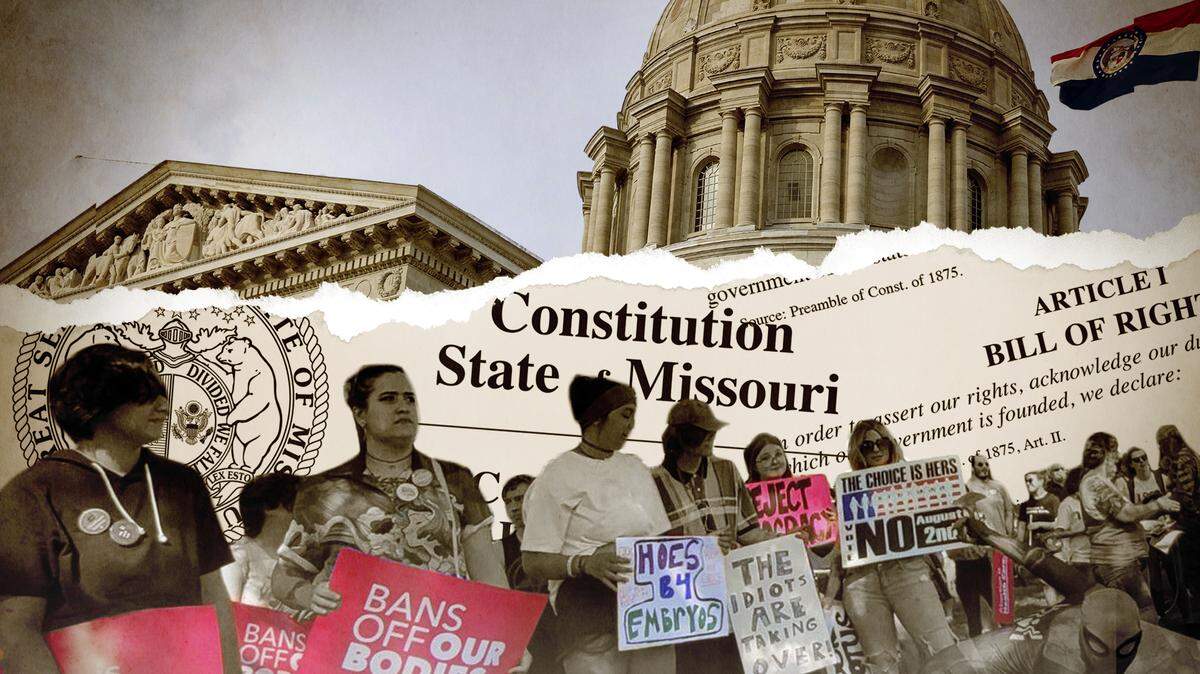
Missouri Republican officials and abortion rights advocates are engaged in a back-and-forth legal battle over the language of a ballot measure that would ban nearly all abortions in the state.
The core issue: the question that voters will see in November 2026 makes no mention of an abortion ban. Opponents argue it’s a Republican attempt to confuse voters into approving the ban.
The legal fight playing out is largely by design, marking the latest salvo in Republican officials’ yearslong effort to halt abortion access. It also follows a playbook outlined in a new law that critics have dubbed the “Let Politicians Lie Act.”
The law, which Republican Gov. Mike Kehoe signed in the spring, restricts judges from rewriting misleading ballot questions, key legislation that gives Republican officials more power to reframe statewide ballot measures on abortion access and other issues they disagree with.
It handed the Missouri Secretary of State’s Office a powerful new tool: three shots at writing their own ballot language if a judge strikes down the initial version.
“By giving them sort of three bites of the apple…they’re really just giving more opportunities to try to get unfair language by the courts,” said Chuck Hatfield, an attorney suing to strike down the law, called SB 22.
Abortion rights advocates say that’s exactly what’s happening in the lengthy fight over abortion.
Inside the legal fight
The proposed constitutional amendment, crafted by Republican state lawmakers, would effectively ban nearly all abortions in Missouri and overturn the historic November vote that legalized access to the procedure.
The question, instead, highlighted the rare circumstances in which abortions would be allowed, such as for rape and incest before 12 weeks gestation, and did not mention that abortions in most other cases would be banned.
Cole County Circuit Judge Daniel Green struck down the language last month, ruling that the question was “insufficient and unfair” and failed to accurately inform voters of its true intent.
But instead of rewriting it, Green ordered Republican Secretary of State Denny Hoskins, a staunch abortion opponent, to write a new one himself. Hoskins’ first attempt, filed late last month, also did not inform voters that it would strike down last November’s vote.
Green, once again, rejected the language and ordered Hoskins to give it another shot. In his second attempt, Hoskins submitted a nearly identical ballot question that changed the word “amend” to “repeal,” in his reference to last November’s abortion rights vote.
On Tuesday, after this story published, Green approved Hoskins’ latest attempt, saying his second of three potential tries was “fair and sufficient” for the ballot. That ruling is likely to be appealed.
Attorneys fighting the language in court argued before Tuesday’s ruling that it should have been struck down.
“They won’t admit they’re trying to end the fundamental right to reproductive freedom or bringing back an abortion ban because they know Missourians oppose it,” said Tori Schafer, an attorney with the ACLU of Missouri. “So instead, they bury the truth in legal jargon and misleading language.”
A spokesperson for Hoskins defended his language in a statement to The Star on Monday, saying that he rewrote it exactly as the court ordered. The statement also pointed to the fact that Hoskins used the word “repeal” in his new ballot question, which was requested by abortion rights advocates.
“Secretary of State Denny Hoskins is honored to have been chosen by the people of Missouri in a statewide election,” said spokesperson Rachael Dunn. “He takes seriously his constitutional duty to write fair and accurate ballot language that reflects Missouri law — not the talking points of out-of-touch, out-of-state interests.”
Dunn went on to defend the new state law that allows Hoskins three opportunities to rewrite ballot questions.
“Senate Bill 22 reinforces this accountability by ensuring that Missouri’s elected officials — those directly answerable to voters — have a clear, lawful process to finalize ballot language,” Dunn said. “It prevents endless litigation by national advocacy networks that seek to delay or distort what Missouri voters see on their ballots.”
Republican statewide officials, for their part, also argue that Hoskins’s language is fair and accurately describes the proposed ballot measure. In a two-page brief filed last week, Republican Attorney General Catherine Hanaway defended Hoskins’ new question.
“Because the Secretary’s revisions are all fair and sufficient, the Court should uphold the revisions,” Hanaway wrote.
As of Monday, the language that Hoskins wants to appear on the ballot would read as follows:
“Shall the Missouri Constitution be amended to:
• Guarantee women’s medical care for emergencies, ectopic pregnancies, and miscarriages;
• Ensure women’s safety during abortions;
• Ensure parental consent for minors;
• Repeal Article I, section 36, approved in 2024; allow abortions for medical emergencies, fetal anomalies, rape, and incest; and
• Prohibit sex-change procedures for children?”
Another Amendment 3
The courtroom fights follow a multi-pronged effort by Missouri Republicans to strike down the November statewide vote that legalized abortion access.
The decision to place the new abortion ban on the Nov. 3, 2026, ballot was remarkable and signified the first major retaliatory response from Republican lawmakers after nearly 52% of voters overturned the state’s abortion ban.
The historic vote last November offered a fierce rebuke of statewide Republicans who had spent decades restricting access. The constitutional amendment, called Amendment 3, overturned a near-total ban that was enacted in 2022 after the U.S. Supreme Court struck down Roe v. Wade.
The upcoming ballot measure would allow abortions in medical emergencies and cases of fetal anomalies, such as birth defects. It would also allow the procedure in exceptionally rare cases of rape or incest within 12 weeks of gestational age.
The actual language of the legislation, however, is silent on when exactly abortion would be banned, making it unclear whether the amendment is intended to allow the state’s previous abortion ban to take effect or give lawmakers the ability to pass legislation to restrict access.
Republican lawmakers have repeatedly rejected framing it as an “abortion ban,” saying that it would allow for exceptions.
“We put emphasis on protecting women,” Rep. Brian Seitz, a Branson Republican who carried the legislation, previously told The Star. “It also allows for the rape and incest if the woman decides to do something about that up till 12 weeks. And I think that’s what most of the people voted for when they voted for Amendment 3.”
But abortion rights supporters argue that Republican officials are engaged in a protracted plan to confuse voters. Polling and statewide votes across the country regularly suggest that abortion rights remain popular, even in conservative states like Missouri.
In addition to the wording of the ballot measure, Hoskins also certified the new abortion ban for the ballot as Amendment 3, the same name as last November’s abortion rights amendment.
This story has been updated after a Missouri judge ruled in favor of a version of the ballot language.
This story was originally published October 6, 2025 at 3:38 PM.