As Kansas City’s mayor eyes Congress, would he — and Democrats — have a shot?
After Missouri Republicans thrust Kansas City into the national spotlight by gerrymandering the state’s congressional map, the city’s mayor immediately warned the move could backfire.
Kansas City Mayor Quinton Lucas and others have argued the new congressional map could be competitive, possibly opening a path for Democrats to pick up additional seats in Congress.
Lucas has gone a step further and flirted with a potential run himself.
But interviews with political experts and polling obtained by The Star suggest Democrats likely face an uphill battle under the new map in 2026. The best shot at halting the gerrymander, experts and some Democrats say, is fighting the map in court and at the ballot box.
The map approved by lawmakers carves Kansas City voters into three Republican-leaning districts under pressure from the Trump administration. Republicans hope to pick up Democratic U.S. Rep. Emanuel Cleaver’s 5th District and ensure GOP control of seven of the state’s eight districts.
“I just think those districts are probably too hard for Democrats to win,” said Kyle Kondik, a political analyst at the Center for Politics at the University of Virginia. “I think these are seven pretty solid Republican seats.”
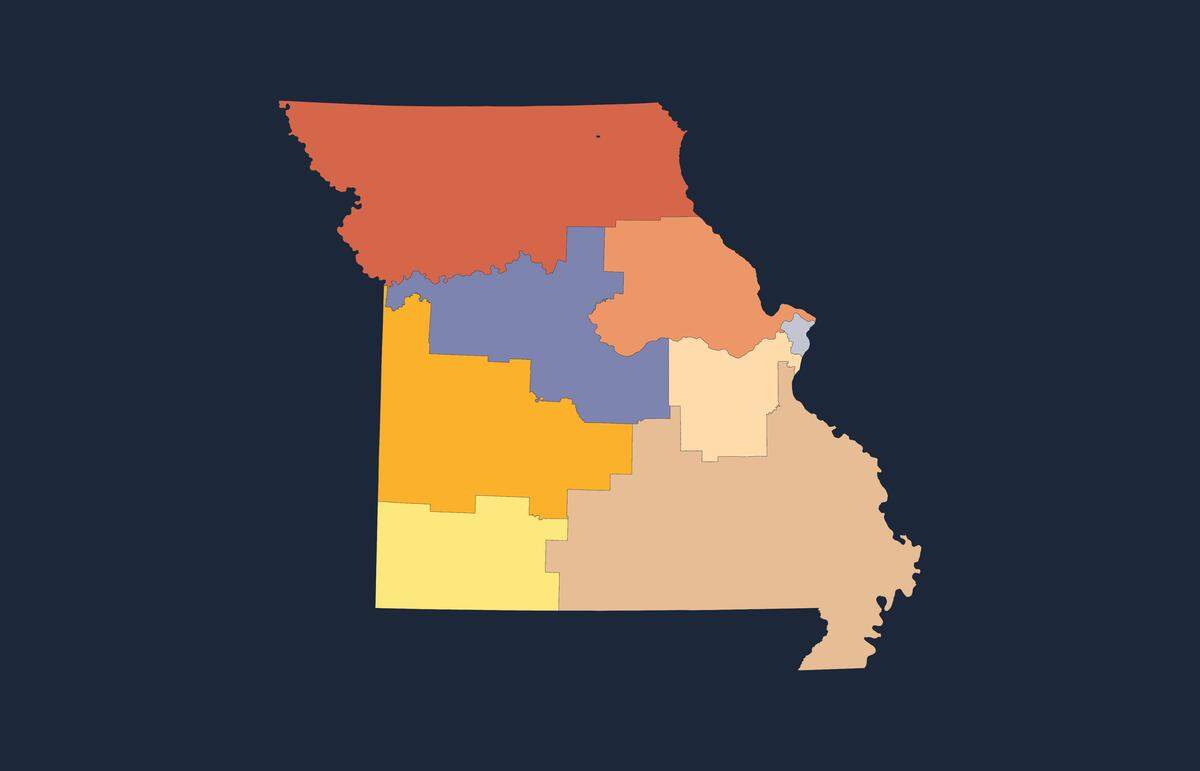
Missouri’s map is an overt example of partisan gerrymandering, a term used to describe the practice of redrawing electoral district boundaries to favor one party over another.
The attempt has sparked debate, however, over the possibility of what’s often called a dummymander, in which a gerrymander backfires. In this case, that would result in Democrats picking up seats that were designed for Republicans to win.
In the wake of lawmakers approving the map, Democrats have rallied behind Cleaver, who has stated his intention to run again. But one potential target for Lucas and others centers on the 4th District, currently represented by U.S. Rep. Mark Alford, a Republican and former Kansas City TV anchor.
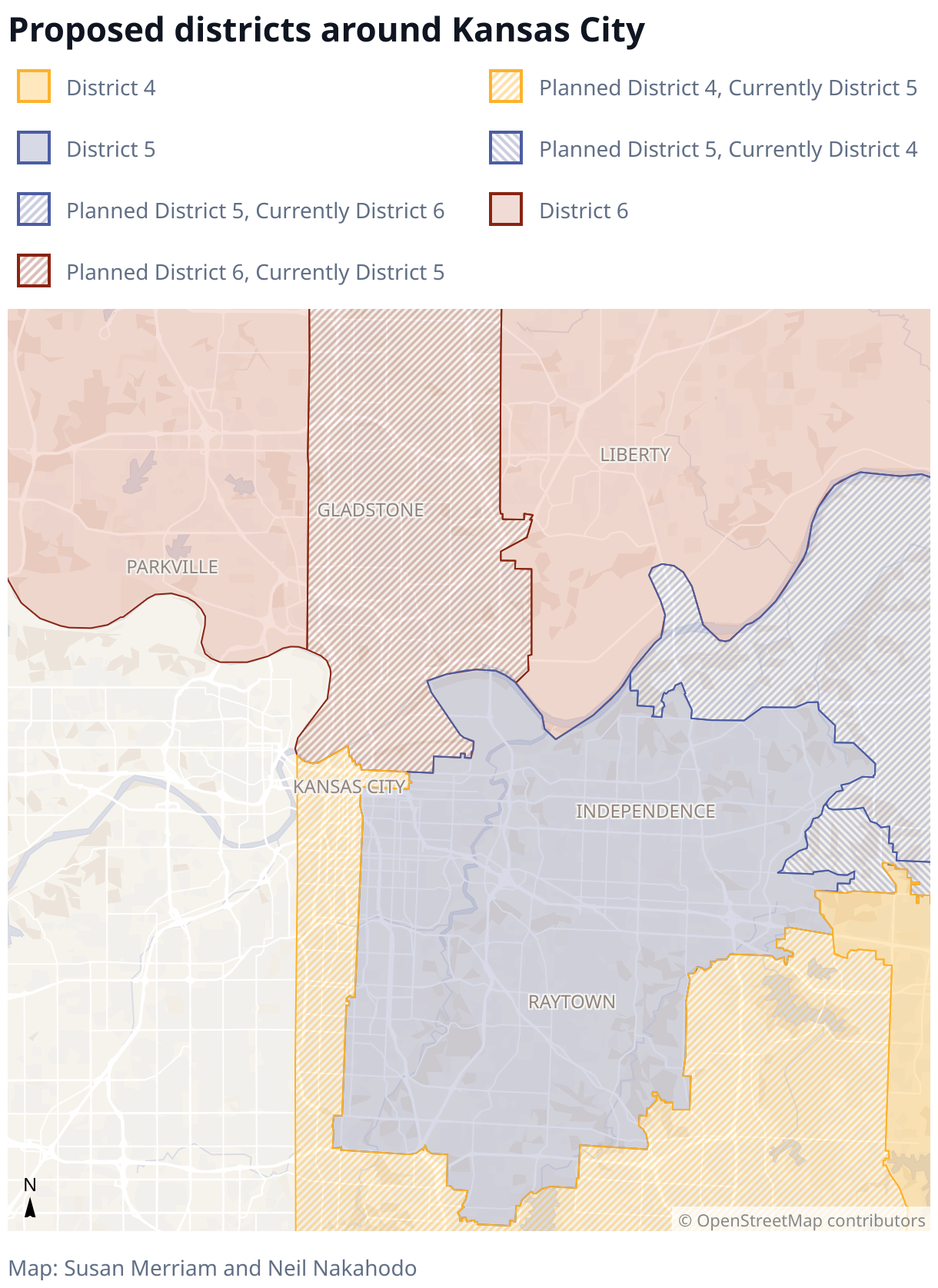
While the map is still awaiting Republican Gov. Mike Kehoe’s signature, the new 4th District would include Democratic-leaning voters in Kansas City and stretch from the city’s downtown to the Ozarks region.
“Regarding a candidacy, I will do whatever I can to ensure all Kansas Citians, including in a newly formed district, have a choice at the ballot box that represents Kansas City viewpoints and values,” Lucas said in a statement to The Star. “I do not believe that candidate is the current U.S. Congressman for the Fourth District.”
Due to the short time frame necessary to run a campaign ahead of the 2026 election, Lucas said candidates for the 4th District would need a “long record of fundraising, winning, and hold strong name identification in western Missouri.”
“While I certainly possess those characteristics,” Lucas said, “I remain committed to ensuring someone in our community presents a formidable and viable challenge to the incumbent, to support our voices in the next election and to require national and Missouri Republicans to expend their resources on a new, more competitive seat.”
Lucas’ position as mayor is nonpartisan, but he has often been aligned with Democrats.
Two Kansas City Democrats who spoke with The Star, Reps. Michael Johnson and Mark Sharp, echoed the idea that the 4th District would be competitive for Democrats under the new map.
“I think that Alford would have his hands full for sure,” said Johnson, referring to the possibility of Lucas running against Alford.
Johnson specifically pointed to several viral videos of contentious town halls where residents have criticized Alford. Alford has hosted a series of public forums around the state where some residents expressed displeasure with the Missouri Republican.
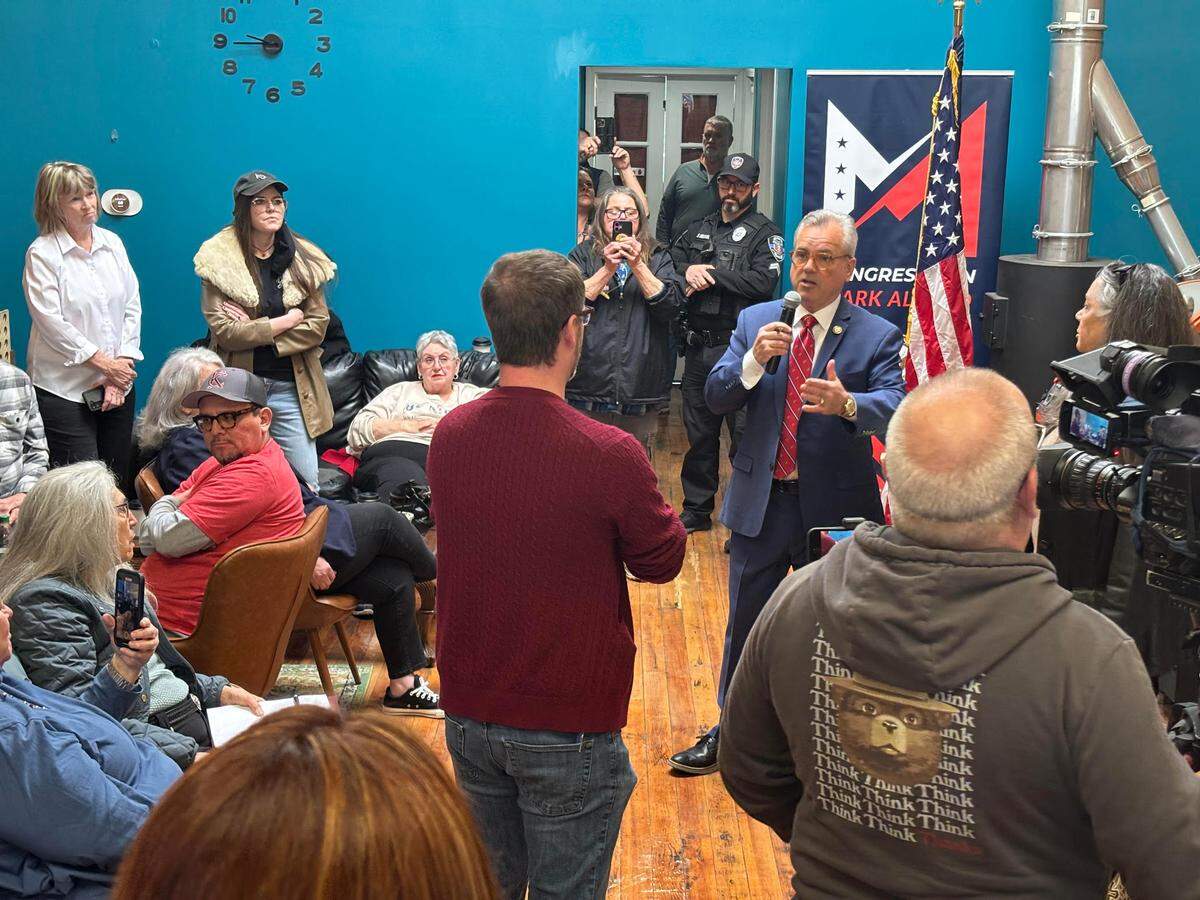
Alford, for his part, has remained confident that he would win under the new district lines. His campaign provided The Star with a poll it commissioned earlier this month from the GOP firm Remington Research Group, suggesting strong Republican support in the 4th District.
The poll of 655 likely voters suggests that Alford would win in a hypothetical race against Lucas, with 55% of respondents saying they would support Alford and 40% saying they would support Lucas.
“We welcome all challengers but make no mistake: we run to win!” Alford said in a statement provided by his campaign, which touted himself as the strongest voice for both versions of the 4th District.
Democrats eye new districts
National Democratic leaders have also actively recruited popular Missouri Democrats to run in the new Kansas City-area districts. Some of the names being floated include former Senate Minority Leaders John Rizzo and Jolie Justus and former Secretary of State Jason Kander.
Justus and Kander have told The Star they do not plan to run. Rizzo declined to comment on any potential campaign, pointing to ongoing efforts to strike down the map.
A spokesperson for House Majority PAC, a national super PAC designed to elect Democrats to the U.S. House, did not provide specifics about any efforts to support Missouri Democratic candidates in the newly-drawn Kansas City districts.
“HMP continues to assess all options as Republicans pursue a power grab across the country,” said spokesperson CJ Warnke. “HMP will do whatever it takes to take back the House, and will not rule out anything.”
Democrats also believe that they’re on the side of voters in pushing against the mid-decade redistricting effort. Recent polling from YouGov found that voters nationwide overwhelmingly oppose the practice of redrawing districts to favor one particular party.
The same is true in Missouri. A poll commissioned by the Democratic Congressional Campaign Committee and published by POLITICO found that nearly half of Missouri voters were against the Republican redistricting push.
However, political experts and a Republican consultant collectively told The Star that the new map would make it difficult for Democrats to win any of the Kansas City-area districts.
“I think they’ve done a pretty good job of drawing districts that are really favorable for the GOP,” said Matt Harris, a political scientist at Park University. “It’s not impossible, but it will be an uphill climb in the 5th and, you know, the 4th and the 6th even more.”
Gregg Keller, a Missouri Republican consultant, agreed in an interview with The Star.
“I think it’s going to be extremely difficult given the new map,” Keller said. “I think the map was, you know, in terms of its partisan makeup, from a Republican perspective, was written exceedingly well.”
The No. 1 goal
Despite discussions surrounding the map potentially backfiring, Democrats have directed most of their attention to striking down the map either in the courtroom or at the ballot box.
The map faces a barrage of attacks. Three separate lawsuits seek to block it from taking effect, while opponents are hoping to mount a referendum campaign that would ask voters to repeal it through a statewide vote.
Lucas made that effort clear, emphasizing in the statement to The Star that his main objective was to repeal the map and return Cleaver to Congress.
“I will keep working to raise money and attention for both the signature gathering effort and legal action filed to strike down the Washington-mandated map,” Lucas said.
Missouri Democratic Party Chair Russ Carnahan went a step further in an interview with The Star. He framed ongoing discussions surrounding potential candidates as a distraction.
“We’re not wasting any time or energy on maps that we think will never go into effect,” said Carnahan, a former Democratic congressman.
Carnahan said Democrats believe the map faces “serious legal hurdles” that could cause it to be struck down in court. If the map survives the legal challenges, voters will likely have the final say during a referendum vote, he said.
“We’re staying focused on the real remedy here,” Carnahan said. “And I think that’s going to, ultimately, be the citizens deciding this.”
For Kondik, the political analyst at the Center for Politics, the potential referendum campaign could be the strongest way for Democrats to fight against the map.
“That, to me, seems like the more plausible path is trying to put it in front of voters, as opposed to actually competing on it next year,” Kondik said. “Because it just seems really difficult.”
This story was originally published September 25, 2025 at 5:30 AM.