Missouri’s gerrymandering plan would drastically change how KC votes. See how
Kansas City voters are in the crosshairs of a Republican plan to gerrymander Missouri’s congressional map.
When Missouri Republican lawmakers head to the state Capitol this week, they plan to carve up the Democratic-leaning Kansas City area into three Republican congressional districts amid pressure from the Trump administration.
The move would effectively dilute the voting power of Missouri’s largest city, combining the voters in Kansas City’s urban areas with residents living in the rural, Republican-leaning parts of the state.
The goal is to push out U.S. Rep. Emanuel Cleaver, Kansas City’s longtime Democratic congressman, and allow a Republican to pick up his 5th Congressional District seat.
Missouri Republican Gov. Mike Kehoe unveiled a copy of the gerrymandered map on Friday and President Donald Trump quickly ordered Republican lawmakers to pass it “AS IS.”
Under the state’s current map, which was approved in 2022, Kansas City and its nearby suburbs are largely within the 5th District.
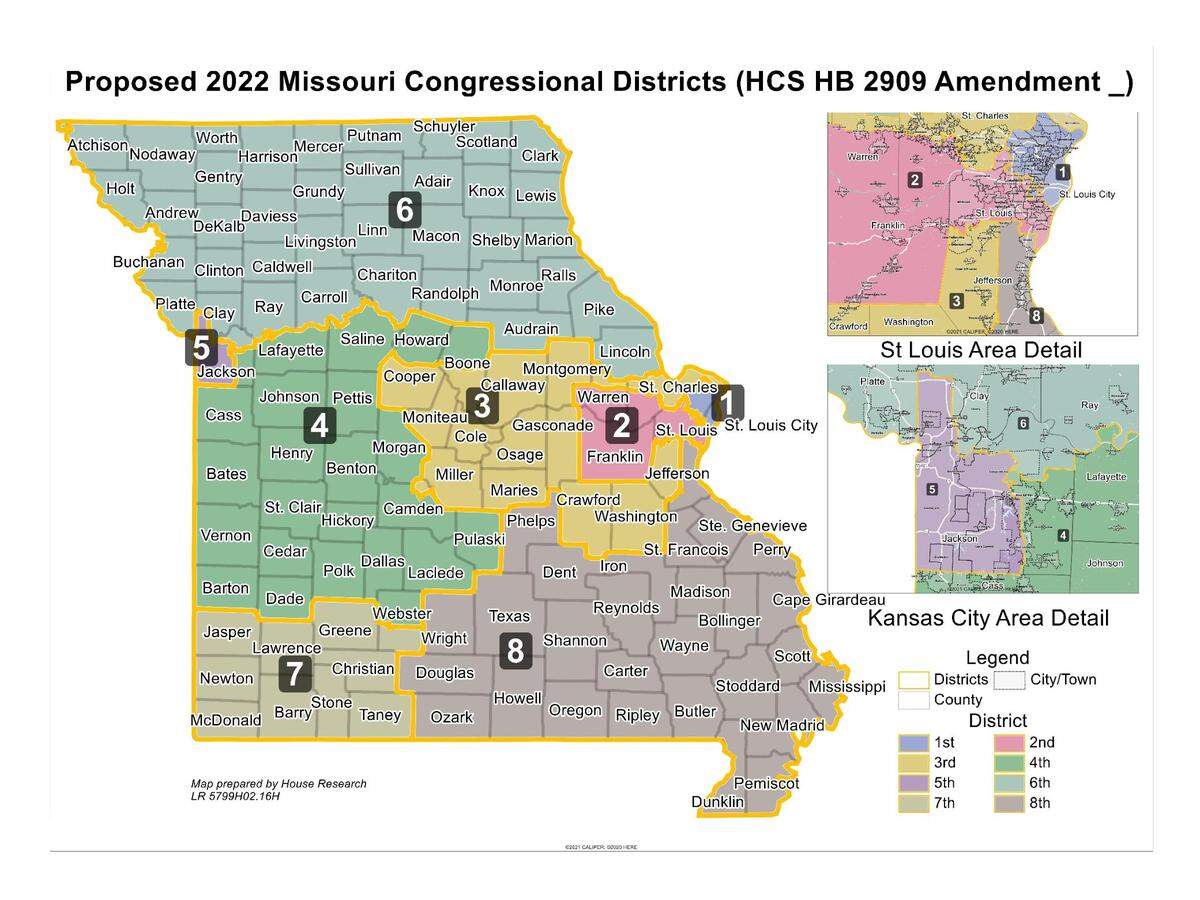
The map promoted by Kehoe and the Trump administration would slice up the city into three districts, but the districts are grainy and difficult to determine actual boundaries.
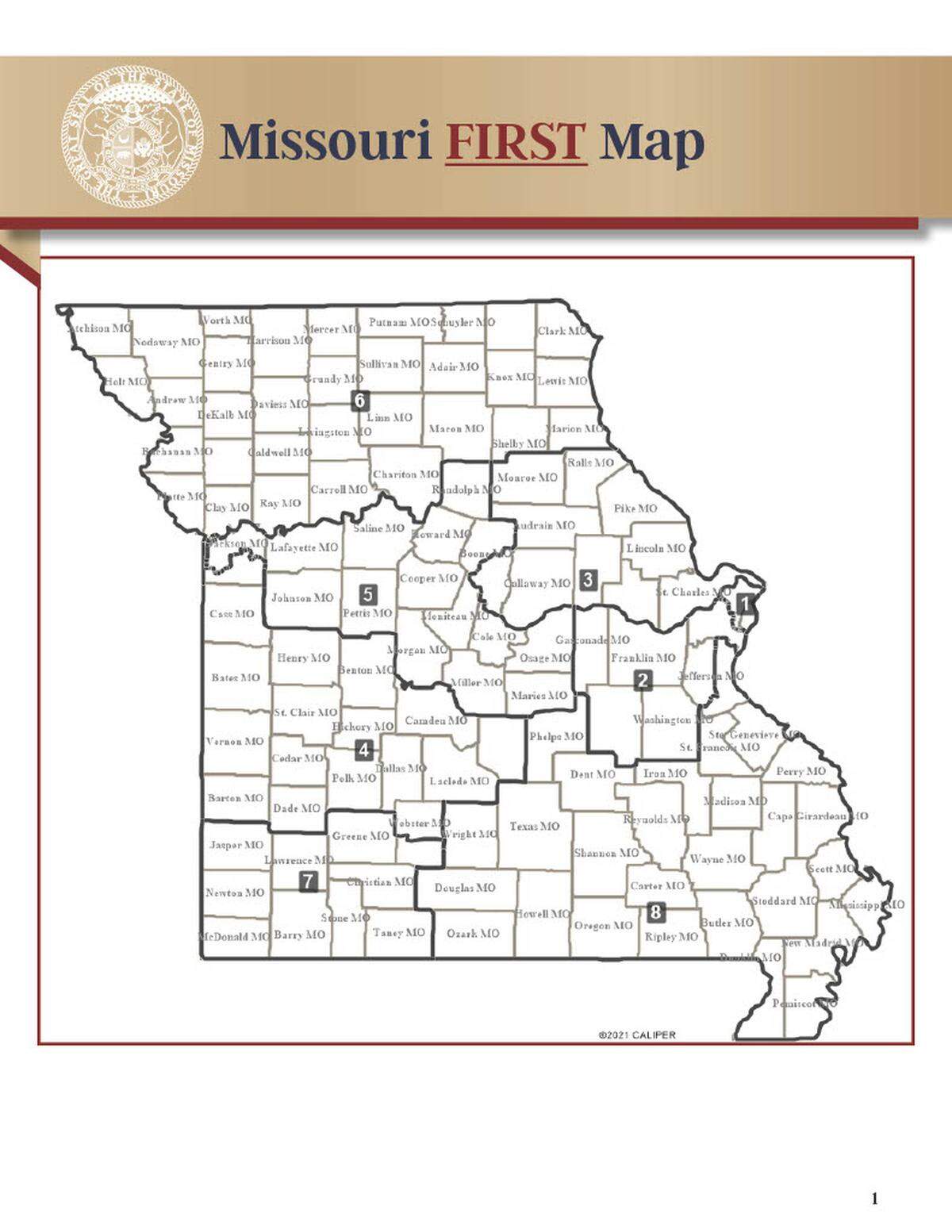
The general outlines of each proposed Kansas City district are:
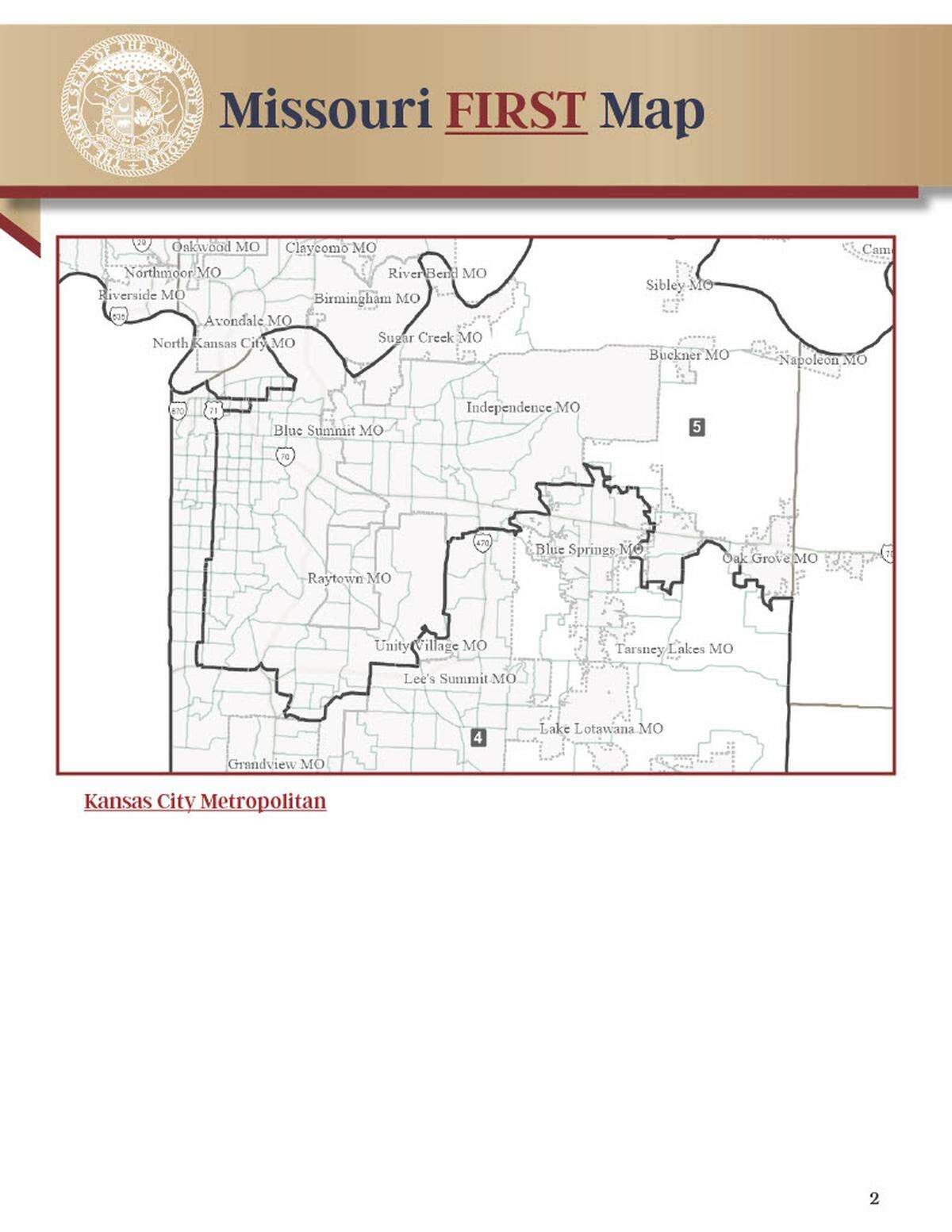
4th District (Currently represented by U.S. Rep. Mark Alford): The northern part includes a thin handle between Missouri’s border with Kansas to the west and U.S. 71 to the east. It scoops up Kansas City’s urban areas, running from Interstate 670 all the way south to Grandview. The district then expands to include the Republican-leaning counties in Missouri’s Ozarks region.
5th District (Currently represented by U.S. Rep. Emanuel Cleaver): Stretches from U.S. 71 to the east all the way to the rural cities and towns across central Missouri. It combines the voters in eastern Jackson County (including Kansas City, Raytown and Blue Summit) with voters hours away in places like Jefferson City, Maries County and Osage County.
6th District (Currently represented by U.S. Rep. Sam Graves): The voters in the Kansas City area’s Northland, including Clay and Platte counties, would be included in a district that stretches across northern Missouri.
Redistricting timeline
The proposed map faces fierce backlash from opponents, who frame the unprecedented mid-decade redistricting effort as an illegal attempt to dampen the voting power of Kansas City and ensure Republican control of Congress.
Critics point to the fact that Republicans are already overrepresented in Missouri’s congressional delegation compared to Missouri’s voting history.
In the 2024 election, for example, 58.5% of Missouri voters elected President Donald Trump, the Republican, while 40.1% voted for Kamala Harris, the Democrat.
Meanwhile, Republicans currently control six of the state’s eight congressional districts or 75% of Missouri’s representation in Congress. Under Kehoe’s proposed map, Republicans could make up nearly 90% of that representation.
Despite the opposition, Republicans have pressed forward with the plan. Kehoe has cast the proposed map as a way to protect “Missouri’s conservative, common-sense values.”
Debate over the map will likely start in the Missouri House, where lawmakers are expected to hold public hearings in Jefferson City this week. A hearing schedule has not been released but committee hearings will likely begin on Thursday.
A House session schedule, obtained by The Star, shows that debate on the House floor could begin next Monday after lawmakers hold hearings this week.
A Senate session schedule indicates that, if the House passes the map, senators plan to take up the legislation by next Wednesday, Sept. 10.
If passed by both chambers, the new map would head to Kehoe’s desk for his signature. Lawmakers could adopt an emergency clause allowing the map to take effect immediately upon Kehoe’s signature ahead of the 2026 elections.
However, the map is likely to run into legal challenges that could delay its implementation.
This story was originally published September 2, 2025 at 1:01 PM.