Kris Kobach asks Kansas Supreme Court to reverse trans driver’s license ruling
AI-generated summary reviewed by our newsroom.
- Kris Kobach petitions Kansas Supreme Court to block gender ID marker changes.
- Court of Appeals ruled in June to uphold gender marker changes on state IDs.
- Supreme Court must now decide whether to review or decline Kobach's request.
Attorney General Kris Kobach isn’t ready to accept a ruling that would allow transgender Kansans to change their gender on driver’s licenses and state identification cards for the first time in two years.
Kobach’s office is petitioning the Kansas Supreme Court to reverse last month’s Court of Appeals decision, which vacated a temporary injunction and permitted the Department of Revenue to resume its practice of accommodating gender marker change requests.
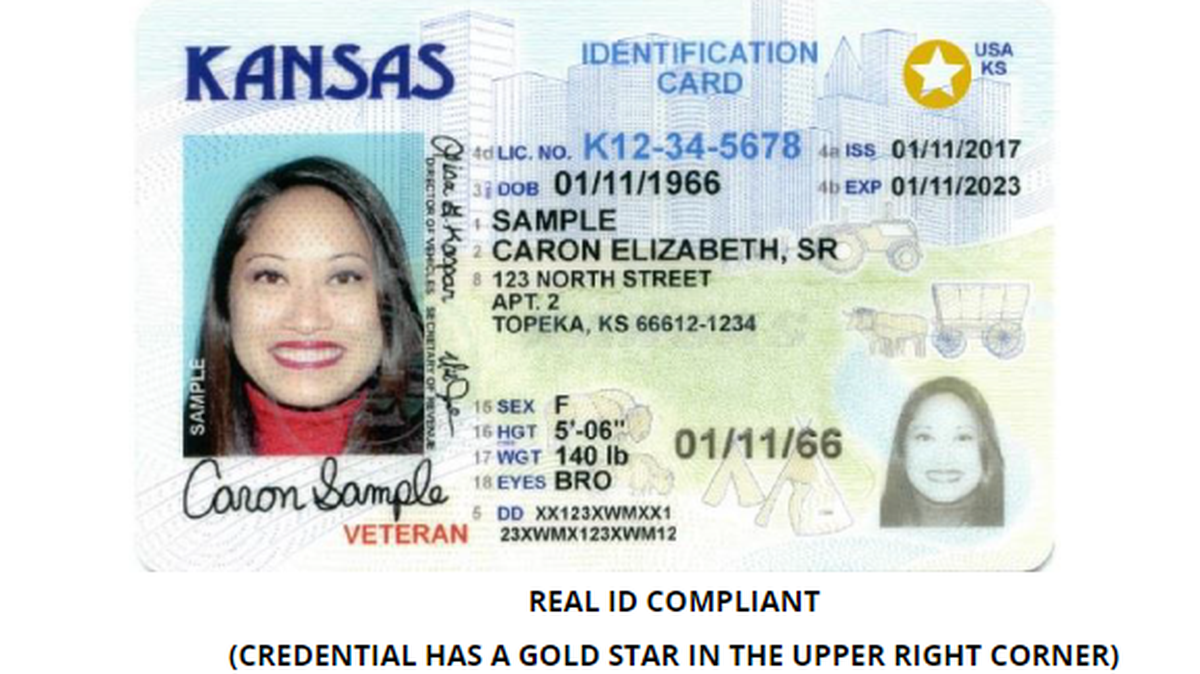
Licenses note the driver’s sex with either an “M” or “F” along with their height, weight and eye color.
Kobach sued KDOR over the practice of altering IDs, asserting that transgender Kansans should not be allowed to have documentation that reflects their identity under a 2023 state law barring trans people from single-sex spaces that was enacted over Gov. Laura Kelly’s veto.
In a statement to The Star, Will Rapp, managing director for the Kansas chapter of the Gay, Lesbian, and Straight Education Network, called on the state Supreme Court to uphold the appeals court ruling and “affirm the fundamental rights of trans Kansans to live as their authentic selves.”
“Denying transgender people the ability to update their driver’s licenses and state IDs is not only discriminatory — it puts them at an increased risk of harassment, violence, and systemic barriers to healthcare, employment, housing and education,” Rapp said.
The Supreme Court will now decide whether to grant review of the case or decline the AG’s request, which would vacate the temporary injunction issued by Shawnee County Judge Theresa Watson while the lawsuit works its way through the courts.
Kobach’s argument
In the petition for review, Kobach disputed the Court of Appeals’ assessment that “sex” and “gender” have distinct definitions under Kansas law.
The AG argued the two terms are interchangeable — a key contention used to justify how the ban on trans people in single-sex spaces applies to gender markers on state IDs.
“Up until recently, ‘gender’ was seen by many as a more polite way to refer to biological sex, without the salacious implications of the word ‘sex,’” Kobach wrote.
He also claimed the Court of Appeals placed too high a burden on his attorneys to demonstrate how the state might be harmed if trans Kansans are allowed to change a letter on their IDs.
“The State does not need to prove harm will definitely occur,” Kobach wrote. “... Instead, the State only needed to show a ‘reasonable probability’ of an irreparable future injury exists, which is a much lower standard than the applicable burden at trial.”
Kobach argued that KDOR’s refusal to comply with his interpretation of the 2023 statute undermines the state’s ability to enforce its laws. He also argued that allowing gender marker changes could confuse law enforcement and allow suspects to escape — a claim the appeals court rejected outright.
“No one was able to bring forward any instance of the feared harm of misidentification of criminals in the last 16 years or even the potential that it could be a problem,” Judge Karen Arnold-Burger wrote in the June ruling. “Instead, the evidence was overwhelming that there was no harm.”
Kobach pointed to the testimony of Shawnee County Sheriff Brian Hill.
“He testified regarding a specific instance in which a perpetrator attempted to evade arrest by changing the sex designation, so that it did not match the perpetrator’s sex when the crime was committed,” Kobach wrote. “When the perpetrator was run through the database with the new (changed) sex marker, no criminal history appeared.”
Kobach also asked the state Supreme Court to reverse the appeals court’s order that the remanded case be presided over by a Shawnee County Judge other than Watson, who initially granted the injunction blocking gender marker changes.
Watson has handled the case impartially, Kobach wrote, and there’s no reason to believe that she will be unable to reach a final decision “in a fair and neutral manner.”