She served in a war zone. Now a Trump-era ban set to end her military career
Sitting in a coffee shop near downtown KC, U.S. Army Maj. Kara Corcoran talks with passion about the country she’s served for more than 17 years.
Commissioned as an infantry officer in the Army on May 10, 2008, Corcoran has served two tours in Afghanistan, attended Ranger and Airborne schools and earned two master’s degrees, receiving the most recent one at Fort Leavenworth in May.
Yet now, the 39-year-old is facing dismissal, soon to be kicked out of the service where she’s spent nearly all of her adult life. All because President Donald Trump has deemed her and many others in uniform as unfit for service.
Corcoran is among thousands of transgender military members who, based on an executive order signed by Trump soon after he started his second term, are now banned from serving.
“I’m an American,” Corcoran says, her voice strong and determined. “I swore to defend the Constitution of the United States of America. And just like thousands of other service members, we swore an oath to defend this constitution, the cherished institutions of America, and if need be fight and die for this country.
“... I transitioned to optimize my performance and become the best war fighter that I could be. And that’s exactly what I did, and that’s who I am today.”
Yet, according to Trump’s order, that’s not how he sees transgender service members.
“A man’s assertion that he is a woman, and his requirement that others honor this falsehood, is not consistent with the humility and selflessness required of a service member,” the order said. “... For the sake of our Nation and the patriotic Americans who volunteer to serve it, military service must be reserved for those mentally and physically fit for duty.”
In the wake of the order, some transgender military members have opted for voluntary separation — where they’re eligible for separation pay and won’t have to repay any bonuses received.
Others, like Corcoran, have decided to involuntarily separate, meaning they’re not choosing to leave the military but are being removed. Those who choose that option receive less money and may be required to pay back bonuses.
Transgender military members with 18 to 20 years of service can apply for early retirement. But for Corcoran, she’s less than a year short of that.
Service members with 15-17 years of service have the option of applying for early retirement, but that is not guaranteed.
That means Corcoran could lose all the retirement pay and benefits she’s worked for since 2008.
“I joined the military because I love this country and the thing that I hate is just seeing everything that I stood for, all the American values that our founding fathers truly believed in,” being diminished, Corcoran said. “It’s disheartening because we are stepping back almost 50 years on human rights, especially for the LGBTQ community.”
If the United States “wants people with the greatest talent of this country,” Corcoran said, “then you’re going to accept everyone, regardless of who they are.”
‘Extremely unfair’
Retired Army Major General Tammy Smith said she feels “especially close” to this group of transgender service members affected by the ban because of what she experienced as a gay woman in the military. For 25 of her 35 years in the Army, Smith said she served under the ban on gays and lesbians.
“So I lived a bit of what this population is experiencing in terms of the ignorance and the inability to speak up for yourself because we weren’t allowed to identify ourselves,” said Smith, who is the first openly gay general or flag officer to serve in the U.S. military.
What’s happening to transgender military members, she said, is “extremely unfair and violates the trust and promises that were made to them by the Department of Defense.”
The retired major general first met Corcoran when Smith was a member of a panel in 2018 speaking to a multi-national student population at Fort Benning, Georgia on LGBTQ rights in the U.S. military. Since then, Smith has admired the advocacy Corcoran has provided and “the courage she’s demonstrated.”
“These are individuals who have already been serving the nation as volunteers, and who, because the Department of Defense told them it was safe to come out, came out,” Smith said. “And lived their life as a transgender person.”
“When the initial policy was changed to allow these individuals to serve, they trusted the Department of Defense that if they outed themselves, that no harm would come to them. … It just feels like this whole group has been betrayed.”
In recent months, Corcoran said, she’s experienced “bouts of anger, sadness and grieving because you’re losing your job and it’s been your career.”
But she said that “losing the things that I earned” isn’t want impacts her the most.
“It’s the fact that I fought in Afghanistan twice, and I’ve been all over this country, and I see how amazing it is, and we’re creating a narrative that’s destroying an entire people,” Corcoran said, referring to the transgender community.
“Transgender service members have been deployed all over the globe for the last decade. And it’s not about just losing your profession, it’s about losing your livelihood for you and your family and your commitment to your country.
“We want to continue to serve our country that we love.”
Thinking she was stuck
As a kid growing up in Massachusetts, outside Boston, Corcoran knew she wanted to be in the military. She saw herself following her father, who graduated from West Point and spent five years in active duty Army and then 10 years in the National Guard.
Corcoran said she had “good parents,” who believed in American values. She and her sister — also a transgender woman who served two decades in the Army before retiring recently – were taught to ‘love thy neighbor’ and care for other people.
“They taught us good, core family values, traditions,” she said. “I couldn’t have asked for a better childhood that they fought hard for as they both worked.”
Mom, a German immigrant, was a nurse. Dad, after service in the military, worked in the corporate world.
Corcoran was around 4 years old when she said first felt like she was born to be a girl. But there wasn’t the education for those feelings in the 90s, and Corcoran kept those thoughts secret.
She played Pop Warner football at a young age, then took up wrestling in high school.
“I did all those things, checked all those boxes,” Corcoran said.
But never living as her “authentic self.”
At Norwich University, a military college in Vermont, Corcoran realized that maybe it was possible that one day she could live as the woman she said she knew she was. Yet, she remembers thinking it wasn’t going to happen if she was in the military.
“I can’t be a woman in combat, so I can not transition,” she recalls thinking 15-20 years ago. “And I can’t be trans in the military, let alone gay. So I guess I’m just stuck.”
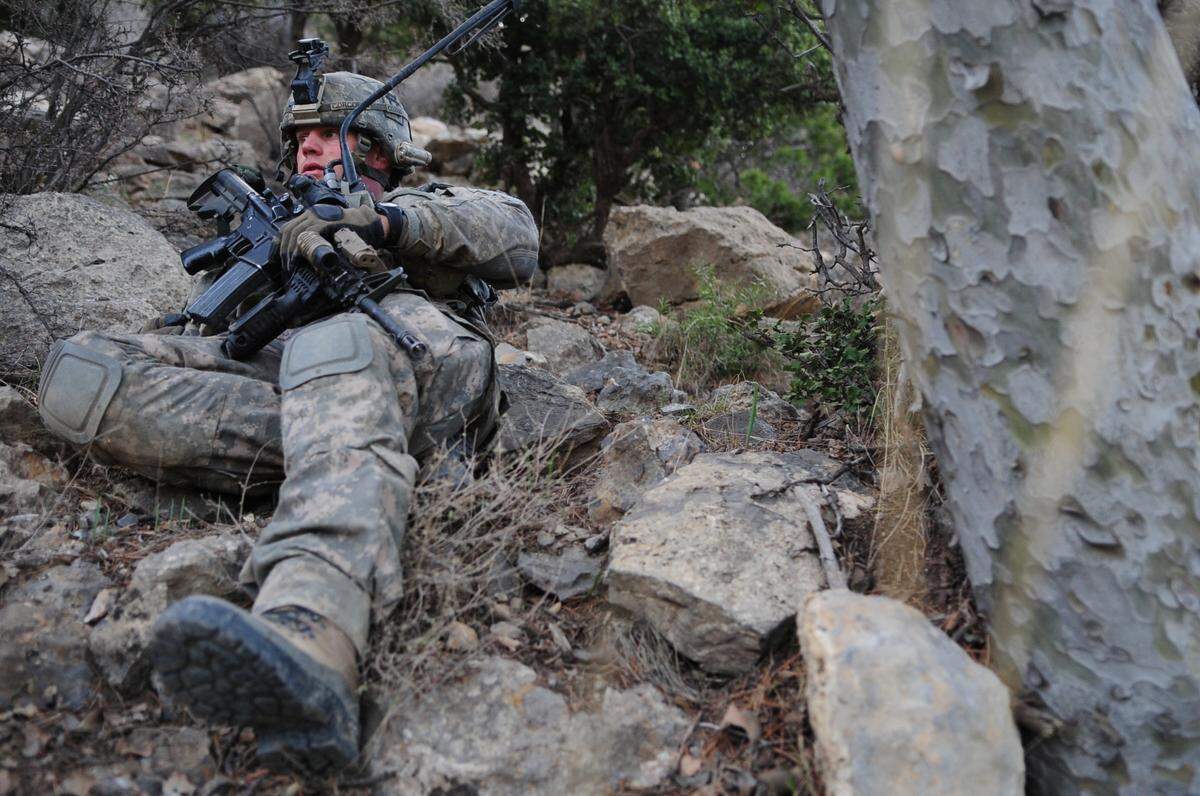
After serving in a war zone, Corcorcan’s mind shifted.
“When I was about 25 years old, and I came back from Afghanistan, after you know, some near death experiences, and you sit back and reflect, ‘I really need to do something about this.’”
But it would be years before she actually did.
An emotional meeting
In late December 2015, former Secretary of Defense Ash Carter — who served under President Barack Obama — announced that all military occupations and positions would now be open to women, without exception.
Then, more than six months later, on June 30, 2016, Carter ended the ban on transgender individuals serving in the military. It wouldn’t be until the next year that soldiers would begin to be educated as a group on the new policy.
Corcoran, who was an observer coach/trainer at the National Training Center in southern California then, purposely found a seat in the back of the class knowing the session wasn’t going to be an easy one.
“I wore my emotions on my sleeve,” Corcoran said. “And I was not ready to expose myself at that time.”
Some in the training “just screamed and ranted and raved about how horrific transgender people are,” Corcoran said. That included questions like, ‘What are they going to do in the showers?” And thoughts like, ‘I can’t believe they’re gonna let these deranged people around my kids.’
“I just sat back, and I was like, these people have no idea who transgender people are and all they are, it’s just reciting what they’ve heard.”
They also had no idea the secret Corcoran kept.
Corcoran’s wife at the time was stationed at Fort Carson, Colorado. She didn’t know the extent of what Corcoran was going through until years later.
“I lived a double life at that point,” Corcoran said. “I was going to work as a man and I would come home, change as a woman.
“I was well past the point of knowing that I needed to transition, but I also knew, especially after that training, that I was not in the right environment.”
And she felt so isolated at that point that she wasn’t ready to come out.
“Despite all the things that I’ve done — major school, jumping out planes, doing all this stuff — I still didn’t have the bravery or the strength to just come out and be my authentic self,” Corcoran said. “Because I knew I was going to lose my friends, my family, my finances, my life.
“Everything that I knew, to be who I was, I knew I was going to lose that, and it was something that I just mentally was not ready for.
“And then when it happened, it became a challenge.”
Becoming Kara
Within a period of a few days in 2018, Corcoran became a parent of twin girls with her wife and began to transition to a transgender woman in the military.
The next year was tumultuous for her and her family.
And dealing with the views of the outside world hasn’t been easy. But she knows it was worth it.
“I’m better because of who I am and my ability to transition,” Corcoran said. “And I’m not going to let the hate of others and discrimination continue to bear me down. Instead, I’m going to use it to continue to be stronger and strengthen myself because that is what people who are fighters do.
“The way to fight is to continue to fight.”
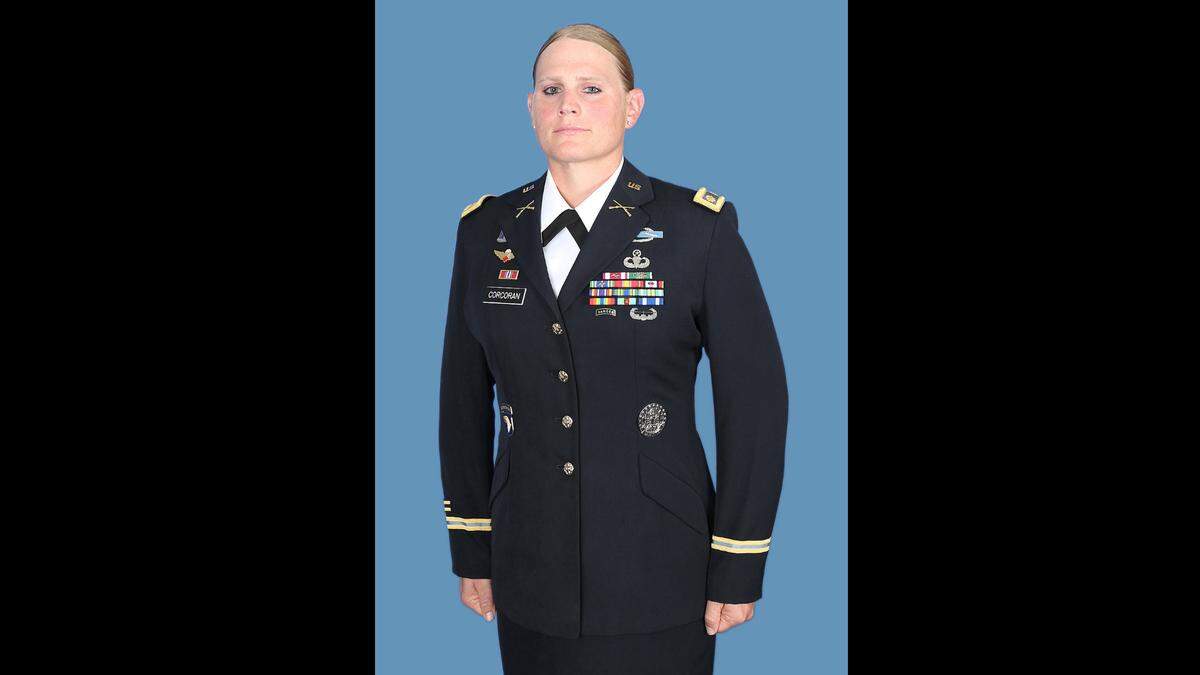
Corcoran is vice president of Sparta Pride, a non profit organization offering advocacy and support to all transgender service members. She often talks with members who need help and guidance.
And the Army Major continues to focus on her love for her country and serving.
Smith, the retired Army major general, said Corcoran is showing “moral courage perfectly in line with the personal courage of her Army values.”
“She’s exhibiting the loyalty that we expect of our soldiers. She hasn’t missed a beat on her responsibility for duty.
“I often believe that at the end of the day, these policies are designed — when they’re attacking a class of person for who they are — to try to strip your dignity from you. And Kara is holding on to her dignity and she understands what it means.”
Corcoran’s marriage ended. She’s lost friends. And now she’s losing a career.
What people aren’t getting, she said, is that transitioning only improves who transgender people are.
“When you lose everything and you go through this roller coaster, you can either survive or you can thrive, right?” Corcoran said. “What people don’t understand is transgender people, because they’ve experienced both sides of the coin of life … we’re some of the most resilient people that you’ll ever meet.
“So bring it. What are you gonna do?”
A decision in May
Two days before her graduation, before she would accept her Master of Arts in Military Operations, Corcoran learned that plans at Fort Leavenworth had changed.
Command staff told her that they had spent the “last 96 hours fighting this” and then, she said, they delivered a list of options on how she could get her diploma.
“The only way I was going to be able to cross the stage with my peers is if I was in male regulation,” Corcoran said. That meant a male uniform and short hair.
She had just spent 11 months there at the U.S. Army School of Advanced Military Studies’ (SAMS) Advanced Military Studies Program (AMSP). And she said she was proud of what she and her peers had accomplished together.
“I was not going to compromise or sacrifice my character to not walk across the stage and receive what I earned.”
Lt. Col. Bryen Freigo, a U.S. Army Combined Arms Center spokesman at Fort Leavenworth, said prior to the May 22 graduation ceremony, “Maj. Corcoran was offered options recommended by the TRADOC Staff Judge Advocate, aligned with Department of Defense policies regarding gender dysphoria.”
These options, Freigo said, included not participating in the ceremony, participating under male grooming standards or holding a private graduation with family and friends.
“The U.S. Army Combined Arms Center sought options that adhered to Executive Orders and Department of Defense Directives while respecting the dignity of the soldier,” Freigo said. “Maj. Corcoran ultimately chose to participate in the graduation ceremony while adhering to male grooming standards, as outlined in Army Regulation 670-1.”
Corcoran had started growing out her hair when she transitioned in 2018. She liked the long locks that hung past her shoulders and that she’d often wear in braids.
The day before graduation, though, she got a hair cut. And borrowed a fellow soldier’s male uniform.
Corcoran doesn’t blame her chain of command at Fort Leavenworth. They were having to implement the guidance from a higher level, she said.
For now, she’s planning her next move and life after the military. Not because she wants that, but because she’s being forced to leave.
She’s set to move west soon, to Colorado where she loves to ski, trail run and hike.
“It’s got everything that I love wrapped up into one,” she said.
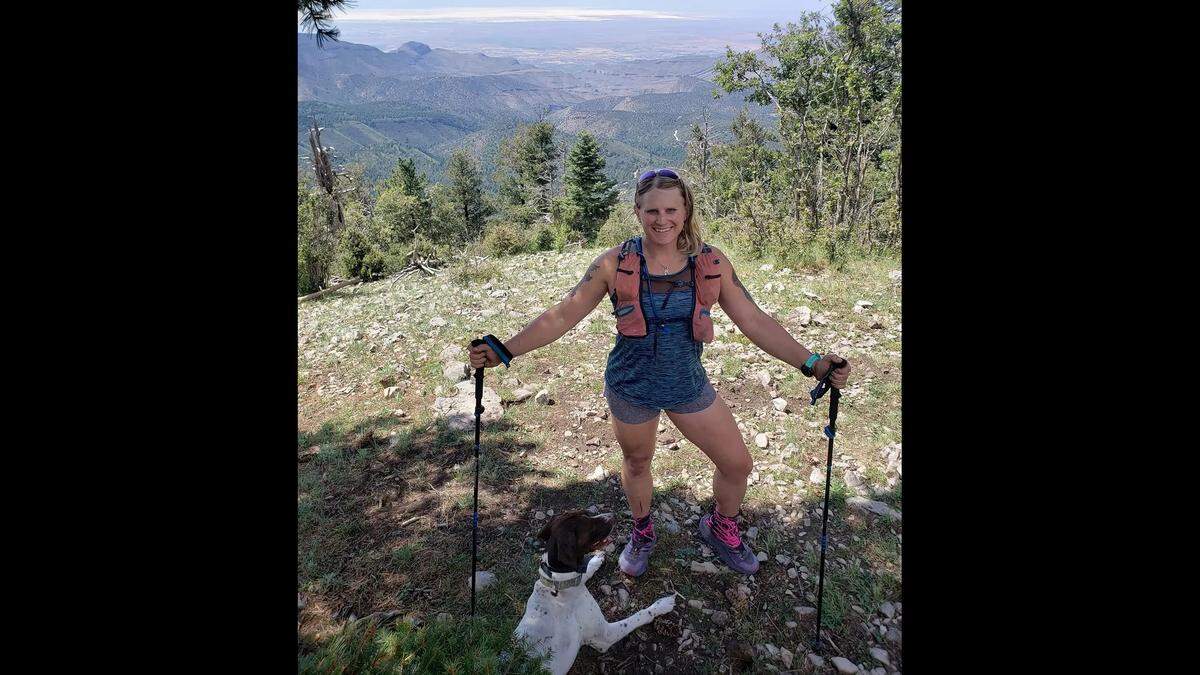
She and two close friends — who are also transgender service members affected by the ban — plan to move into a house together. And live their authentic lives.
In her last days in the military, Corcoran hopes people hear a message. And begin to understand more about her and other transgender service members.
“I’m American,” she said. “I’m a normal human being. … I, just like thousands of transgender service members, continue to get tossed around through this horrible process, and at the end of the day, we were just trying to simply serve our country.
“And for a lot of us, we’ve been serving for the majority of our lives to fight for this country that is based upon the American values of life, liberty and the pursuit of happiness. We are not only doing that, but we’re also doing it in a manner that allows us to optimize our performance.”