
Ebola has potential to stir irrational fears in Americans, some experts say
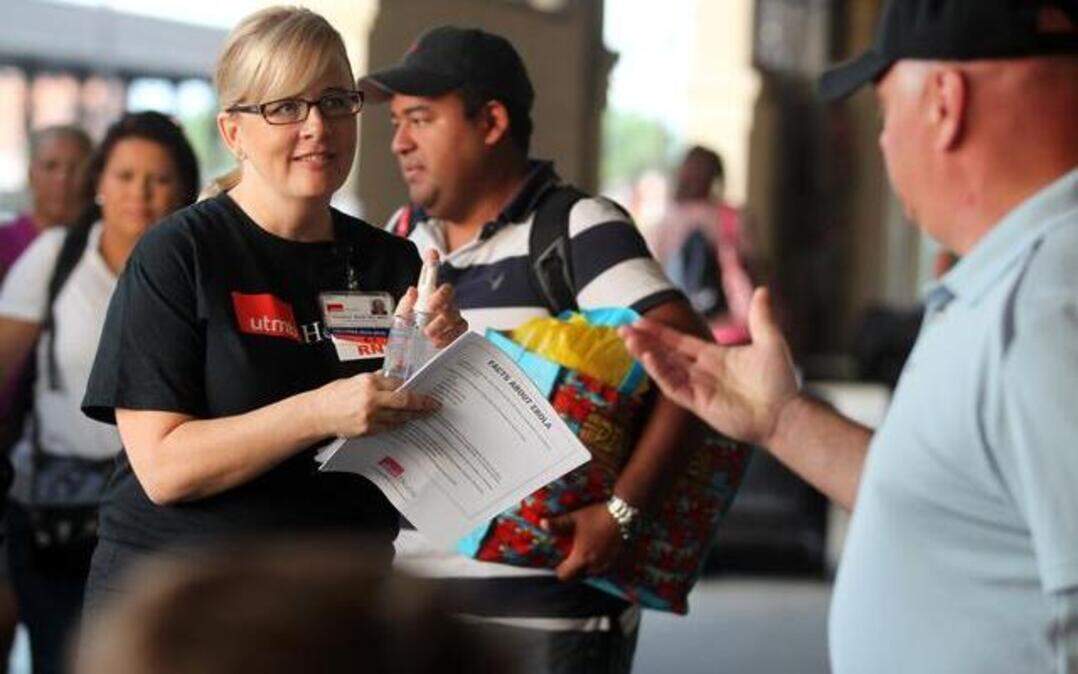
The first wave of people, including the fiancee of Ebola victim Thomas Eric Duncan, will emerge from a state-ordered, 21-day quarantine today, which should probably spark relief.
But church officials are considering extra security for Louise Troh and her children amid ongoing fears about Ebola across Dallas-Fort Worth — and throughout the United States.
Experts who study psychology say the release of 48 people from the Ebola watchlist back into society, and the expected onslaught of news coverage about them shopping at local grocery stores and returning to schools could fuel another wave of irrational fears.
They say the next few weeks could be crucial to understanding whether the hysteria will begin to dissipate or continue to spread as other public and business leaders across the country announce precautions being taken to monitor those with even the slightest interaction — or potential interaction — with the virus.
“Ebola is very much in the public imagination right now,” said Andrew Noymer, a sociologist who studies infectious diseases at the University of California, Irvine. “It’s not a science-based fear.”
Troh issued a statement Sunday thanking the community for its support and asking for privacy as she and her family monitor their health.
“We are so happy this is coming to an end, and we are so grateful that none of us has shown any sign of illness,” she wrote in the statement, which also mourned the loss of her fiancee, Duncan.
“Our hearts also go out to the two brave women who have been infected by this terrible disease as they were trying to help him,” she wrote. “We are also aware of how much this has affected many other people of my city, Dallas, and my country, the United States of America, even as it has in the country of my birth, Liberia.We also know that many people who work in Presbyterian Hospital are hurting because of this tragedy. We pray that God will bring healing to all in our community soon.”
Ebola has killed about 4,500 people in West Africa. But the chances of infection in the United States remain extremely low. Only one person has died in the United States, and two medical workers have caught the disease.
A Washington Post-ABC News poll last week found that nearly two-thirds of Americans were concerned about a widespread Ebola outbreak. President Barack Obama assigned an Ebola czar, and lawmakers have called for travel bans. Late last week, a Caribbean cruise ship held a passenger in quarantine after learning the person had worked with Duncan’s lab samples at a Dallas hospital.
But Michael Telch, a professor of psychology who studies anxiety disorders at the University of Texas at Austin, sees many of these steps as overreactions that only perpetuate national anxiety. He said he’sbeen receiving text messages from his patients at all hours of the night being worried whether they’re going to contract Ebola.
“It’s the bombardment of stories,” he said. “I haven’t seen one story about contracting the flu even though many more people die of the flu than Ebola each year.”
This story was originally published October 20, 2014 at 12:30 AM with the headline "Ebola has potential to stir irrational fears in Americans, some experts say."