Chiefs, Royals futures still uncertain as Missouri plan nears law. Here’s why
Missouri’s plan to offer the Kansas City Chiefs and Royals a new stadiums incentives package is close to becoming law as lawmakers push aggressively to keep the teams inside state lines.
But what happens after that is far from certain.
The legislation, which cleared the state Senate early Thursday morning, is poised to pass easily through the House next week and head to Republican Gov. Mike Kehoe’s desk for his signature.
The funding plan, if passed, would allow Missouri to offer incentives to cover up to 50% of the costs for a new or improved stadiums for the teams. At the same time, Kansas is trying to lure the teams across state lines through a supercharged bonds program that could pay for up to 70% of new stadiums.
The bill required lengthy Senate negotiations viewed as the largest hurdle to moving it across the finish line. Kehoe framed it as “a historic economic development package” that would strengthen Missouri’s economy, despite years of research that show stadiums aren’t major economic drivers.
A spokesperson for Kansas City Mayor Quinton Lucas said the mayor was “a strong supporter” of the legislation, saying it would ensure the teams “remain in their hometowns for generations to come.”
But does it ensure they would remain in Missouri?
“It’s the most important step, but it’s still just the first step,” Kansas City Councilman Wes Rogers from the 2nd District said Thursday. “The Kansas offer is still there. It’s still a good offer. It’s still very real. All this does is give us an opportunity to compete.”
The Chiefs and Royals are planning to decide this month where to secure their future homes and haven’t committed to either state — even if Missouri approves the plan, their lobbyists told lawmakers. For Missouri’s pitch to work out, the teams also need funding commitments from local governments, according to the language of the incentives proposal.
They tried that once — and failed.
In April 2024, the Chiefs and Royals attempted to obtain local funding before securing state funding. They asked Jackson County voters to extend a 3/8th-cent sales tax for up to 40 years, only to see voters reject that proposal.
If the teams prefer to stay in Missouri, they would likely need to return to a ballot and therefore, potentially return to a voting base that recently turned them down.
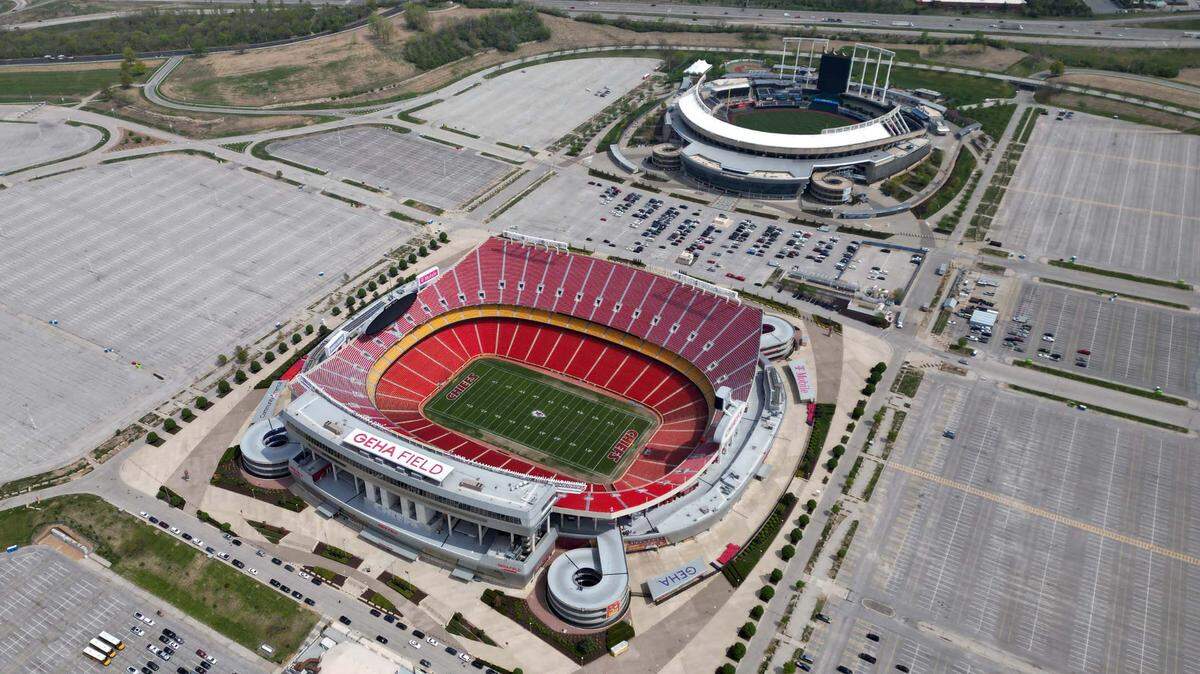
A Chiefs plan in Missouri centers on renovating Arrowhead Stadium. Team president Mark Donovan has told The Star that pursuing that option would include placing a Chiefs-only measure on the Jackson County ballot.
The Royals could make a similar — but separate — ask of Jackson County if they fulfill their original vision of moving downtown. Their talks with City Hall have concentrated on a site at Washington Square Park.
But the baseball team has had conversations about other Missouri locations, as well, including a Merriman family-controlled site in North Kansas City in Clay County, sources told The Star last month. That’s in addition to the team’s explorations in Kansas, which include the former Sprint Campus (now Aspira) at 119th Street and Nall Avenue.
After the April 2024 vote, the Chiefs and Royals agreed to part ways on their projects and consequently would appear separate in any ballot proposals.
Missouri vs. Kansas
Inside the Missouri Capitol this week, lobbyists from the Chiefs and Royals urged lawmakers to approve the statewide plan, which they described as competitive with Kansas. But while the teams outlined their lines, if they decide to stay, neither would actually commit to Missouri.
“The Kansas proposal is better in the respect that we don’t need a local vote and in the respect that it would cover up to 70% of the construction,” Chiefs lobbyist Rich Aubuchon told senators on Tuesday. “But it’s new construction. It is also not going to be the loudest stadium in the world. You don’t have the allure of Arrowhead.”
As for the Royals, lobbyist Jewell Patek emphasized that the team also needed additional commitments from either Jackson County or Clay County — both of which have been floated as potential stadium spots — and have not received those yet.
A commitment in Jackson County is far from certain — and it proved a significant challenge ahead of the April 2024 vote. Jackson County Executive Frank White vetoed ballot language for the sales-tax extension before the county legislature overrode that veto to place the measure in front of voters.
The voters sided with White. The county executive, in a statement on Thursday, appeared to throw some support behind Missouri’s stadiums plan and suggested it allowed the state to carry some of the financial responsibility for the teams.
“We remain committed to working with our partners at every level to support a future that is more balanced, more sustainable, and ultimately more fair for the people of Jackson County,” White said.
Inside Missouri’s push
Final approval of the Missouri plan is not a certainty. But the bill faces a significantly easier road once it reaches the House next week. When Kehoe first unveiled the initial version of the plan during the regular session last month, that chamber overwhelmingly passed it before it died in the Senate.
“I feel pretty confident we’ll get it out,” said Rep. Chris Brown, a Kansas City Republican who is expected to handle the legislation. “It would be very surprising and exceedingly disappointing if we did not.”
But even Brown’s optimism about Missouri’s ability to put a competing offer on the table was laced with a sense of urgency. The state is holding up its end of the bargain and it’s time to get more clarity from the teams about what they’re going to do, he said.
“Everybody has wanted to see a little bit more of a definite path in terms of what the Chiefs and the Royals — in particular, I think, the Royals — where they would like to end up,” Brown said.
If the Missouri plan is signed into law, the state also wouldn’t just hand the teams cash. The teams would have to prove to the Missouri Department of Economic Development that their stadium plans qualify for the new incentives program.
The proposal sets a minimum project cost of $500 million to qualify and stadiums must have a seating capacity of more than 30,000. A new Royals stadium would cost more than $1 billion. The Chiefs, who would like to renovate Arrowhead Stadium, have estimated those renovations at $1.15 billion.
Total state dollars will not exceed 50% of total project costs, according to the legislation. The program benefit won’t last longer than 30 years and contributions from local governments are also required.
Decades of academic research have consistently found that stadiums and arenas are not major drivers of economic development. But many Missouri officials, including Kehoe and the bill sponsor, Sen. Kurtis Gregory, a Marshall Republican, have in recent weeks embraced the idea, portraying stadiums as significant economic development projects.
Under the bill, state incentives would be clawed back if a team relocates its stadium, headquarters or training facility outside Missouri.
In the coming days and weeks, questions will remain about the future of the teams as a June deadline approaches. But, for now, in the hours after the Senate vote, supporters of keeping the Chiefs and Royals appear optimistic that Missouri will soon be able to compete with Kansas.
“If the state of Missouri didn’t pass anything, I think you would have seen the teams probably decide to move across state lines,” said Gregory, a former Mizzou and NFL football player. “Now, at least we could say we had a deal on the table.”