Kris Kobach claims victory in COVID-19 vaccine lawsuit. It’s premature
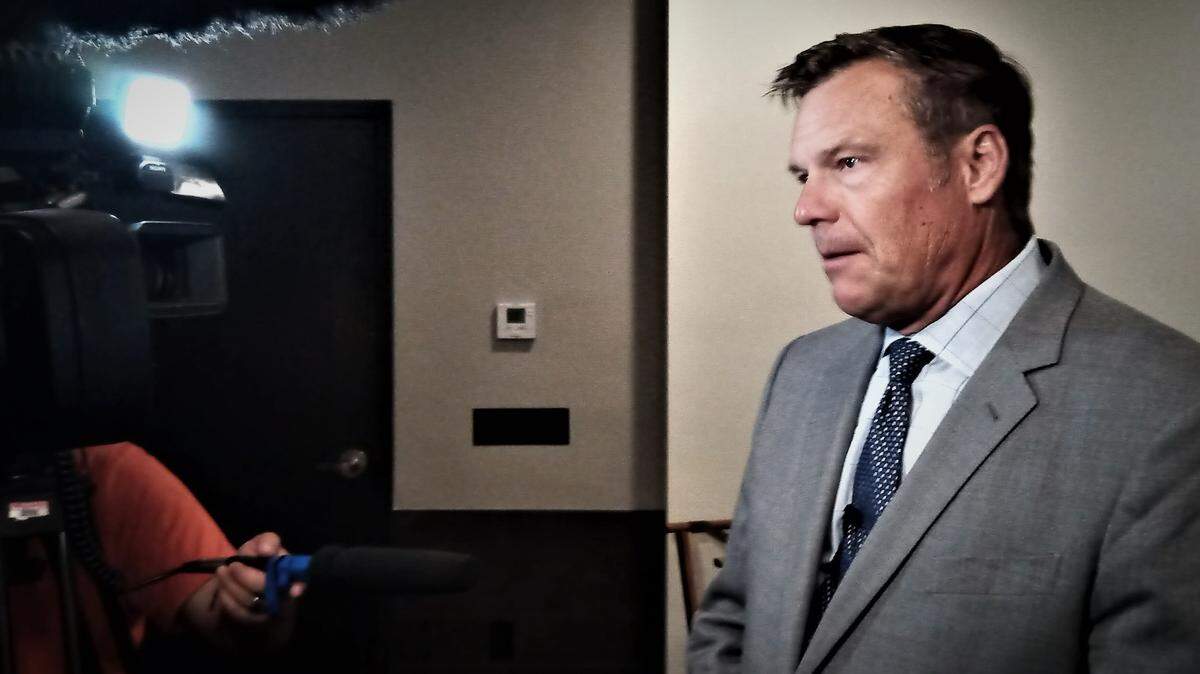
Kansas Attorney General Kris Kobach is crowing about a victory in his lawsuit against Pfizer over the safety of its COVID-19 vaccine.
But the federal judge’s ruling has nothing to do with the merits of Kobach’s scientifically dubious argument that the vaccine isn’t as safe or effective as the drug company advertised.
Instead, U.S. District Court Judge Daniel D. Crabtree sided with the AG’s office in a jurisdictional dispute over which court should handle the deceptive advertising suit.
Pfizer, which entered into a $1.95 billion agreement with the federal government to produce 100 million doses of its COVID-19 vaccine in July 2020, argued that the suit should be settled in federal court.
Crabtree wasn’t convinced by Pfizer’s arguments, including that, as a partner with the federal government, the company couldn’t be fairly judged in state court. In a written ruling Tuesday, he remanded the suit back to Thomas County in remote northwest Kansas, where Kobach’s office initially filed it last summer.
The judge also denied a request from Kobach’s attorneys to make Pfizer pay the legal fees incurred by the AG’s office as a result of the company’s effort to relocate the lawsuit.
“This victory is the first step in bringing justice to the Kansans who were misled by the false statements made by Pfizer regarding the health risks of its COVID vaccine. The case will now proceed in state court, which is where a claim under the Kansas Consumer Protection Act belongs,” Kobach said in a press release Wednesday.
Pfizer has argued in court filings that Kobach’s claims are completely without merit.
Leading health experts have criticized the lawsuit, which resurfaces false claims about vaccine safety, as frivolous and misinformed.
The complaint alleges that the pharmaceutical giant “misled the public,” “concealed critical effectiveness information from the public,” “worked to censor speech on social media,” and “conceal[ed], suppress[ed], and omitt[ed] material information” that undermined its claims that that the vaccine is “safe and effective.”
“Kobach accuses Pfizer of downplaying potential risks such as myocarditis and pregnancy complications, citing misinformation to support the lawsuit,” according to a Kaiser Family Foundation article published last summer, noting that the chance of developing myocarditis, or inflammation of the heart muscle, after vaccination is rare and that the U.S. Food and Drug Administration issued a myocarditis warning in 2023.
The FDA granted an emergency use authorization for the Pfizer-BioNTech vaccine in December 2020 and issued a full approval the following August.
Although minor side effects including injection site pain, aching, fever and chills are common for up to a few days after receiving a COVID-19 shot, serious adverse effects are exceedingly rare.