Judge questions ‘propriety’ of Kansas death penalty law in KC-area murder case
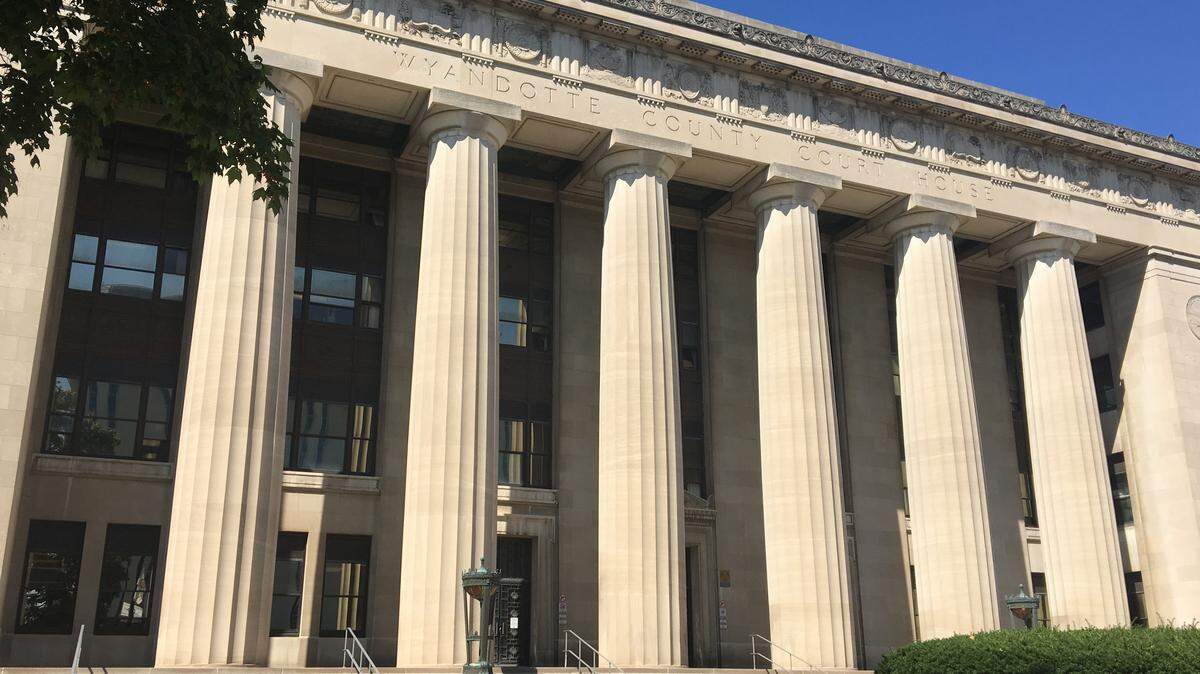
A Wyandotte County judge strongly questioned Kansas’ death penalty but stopped short of striking it down on Wednesday in a decision that could help spur future challenges to capital punishment in the state.
“This Court’s analysis is directed at the economic, fairness and psychological issues with the Kansas death penalty,” District Court Judge Bill Klapper wrote in a 15-page decision.
“It questions the propriety of spending Kansans’ money and causing the victims’ families the extended anguish in keeping a death penalty that the State has not and apparently never will impose” – a reference to Kansas’ zero executions since the state brought back the death penalty in 1994.
Klapper’s ruling came at the end of the trial of Hugo Villanueva-Morales, a man in his mid-30s accused in a 2019 shooting outside a Kansas City, Kansas, bar that left four dead. Villanueva-Morales agreed to a bench trial in the case and Klapper found him guilty of capital murder and other crimes on Wednesday afternoon.
Villanueva-Morales, dressed in a white dress shirt with an open collar, looked straight ahead as Klapper read out the verdict. He asked to address the court and briefly denied the allegations but made no other comment. Klapper scheduled sentencing for July.
Even though Villanueva-Morales was convicted of capital murder, Klapper wrote he had lost his standing to challenge the constitutionality of the death penalty after prosecutors said they wouldn’t seek a death sentence. Klapper’s decision doesn’t block the death penalty or order any changes in how it’s practiced.
The Wyandotte County District Attorney’s Office had originally sought the death penalty for Villanueva-Morales, prompting the American Civil Liberties Union and other lawyers representing him to mount a challenge to the state’s death penalty. Over the course of several weeks, a mini-trial over the death penalty played out in Klapper’s courtroom as Villanueva-Morales’ lawyers cast the way it’s practiced in the state as racially biased and unfair.
The ACLU has now challenged Kansas’ death penalty in four capital murder cases, though none of the defendants ultimately faced trials where the death penalty remained an option.
“That is no coincidence. The evidentiary hearings have consistently exposed uncomfortable truths to state prosecutors, the courts, and the public about the deep flaws and injustices embedded in the death penalty system,” Cassandra Stubbs, director of the ACLU’s Capital Punishment Project, said in a statement after Klapper’s decision.
Stubbs said that while the ACLU was relieved that none of its clients had received death sentences, “the systemic issues that these cases have brought to light persist.”
At the core of Villanueva’s challenge was the argument that how Kansas seats jurors in death penalty cases – a process called death qualification – skews capital trials. The process, which requires potential jurors to affirm they would be willing to impose the death penalty, discriminates against potential jurors on the basis of race, gender and religion, they argue.
Mona Lynch, a professor of criminology, law and society at the University of California-Irvine, had testified that a survey of 500 jury-eligible Wyandotte County residents, conducted between August and October 2024, found that death qualification significantly changed the percentage of people in the jury pool who favored the death penalty – raising the percentage from 57% to 68.8%.
Death penalty opponents were overwhelmingly excluded – 60.4% of opponents were excluded compared to roughly 34% of supporters.
About 36% of white residents who participated in the survey opposed the death penalty, compared to nearly 59% of Black respondents. And women were much more likely to be excludable from capital juries than men – about 84% to 58% – because they were never willing to impose the death penalty.
“We remain committed to challenging the death penalty on behalf of people facing capital charges in Kansas, with the hope that state legislators will end the death penalty and make future legal challenges unnecessary,” Stubbs said.
Kansas’ last execution took place in 1965, but the state’s modern death penalty has been on the books since 1994 and nine men in Kansas prisons have death sentences.
The Kansas Supreme Court in 2022 rejected a facial argument against the state’s death qualification process. In other words, the court ruled the process itself wasn’t unconstitutional as written. The court affirmed the death sentences against Jonathan and Reginald Carr, who killed five people in Wichita in December 2000.
But the Kansas Supreme Court’s justices wrote in the decision that allegations that the death qualification process is racially biased “most certainly warrant careful analysis and scrutiny” – a statement that death penalty opponents have interpreted as an invitation to further challenge the system.
No definitive death penalty ruling
Wyandotte County District Attorney Mark Dupree had urged Klapper not to rule on the death penalty.
In early February, prosecutors said they would no longer pursue the death penalty. A few days later, deputy district attorney Kayla L. Roehler filed a written closing argument in the death penalty challenge, arguing it would be inappropriate for the judge to rule because the death penalty was off the table in the case.
“In this case, the death penalty cannot be a possible punishment of the Defendant’s sentence, therefore, his constitutional challenge is not ripe,” Roehler wrote.
Villanueva-Morales, through his lawyers, contended that he has always maintained that even if prosecutors decided against pursuing the death penalty, the constitutional questions surrounding the death penalty remained under the court’s purview.
Klapper’s decision stopped short of providing a definitive ruling on the death penalty. Instead, it appeared to function as a kind of judicial commentary.
He concludes his decision by purporting to quote from Furman v. Georgia, the 1972 U.S. Supreme Court case that struck down the death penalty (it was reinstated in 1976). In fact, the quote is from the 1971 case McGautha v. California.
“To identify before the fact those characteristics of criminal homicides and their perpetrators which call for the death penalty, and to express these characteristics in language which can be fairly understood and applied by the sentencing authority (juries), appear to be tasks which are beyond present human ability,” Klapper wrote, quoting from the decision.
Klapper also attributes the quote to Justice William Brennan, but it was from Justice John Marshall Harlan II.