Missouri GOP wants to revive 2nd Amendment law. KC-area top cops say it’s a bad idea
Blue Springs Police Chief Bob Muenz began his law enforcement career in the early 1990s and has led the department since 2017. He’s worked through periods of upheaval that have shaped and challenged law enforcement: Rodney King. Ferguson. George Floyd.
As he sees it, Missouri’s Second Amendment Preservation Act presents another challenging moment.
“You can talk about challenges, those are challenges, right?” Muenz said. “This is up there, though, because this challenges our ability to protect our communities and to really serve victims of crime or protect gun owners to get their weapons back to them.”
When the Republican-controlled Missouri General Assembly passed the Second Amendment Preservation Act in 2021, the new law generated a swift and punishing backlash. The measure, also called SAPA, purported to invalidate federal gun laws, including those covering weapons registration and tracking, and possession of firearms by some domestic violence offenders.
State and local police were prohibited under the act from helping federal agents enforce any of the “invalid” laws or from hiring former federal agents who had enforced them. Departments risked $50,000 lawsuits from private citizens if they did.
Federal courts blocked the law. In August, a three-judge panel of the U.S. Eighth Circuit Court of Appeals ruled the measure violated the U.S. Constitution’s supremacy clause, which ensures federal law trumps state law.
Missouri Republicans want to bring it back.
The Missouri House passed a new version of SAPA, 100-51, last week and the state Senate is also considering a similar bill. The legislation changes how the law describes the federal government and the legislature’s view of Second Amendment rights, in an effort to sidestep the legal problems that ensnared the 2021 law.
But the measure retains the core goal of the original law – stopping Missouri law enforcement from enforcing federal gun laws.
Kansas City-area police chiefs have begun warning that the revived SAPA, as currently drafted, would come with the same problems of the old law. Drug task forces and other joint federal-local efforts will become more difficult; some departments will stop entering stolen firearms into a key database; the threat of expensive lawsuits will hang over agencies.
Independence Police Chief Adam Dustman and Gladstone Police Chief Fred Farris are also raising concerns about SAPA. In a statement, Farris said law enforcement agencies would have to defend against frivolous litigation, costing taxpayer dollars. The chiefs are part of the Law Enforcement Legislative Coalition, which is seeking changes to the proposal.
In an interview on Tuesday, Muenz emphasized that he is supportive of the Second Amendment and isn’t even necessarily opposed to legislation. But he wants changes that would place additional parameters on when someone can sue over alleged violations of Second Amendment rights. Simply partnering with federal authorities shouldn’t be enough, he indicated.
“What we want to do is work with our legislators to craft this language to protect the Second Amendment but to also protect our ability to protect our communities without fear of financial repercussions for just doing our jobs,” Muenz said.
In response to the 2021 SAPA law, some departments responded by not entering stolen firearms into the National Crime Information Center, NCIC, system. The database allows law enforcement to quickly check to see if a gun was previously reported stolen.
While Blue Springs police continued to submit information while SAPA was in effect, some agencies did not, Muenz said. The fewer entries made into the system, the less effective it becomes.
The Law Enforcement Legislative Coalition and the Missouri Police Chiefs Association in March urged anyone who reported a firearm stolen between 2021 and 2024 to re-contact law enforcement and ask them to submit information about the firearm to NCIC. The request, which cited SAPA, represented a remarkable effort to effectively fill in gaps that may have developed while the law was in effect.
Muenz and other police chiefs have said the national system is key to helping lawful gun owners recover their stolen firearms. If a stolen gun is used in a crime and seized as evidence, it may be destroyed at the conclusion of a case if the owner can’t be identified.
“In a way, it does impinge a little bit on the Second Amendment because we’re not getting that weapon, if we’re not using those systems, back to the rightful owner of that weapon,” Muenz said.
State vs. federal gun laws
SAPA proponents say the law shields Missouri residents against potential federal overreach. They have downplayed law enforcement criticism of the measure, suggesting that opposition is rooted in department leaders, not rank-and-file officers.
Supporters also dismiss concerns that the measure hampers law enforcement generally. They emphasize that Missouri law overlaps in many areas with federal law, casting doubt on SAPA’s practical effects.
Rep. Bill Hardwick, a Dixon Republican who is sponsoring the new bill in the House, told lawmakers during debate on the measure that they would be voting to affirm their belief in the Second Amendment and the 10th Amendment, which says states reserve powers not granted to the federal government by the U.S. Constitution.
“This bill says that state police, deputy sheriffs, they enforce state criminal laws,” Hardwick said. “Those laws are on the books, but they don’t enforce federal gun laws.”
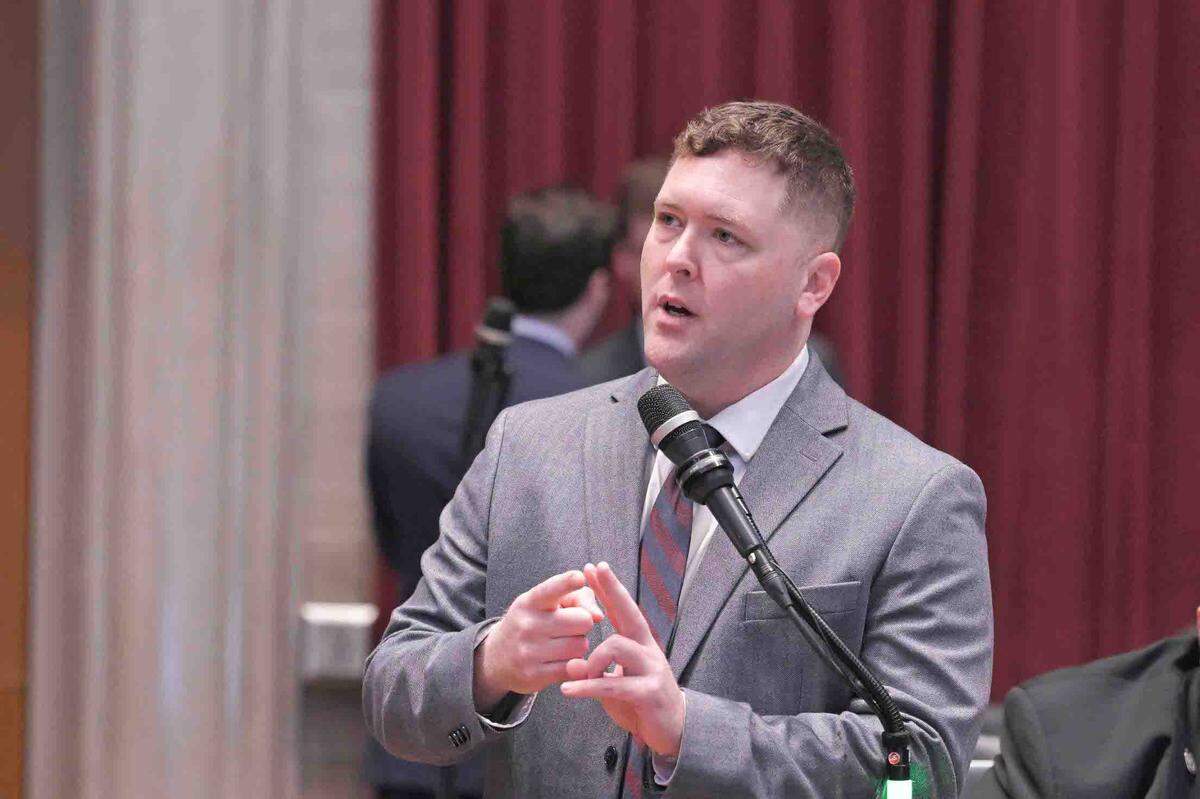
Ron Calzone, longtime SAPA proponent, said during a House hearing on the legislation that while the bill is named after the Second Amendment, it also aims to promote the 10th Amendment and “normalize” the use of the amendment in the state legislative process.
The measure protects individual officers, he said, by making law enforcement agencies – the officers themselves – liable for SAPA violations. In other words, if someone sues over an alleged violation, the law enforcement agency would have to pay the $50,000 penalty.
“I would suggest that to the extent you’re getting complaints from law enforcement, it’s probably not from the individual law enforcement officer,” Calzone said.
Democrats don’t buy the idea that the measure doesn’t harm law enforcement.
Rep. Keri Ingle, a Lee’s Summit Democrat, said SAPA ties the hands of police by limiting cooperation with federal law enforcement. That cooperation can be especially critical in the Kansas City region – a major metro area divided between two states.
The vote for the bill is a vote against law enforcement, she said.
“So save your breath when you want to talk to me about backing the blue in law enforcement, when they are telling you what they need and what they do not want,” Ingle said. “Emphatically, there is not a single law enforcement agency that has advocated on behalf of this bill. In fact, they’re advocating against it.”
Lawmakers are expected to continue tweaking the proposal before potentially passing the legislation and sending it to Gov. Mike Kehoe, a Republican who has cast himself as a champion of law enforcement.
A Kehoe spokesperson didn’t respond to questions on Tuesday about whether the governor supports the House-passed bill.
Supreme Court case?
Even as GOP lawmakers push forward on a revived SAPA, Missouri Attorney General Andrew Bailey continues to mount a legal push to keep the law alive.
Bailey, a Republican, is asking the U.S. Supreme Court to take up the case after the Eighth Circuit Court of Appeals ruled against the law. While he isn’t directly asking the court to reinstate the law, he’s asking the court to consider questions that, if Missouri prevailed, would likely lead to the law going back into effect.
Bailey wants the U.S. Supreme Court to consider whether federal courts can “second-guess” a state’s reason for exercising its 10th Amendment authority. He also wants the court to weigh whether the U.S. Constitution prohibits states from exercising 10th Amendment authority “when motivated by a concern that a federal statute is unconstitutional.”
The justices haven’t decided whether to take the case – and the U.S. Department of Justice hasn’t taken a position yet.
During President Joe Biden’s administration, the DOJ vigorously fought the Missouri law. It was sued in federal court to overturn it, leading to the Eighth Circuit decision. At one point, the DOJ argued that the law “severely impairs federal criminal law enforcement operations” to fight gun crime in Missouri.
Since President Donald Trump took office on Jan. 21, the DOJ has requested and received two extensions to file its response. It’s now due on April 11.
It’s unclear what position Trump’s Department of Justice will take. If the department stakes out an opposing stance from Bailey, it will mark a rare rupture between a Republican administration and a Republican state attorney general.
But if the DOJ agrees with Bailey and urges an expansive view of states’ rights under the 10th Amendment, it could empower Democratic-controlled states to more easily rebuff the Trump administration.
For his part, Muenz is more focused on the law’s consequences for day-to-day police work.
“Law enforcement, we’re not opposed to supporting the Second Amendment,” Muenz said. “But when you curtail our efforts to protect the community, to fight crime, to get guns off the street, to do those things under the threat of financial punishment to the city or county you’re representing, it’s worrisome to law enforcement agencies, law enforcement directors.”
This story was originally published April 2, 2025 at 5:30 AM.