Johnson County loves early, mail-in voting. Will Kansas eliminate ballot grace period?
Elizabeth Hunter-Blank’s commitment to voting is such that ahead of Kansas’ abortion rights election in August 2022, the Mission Hills resident paid to have her ballot shipped overnight to a marina as she traveled by sailboat across Lake Michigan.
She readily acknowledges her circumstances that summer were unusual. What’s become less unusual in recent years, she said, is the falling quality of the postal service in her Johnson County neighborhood. An area email list is filled with messages of delayed and missed service.
The diminished service worries Hunter-Blank, who fears for college students and others who may need to depend on the mail to vote. And many people simply can’t afford to pay for expedited delivery.
“The mail system is not what it used to be. It just isn’t,” Hunter-Blank said.
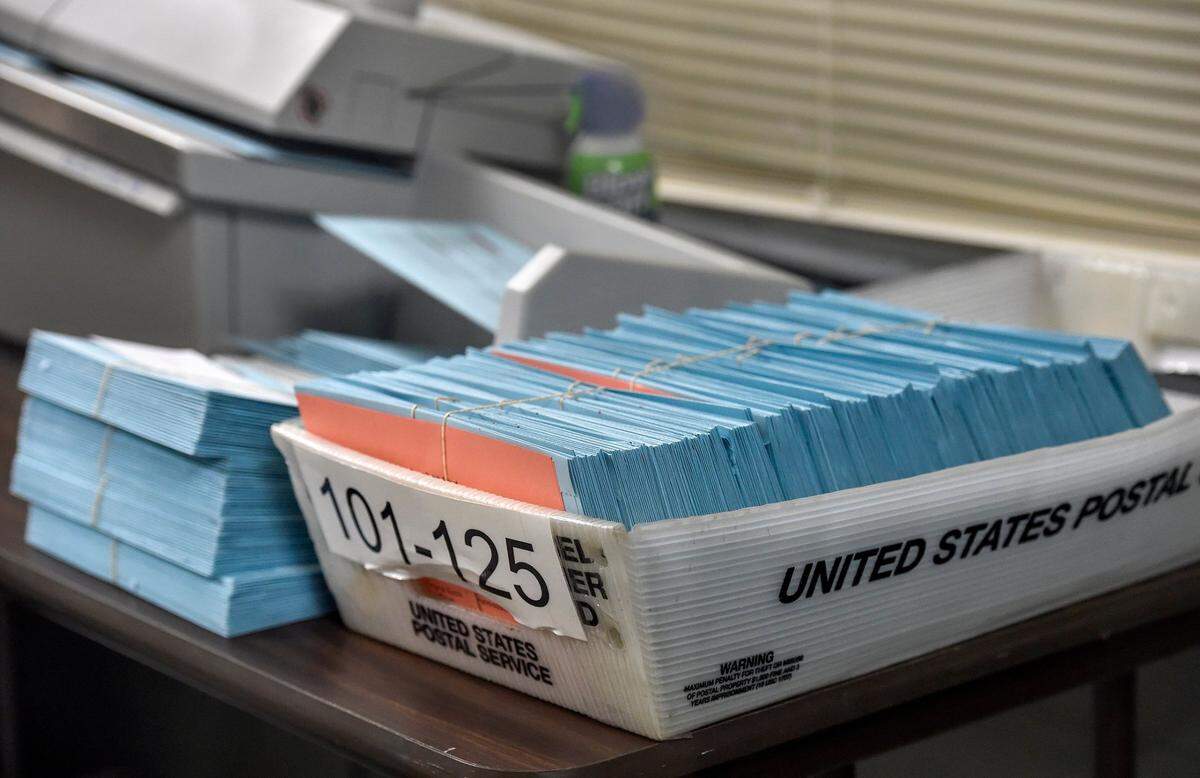
Johnson County residents love to vote early and by mail. Of the nearly 350,000 residents who voted in November, fewer than 89,000 voted in person on Election Day. Nearly 60% voted early in person, while roughly 14% voted by mail.
But the Republican-controlled Kansas Legislature is advancing a proposal to cut the number of days that election authorities will accept mailed ballots. The state Senate in early February passed a bill to prohibit counting any ballots arriving after 7 p.m. on Election Day. The state House could take it up at any time.
Under current law, ballots count if they arrive up to three days after the election and were postmarked on or before Election Day. The “grace period” provision has been in place since 2017, when lawmakers added it in response to lagging mail delivery times.
President Donald Trump helped fuel a backlash against mail-in voting in 2020. Even as Trump later came to embrace mailed ballots in his most recent campaign, suspicion of mail voting has lingered among many Republicans, who increasingly want to redirect voting onto Election Day.
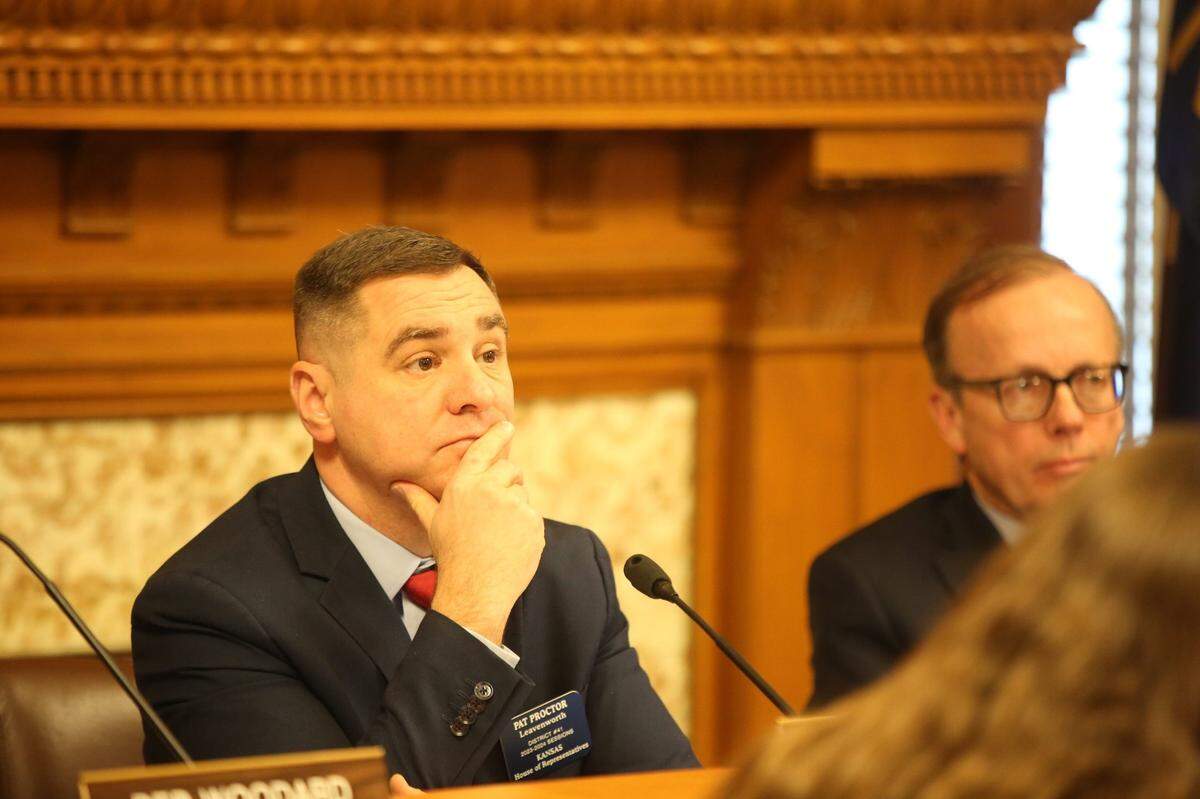
The top House Republican on election issues, Rep. Pat Proctor of Leavenworth, has said that “if it was up to me, Election Day would be Election Day,” according to a video of remarks he made on a conference call last year. The civic advocacy organization Loud Light, which supports early and mail-in voting, provided the video to The Star and other news organizations.
Proctor also said on the call that he wants to eliminate early voting and that mail-in ballots should be restricted to military members and those with severe disabilities. He tempered his comments by adding that “I’ve got to bring 84 people with me so I’m trying to chip away at it” – a reference to the number of representatives needed in the House to override a veto by the governor.
Nationwide, Republicans and people who lean Republican are less likely to favor no-excuse early and absentee voting than Democrats, who largely support the practice, according to the Pew Research Center. Republican support for no-excuse early and absentee voting has also fallen sharply since 2018, from 57% in favor in 2018 to 37% in 2024.
Proctor’s idea to dramatically curtail early and mail-in voting isn’t going anywhere soon. No bill taking such a severe approach has advanced and it would likely take years of effort to pass a proposal – Kansas has a legacy of support for mail-in voting that extends back into the 1990s.
But the elimination of the mail-in ballot grace period stands a good chance of becoming law this year. The Senate’s 29-10 vote passing the bill this month cleared the supermajority threshold that would be needed for a veto override.
Taken together, the looming end to the grace period and the future prospect of limiting early and mail-in voting has alarmed some Johnson County residents and lawmakers, who see popular forms of voting potentially at risk. As mail delivery comes under strain, it’s more important than ever to allow plenty of time for ballots to arrive, they say.
“I think we just need to make it as easy as possible,” Erin Dahl, a Roeland Park resident who has become a frequent poll worker, said about voting.
Dahl last mailed in her ballot in 2021 and said she won’t do it again. She dropped her ballot into a mailbox but became concerned as days ticked by without the Johnson County Election Office reporting its arrival. She now votes early in person, which she calls “so important.”
Given the area’s proximity to Missouri, she’s also watched as voters there struggled with more limited access to early and mail-in voting. While Missouri permits absentee voting by mail, ballots must be notarized, a step that often effectively defeats the convenience of voting by mail.
“Especially because we’re so close to Missouri, we hear about the very long lines and difficulty getting in,” Dahl said. “In Kansas, I have never personally experienced that.”
Mail delivery frustrations
Republicans who champion eliminating the grace period say the current law effectively stretches elections past Election Day. While they acknowledge that mail delivery has suffered, they say the onus is on voters to ensure their ballots arrive on time.
Sen. Mike Thompson, a Shawnee Republican who chairs the Senate Federal and State Affairs Committee and introduced the bill that would end the grace period, said the current three days provides voters with “extraordinary relief.”
“Just because the mail is a problem doesn’t mean that they’re being denied the access to vote,” Thompson said. “You have a responsibility if you want to vote to vote however it’s going to happen. Considering the post office problems that they have right now getting the mail delivered, I would have a lot of hesitancy.”
Melissa Campbell said in written testimony to the Thompson’s Senate committee that she firmly believed “Election Day should remain Election Day” and that all ballots should be returned by 7 p.m.
“If it’s a priority to adults to vote, they can make arrangements to make it happen as election dates are published FAR in advance,” wrote Campbell, who identified herself as a resident of Senate District 9, which includes parts of Johnson, Wyandotte, Douglas and Leavenworth counties.
Proctor chairs the House Elections Committee, which has advanced the legislation – SB 4 – to the House floor. In an interview, the lawmaker said that if he was “king for a day,” everyone would vote on Election Day.
“I stand by that,” said Proctor, who indicated the comments he made on video likely occurred last spring.
He said that as the committee chair for the past three years, he’s been attempting to address problems with voter confidence. He said the issue has probably been exacerbated by mail-in and early voting, as well as taking ballots for several days after Election Day.
“But I live in the real world and I understand that people like the convenience of mail-in balloting and I know that people like the convenience of early voting,” Proctor said.
While GOP lawmakers have attempted to end the grace period for the past few years, voting rights advocates are especially alarmed this time. Last year a proposal to end the grace period also included provisions to move the voter registration deadline back three days while allowing three extra days of early voting. The additional early days aren’t in this year’s bill.
It’s possible an amendment could be offered on the House floor to add the extra days back in. Democrats would likely support the change but it’s unclear if enough Republicans would vote for it.
‘Solution looking for a problem’
Relatively few ballots are affected by the grace period. Statewide, 2,110 ballots were received after Election Day on Nov. 5 and counted, according to statistics from the Kansas Secretary of State’s Office. That’s 1.4% of all mail-in ballots that voters sent back to election officials.
An additional 603 ballots were received after the grace period and didn’t count; 104 ballots arrived after Election Day without a postmark, so they also didn’t count.
Still, even a few votes can sway an election. And each ballot that doesn’t count represents a real voter whose voice wasn’t heard.
Senate Minority Leader Dinah Sykes, a Lenexa Democrat who voted against the bill, said that if the grace period is eliminated, applications for mail ballots should be made available earlier.
Sykes’ two children both attend college out of state and vote by mail. Last November her youngest son, who attends school in California, requested a mail ballot the first day they were available. It took the ballot two weeks to arrive on campus; he returned it the same day.
The ballot arrived the day after Election Day. The grace period meant it was counted.
“I think they’re trying to chip away, and I think it will be ballot boxes, all those things, because they want people to have to just go and vote in person on Election Day and not have flexibility,” Sykes said.
For his part, Thompson said he has no interest in curtailing mail-in and advance voting and said he would be fine with offering “a little more time” to vote on the front end, though he cautioned against going too far.
“They have a lot of options,” Thompson said. “You’d have to be completely isolated and cut off from society not to be able to get your vote in.”
Hunter-Blank, the Mission Hills resident, noted that when the Legislature passed the bill implementing the grace period in 2017, Republican Kris Kobach, who styles himself a staunch opponent of voter fraud and was then the state secretary of state, supported the measure.
An official for the Kansas Secretary of State’s Office at the time did in fact testify in favor of the proposal. The final bill included other provisions but passed the Legislature nearly unanimously.
Hunter-Blank can’t understand why lawmakers want to reopen the debate just a few years later.
“It doesn’t make sense to me why they’re doing it,” Hunter-Blank said. “It feels like a solution looking for a problem.”
This story was originally published February 26, 2025 at 5:30 AM.