On Day One, President Trump pardons, commutes sentences of Jan. 6 defendants
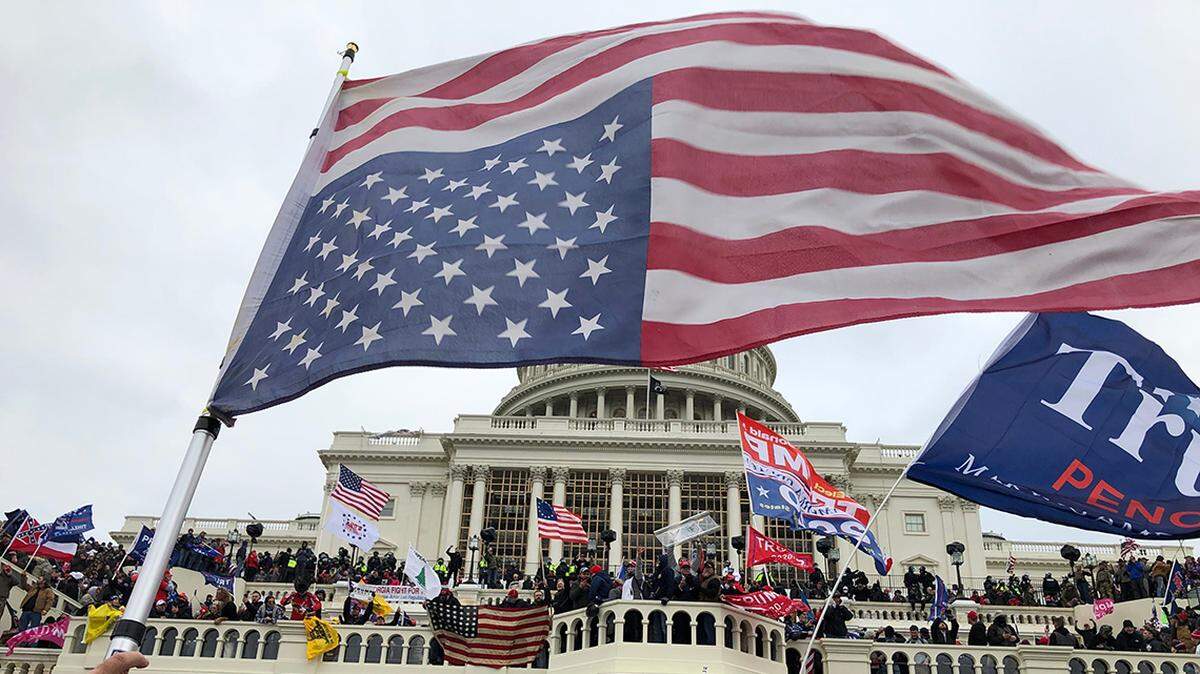
President Donald Trump on Monday night issued pardons to nearly all of the Jan. 6 defendants, following through on his campaign pledge to grant clemency to those charged in the Capitol breach.
On his first day in office, Trump signed an executive order pardoning more than 1,500 defendants and commuting the sentences of 14 members of the far-right Proud Boys and Oath Keepers. The order requires the federal Bureau of Prisons to act immediately.
Trump’s order, which also directs the Department of Justice to dismiss all pending cases, covers the 38 residents from Missouri and 10 from Kansas who have been charged for their actions on Jan. 6, 2021. Their offenses range from misdemeanor counts of demonstrating or picketing to felonies that include assaulting officers and civil disorder.
“Full pardon,” Trump said as he signed the order. Of those in prison, he said, “We hope they come out tonight, frankly. They’re expecting it.”
Trump said that “we’re looking at different things” regarding the commutations. “Maybe it’ll stay that way, or it’ll go to a full pardon.”
He said the defendants “have been treated very unfair.”
“The judges have been absolutely brutal,” he said. “The prosecutors have been brutal. Nobody’s ever treated people in this country like that.”
When asked if the clemency included those who assaulted law enforcement officers on Jan. 6, Trump said: “Well, I will say this. They’ve been in jail for a long time already. I see murderers in this country get two years, one year, and maybe no time … These people have been destroyed. What they’ve done to these people is outrageous.”
More than 140 law enforcement officers were injured during the Capitol siege, according to the Justice Department, making it the largest single-day mass assault of officers in the nation’s history.
A pardon forgives a crime and restores the defendant’s civil rights, such as gun ownership, the right to vote, hold state or local office or sit on a jury. A commutation reduces or eliminates the sentence but does not restore civil rights, according to the Justice Department. Neither a pardon nor a commutation signifies innocence or erases a conviction.
“Obviously, I’m totally innocent and have never been convicted of anything and would win my case if it went to trial, but it’s wise for President Trump to drop these cases,” said William Pope, a Jan. 6 defendant from Kansas who was facing one felony charge and four misdemeanors and was scheduled for a jury trial in June.
“It should have happened a long time ago,” said Pope, who was dressed in a tuxedo and attending the Liberty Ball in Washington on Monday night. “This was an extreme use of government force against entirely peaceful Americans like me, but we’ve been vindicated by the American people who voted for change.”
Nearly 1,600 charged nationwide
Of the 10 Kansans charged, nine had pleaded guilty and had been sentenced. Five received prison sentences ranging from 70 days to 4 ½ years.
The only Kansas case pending was Pope’s, which had attracted national attention over his efforts to force the government to release Capitol security footage. The Topeka man originally was charged with two felonies and six misdemeanors, but one felony and two misdemeanors were dismissed last year and he was successful in getting his trial moved until after Trump took office.
Of the 38 Missourians charged, 32 had pleaded guilty or had been found guilty in a jury trial or a bench trial before a judge. Of those, 31 had been sentenced, with 15 receiving jail time ranging from 14 days to nearly six years. One-third of those prison sentences were for a year or more.
Five of the Missouri defendants remain in prison. All pleaded guilty to assaulting or obstructing officers during the riot.
In the four years since the Capitol riot, nearly 1,600 people have been charged in nearly all 50 states for crimes related to the attack, according to the Justice Department. That figure includes more than 600 defendants charged with assaulting or impeding law enforcement.
Of those charged, about 1,000 have pleaded guilty, one-third of them to felonies, and more than 250 have been found guilty at trials. About 1,070 defendants have been sentenced overall, with roughly 650 receiving periods of incarceration.
The Justice Department continued to file charges through last week, including defendants from Ohio, Illinois and Arkansas arrested Thursday for offenses that include allegedly assaulting law enforcement on Jan. 6.
And several defendants were sentenced to prison Friday, at least two of them for assaulting law enforcement. One, Lewis Wayne Snoots, 59, of Louisa, Virginia, was sentenced to 71 months in prison and three years of supervised release. He also was ordered to pay $2,000 restitution for damage to the Capitol and $96,927 restitution to the Metropolitan Police Department.
Snoots was one of multiple rioters charged in the attack of Metropolitan Police Officer Michael Fanone, who was dragged out of the Lower West Terrace Tunnel and into the mob, where he was beaten and shocked repeatedly in the neck with his own Taser.
Throughout his campaign, Trump pledged to pardon the Jan. 6 defendants, whom he has referred to as “hostages,” “patriots” and “political prisoners.” But the details on how he intended to accomplish that were unclear.
Legal experts say issuing pardons on such a large scale is extraordinary but that as president, Trump has the authority to pardon any or all of those charged, no matter what stage their cases are.
‘These people are terrorists’
Fanone spoke out against Trump’s plan for pardons at a Jan. 7 news conference of the Not Above the Law Coalition.
“On January 6, 2021, President Donald Trump incited an insurrection, along with his fellow MAGA extremists, in order to overturn the results of the 2020 presidential election,” he said.
That day, Fanone said, “I came face-to-face with the hatred and violence that MAGA extremism represents. I was beaten and repeatedly tased. I suffered a heart attack and was left with a severe concussion.”
“ … I want to be clear, these people are terrorists. They use violence to achieve a political goal.”
Every member of Congress was in danger that day, Fanone said. Voters, he said, should have demanded that their elected officials stand against Trump’s pledge to pardon the rioters.
“But they didn’t,” he said. “Too many Americans failed to empathize with those of us whose lives have been destroyed by Trump and the MAGA thugs. The insurrection caucus has shown that they only care about elections when they win, and peaceful transfer of power means nothing to them. I’m here today to serve as a reminder to the American people as to the reality of January 6, 2021, and to set an example of what a true American patriot looks like, because they’ve clearly forgotten.”
At the news conference, Rep. Steve Cohen, a Tennessee Democrat, described a proposal he introduced this month that would amend the Constitution to limit the presidential pardoning power. He said he’s repeatedly introduced the amendment since 2017.
Cohen said Trump incited the riot.
“President Trump, to some extent with these pardons, will be absolving himself because he’s responsible for each and every one of these people going up to do what they did,” Cohen said. “If it weren’t for Donald Trump, this would not have occurred. And this is a way for him to absolve to some extent, I guess, assuming he has a conscience, to absolve his conscience by pardoning these people that are in jail because of him.”
A poll released last week found that most Americans in the most competitive Congressional districts did not want Trump to focus on pardons.
The YouGov poll was commissioned by Protect Democracy United and conducted across the 43 most competitive Congressional districts in the country. It found that 75% of Americans opposed pardons for those convicted of using a deadly or dangerous weapon at the Capitol, including 55% of Republicans.
And nearly three-fourths of Americans opposed pardons for those convicted of assaulting Capitol Police officers, including 54% of Republicans.
The poll also found that 56% of Americans opposed pardons for defendants convicted of organizing and directing violence on Jan. 6, 55% opposed pardons for those convicted of crimes by a federal court and 54% said that pardoning people who participated in political violence would encourage more such acts.
This story was originally published January 20, 2025 at 8:12 PM.