Missouri Gov. Parson says child cannabis poisonings have increased 600%. Is that true?
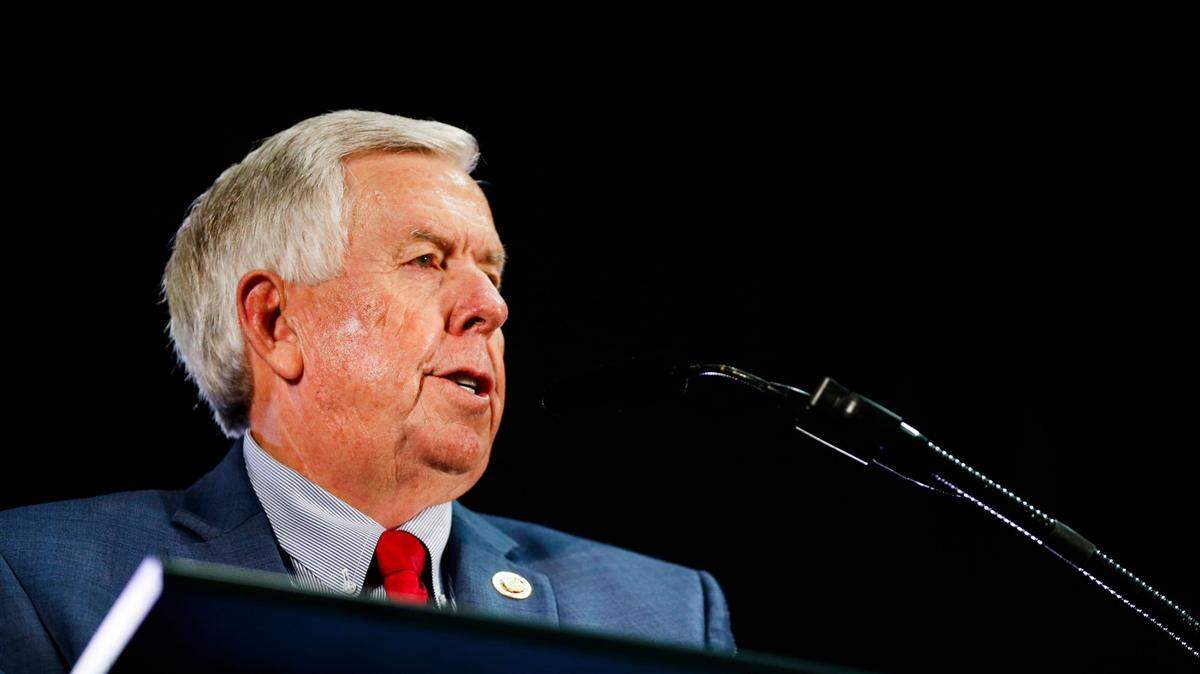
Missouri Secretary of State Jay Ashcroft this week, for the second time, rejected emergency rules from Gov. Mike Parson’s administration designed to crack down on unregulated hemp-derived cannabis food products.
Ashcroft’s initial rejection of the rules drew swift condemnation from Parson, a Republican, who argued that Ashcroft was putting children in danger of consuming the products. The Republican secretary of state followed with another rejection on Tuesday.
The moves are likely to delay the implementation of the emergency rules, potentially until after Parson leaves office in January. Parson, in defense of his decision to crack down on the products, has cited an extraordinary rise in cannabis poisonings among children.
Parson’s office, in two recent press releases, has said the number of children five and under who visited emergency rooms or were hospitalized with cannabis poisoning has increased 600% since 2018.
That sharp increase is based on data from the Missouri Department of Health and Senior Services or DHSS and was collected through a system that collects hospital discharge information.
The data, provided to The Star, shows the number of people, based on age groups, that went to the emergency room or an inpatient facility with cannabis poisoning. In 2018, 21 children under the age of six went to the emergency room or were hospitalized with cannabis poisoning. In 2023, the figure jumped to 152 people — an increase of more than 623%.
For adults 21 and over, the number of people with cannabis poisoning increased by 55% since 2018, the data shows.
Lisa Cox, a spokesperson for DHSS, said that the data uses a code from the Centers for Disease Control and Prevention to identify cannabis-based poisonings. That data includes both marijuana and hemp.
Hemp, which is federally legal, typically has little to no THC, the intoxicating compound found in marijuana.
The agency was unable to show the number of hemp-based poisonings compared to marijuana, she said.
That comparison could be important because Missouri voters voted to legalize medical marijuana in 2018 and recreational marijuana in 2022.
Hemp industry pushes back
The MO Hemp Trade Association, which represents the state’s hemp industry, has opposed Parson’s rule, arguing that a ban on certain hemp products would force consumers back to the black market.
Brooklyn Hill, the association’s president, in a statement, did not refute the data from Parson’s administration. But she cited a recent report from the Missouri Poison Center, the state’s main poison center, that showed “adverse events related to the overconsumption of hemp products do not rank among the top ten reasons for poison control calls,” she said.
“Instead, substances like ibuprofen, household cleaners, and antidepressants are responsible for a significantly higher volume of calls and pose greater dangers than hemp products,” Hill said.
Still, Hill said that her association supports “the stringent regulation of hemp products to ensure they remain inaccessible to children.”
“While we cannot control instances where parents leave these products in places within their homes that children might reach, we recognize the importance of increasing public awareness about the potential risks associated with children accessing such items,” she said.
Ashcroft’s office said on Tuesday that he rejected the most recent rule due to Parson’s administration’s failure to justify the rule as required by state law.
“Statute determines the requirements for such a designation and I have a responsibility and a duty to follow the law,” Ashcroft said in a statement.
Due to his rejection, the initial rule that Ashcroft rejected will go through the normal rulemaking process, which includes an opportunity for people to provide public comments, his office said.
The executive order from Parson, issued Aug. 1, bans what the governor’s office terms “psychoactive cannabis products” – including food and drinks – from being sold in Missouri unless from approved sources. DHSS was also directed to block retail stores that hold a liquor license from selling the products.
The ban doesn’t apply to products sold by legal dispensaries regulated by the state.
This story was originally published August 28, 2024 at 12:14 PM.