Judges in Missouri and Kansas block parts of Biden’s student debt forgiveness plan
Judges in Kansas and Missouri blocked parts of President Joe Biden’s student loan plan on Monday, putting the two cases on track for a potential decision by the Supreme Court as the Biden administration has continued to face legal challenges to its efforts to forgive student loan debt without action from Congress.
The judges each issued their orders on Monday, blocking a loan forgiveness provision that goes into effect on July 1, while leaving in place some of the actions already taken by the administration. The orders will block millions of student loan borrowers from some form of debt relief, including a provision that wipes out student loan debt after 20 years of repayment for undergraduate loans and 25 years for graduate loans.
Twice Biden has attempted to achieve his campaign pledge of forgiving student loan debt in an effort to unburden a generation of students who took on massive student loan debt at a young age.
Twice, now, he has been blocked in the courts in cases brought by conservative attorneys general who paint the pledge as an effort to help college-educated Americans by shifting the burden onto working people.
While the cases are likely to end up in the Supreme Court, they will first have to go through an appeals court. It’s unlikely the Supreme Court would take it up before November, hamstringing Biden’s pledge to younger voters — a demographic polls show he is struggling to win over in his reelection bid.
White House Press Secretary Karine Jean-Pierre said the White House will continue to encourage people to enroll in their student forgiveness plan so they can access the elements that remain available, which include lower monthly payments and no payments for people who make $16 or less an hour.
“It’s unfortunate that Republican elected officials and their allies have fought tooth and nail to prevent their constituents from accessing lower payments and a faster path to debt forgiveness — and that courts are now rejecting authority that the Department has applied repeatedly for decades to improve income-driven repayment plans,” Jean-Pierre said.
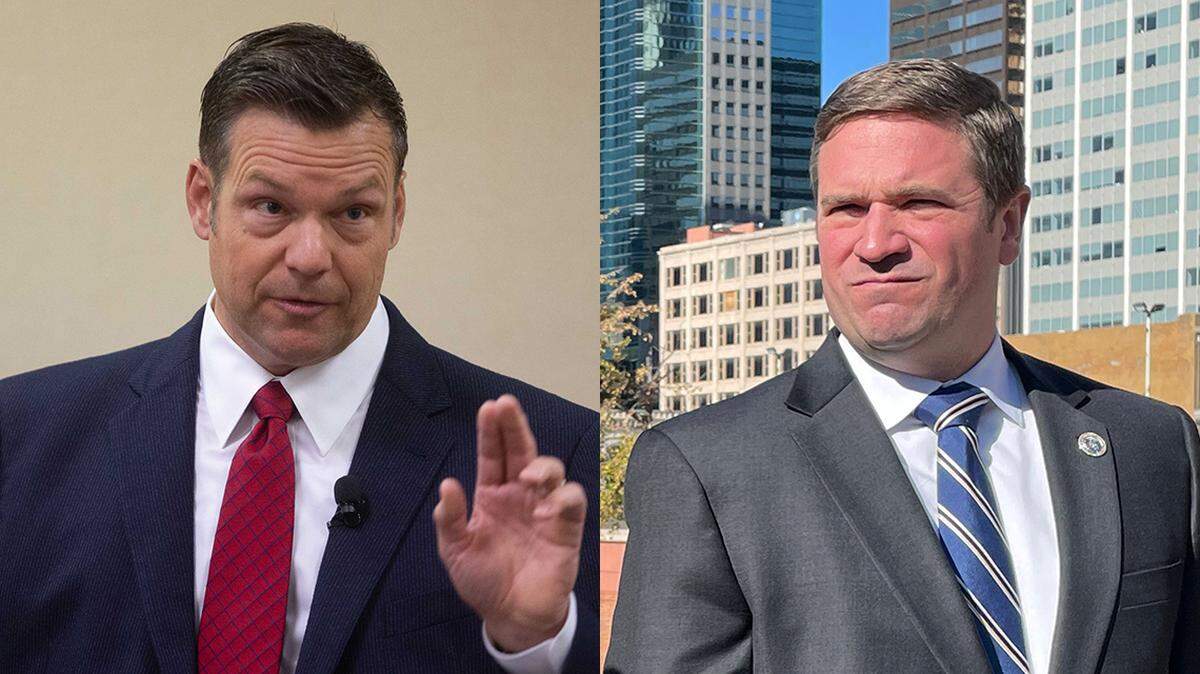
The rulings stem from two separate cases: One group of conservative states, led by Kansas Attorney General Kris Kobach, filed a suit in March and a second case brought by a group of six conservative states led by Missouri Attorney General Andrew Bailey in April.
After the U.S. Supreme Court struck down a previous Biden administration plan to forgive student loan debt, the Department of Education worked on releasing a series of rules that can help borrowers lower their payments and wipes away debt for people who have been paying off their loans for more than a decade, depending on their income level and the size of their original loan.
Earlier this month, Judge Daniel D. Crabtree, who serves on the U.S. District Court for the District of Kansas, ruled that Kansas and seven of the states in its coalition did not have the legal standing to challenge the Biden administration’s rule. He said only Alaska, South Carolina and Texas were able to show they have been harmed under the new rules.
Crabtree wrote that the states did not show how they were harmed by the parts of the Biden administration plan that are already in effect, but said the Department of Education overstepped its authority with the scope of its new rule, because it goes beyond numbers specifically set by Congress.
Judge John A. Ross, a U.S. District Court Judge for the District of Missouri, offered a similar interpretation in his temporary injunction, but said he believes the states will only be successful in challenging the parts of the plan that actually forgive student loan debt, not the parts that lower payments.
Missouri was instrumental in overturning the Biden administration’s previous effort to forgive student loan debt, which would attempted to use powers given to the executive branch during a state of emergency — in that case, the COVID-19 pandemic — to forgive up to $20,000 in student loans for some borrowers.
In splitting their latest efforts into a series of rules, the Biden administration appears to have successfully protected some elements of its relief plan from sweeping court rulings. Still, the conservative states sought a larger measure to block the entire plan.
“Only Congress has the power of the purse, not the President,” Bailey said in a statement following the ruling. “Today’s ruling was a huge win for the rule of law, and for every American who Joe Biden was about to force to pay off someone else’s debt.”
This story was originally published June 25, 2024 at 9:13 AM.