Kansas, Missouri to keep fighting abortion drug after Supreme Court upholds access to it
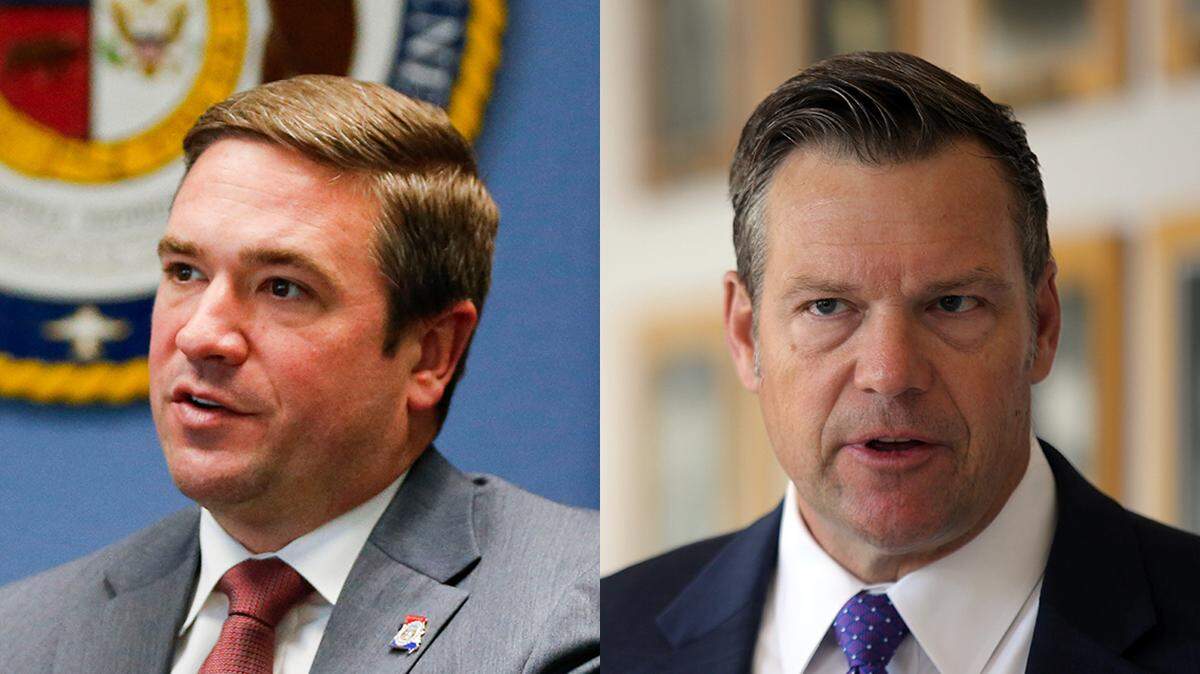
Attorneys general for Kansas and Missouri on Thursday vowed to push forward with their legal challenge of a common abortion medication, minutes after the U.S. Supreme Court ruled that a group of doctors couldn’t sue to ban the drug.
The Supreme Court’s decision upheld, for now, nationwide access to mifepristone, one of two medications frequently used in abortions. In a unanimous decision, the high court found the doctors who had sued in federal court in Texas, challenging the FDA’s decades-old approval of the drug, lacked standing to bring a lawsuit.
But Missouri and Kansas in January convinced a federal judge to allow the states, along with Idaho, to intervene in the lawsuit. The decision allows the states to potentially keep the legal challenge alive, by arguing that they – unlike the doctors – have standing to sue.
“We are moving forward undeterred with our litigation to protect both women and their unborn children,” Missouri Attorney General Andrew Bailey, a Republican, said in a statement.
Kansas Attorney General Kris Kobach, a Republican, said in a statement the states “possess the standing that the doctors did not.”
“It is essential that this case continue in order to ensure that the FDA operates within the law,” Kobach said.
A continuing legal challenge of mifepristone could bring seismic implications for abortion access in the United States. Since the Supreme Court ended the federal right to an abortion in 2022, more than a dozen states, including Missouri, have enacted total or near-total bans. The medication, which can be taken across state lines, have offered some individuals a way to access abortion despite state-level bans.
Even in states where abortion is legal, the medication plays a critical role. If mifepristone’s federal approval were rescinded, abortion access could be dramatically curtailed and more individuals would be forced to seek surgical abortions, straining clinics. Abortion medications were used in about 63% of all abortions in 2023, according to the Guttmacher Institute, a research organization that supports abortion rights.
The decision comes less than two weeks before the second anniversary of the Supreme Court decision overturning Roe v. Wade – and roughly five months before Missouri voters are expected to decide whether to overturn the state’s ban and protect the right to abortion in the state constitution. Kansas voters affirmed the presence of abortion rights in their state’s constitution in 2022.
“Missourians across political backgrounds and ideologies want reproductive freedom to make their own decisions about their bodies, families, and lives — this year we have the opportunity to make Missouri the first state to overturn an abortion ban at the ballot box and enshrine a broad right to reproductive freedom in our state constitution – and we are going to win,” Mallory Schwarz, executive director of Abortion Action Missouri, said in a statement.
Missouri, Kansas and Idaho had previously attempted to intervene in the lawsuit against mifepristone at the Supreme Court level. The court denied the states’ attempt, without offering an explanation.
It is unclear whether the states will have a strong case at the district court level, where Judge Matthew Kacsymaryk allowed them to intervene in January. If they attempt to continue the existing case, they will have to prove why Missouri, Idaho and Kansas should have a case heard in a federal district court in Texas.
The states would then face a similar hurdle the doctors faced in proving how the states are harmed by the FDA’s decision, after Justice Brett Kavanaugh dismissed similar claims in Thursday’s unanimous ruling by the court. During oral arguments before the Supreme Court, the doctors were represented by Erin Hawley, an attorney for the conservative legal advocacy group Alliance Defending Freedom and the wife of Sen. Josh Hawley, a Missouri Republican.
In their motion to intervene in the case at the Supreme Court, the states argued that they were affected by the FDA’s decision allowing abortion medication by mail because Missourians could receive the medication despite the state’s ban. They also argued that the states would have to contribute more to Medicaid because women could end up in the emergency room after taking the drug.
But the Biden administration has argued that the states have a worse case for standing than the doctors who brought the original case. In a filing with the Supreme Court over whether the states should be allowed to intervene in the case, the Biden administration argued that the states are relying on too much speculation to be able to bring a challenge to the FDA’s decision.
This story was originally published June 13, 2024 at 11:57 AM.