Kansas Governor Kelly faces revolt from Democrats after striking tax deal with Republicans
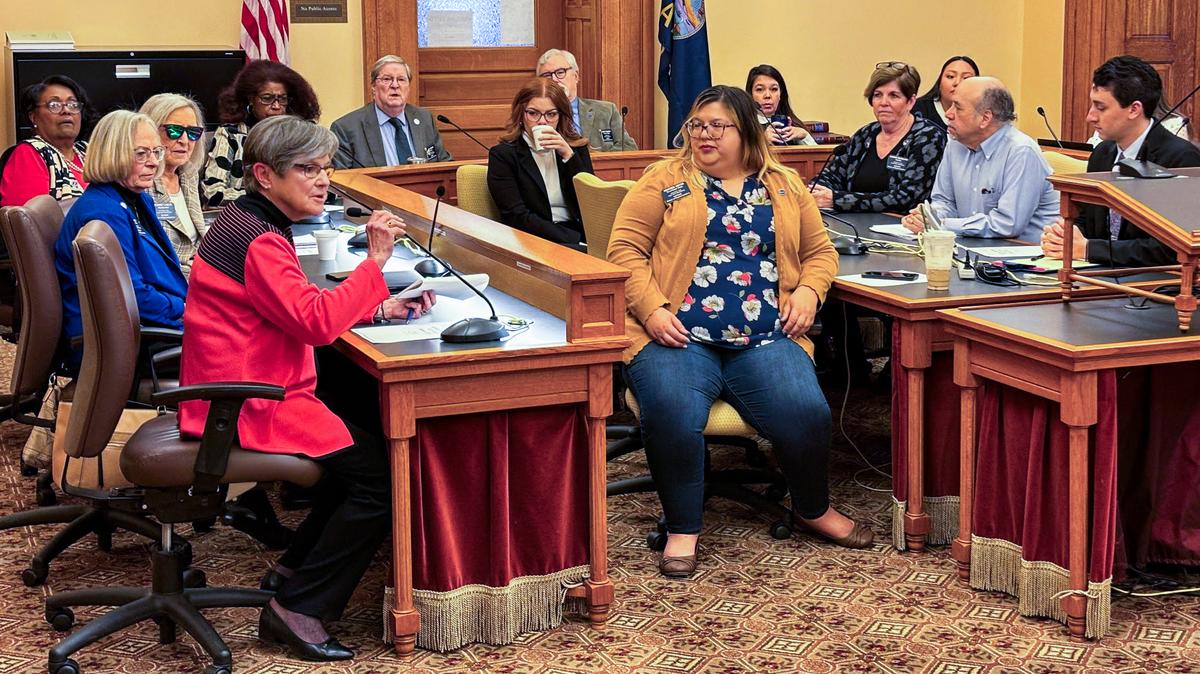
Kansas Gov. Laura Kelly faced a revolt among House Democrats on Thursday over a compromise tax plan, opening the possibility the Democratic governor could sign a tax cut passed with primarily Republican support.
The Kansas House and Senate negotiators agreed Wednesday on a comprehensive tax bill that retains the state’s existing three-bracket structure while lowering income taxes for those in the highest bracket making more than $30,000 a year.
The proposal also eliminates state income tax on Social Security, increases the standard deduction and child and dependent tax credit, accelerates the elimination of state sales tax on food by six months and lowers state-imposed property tax. The measure has yet to be voted on by either chamber.
Many House Democrats – including Minority Leader Vic Miller of Topeka – said they will try to send the bill back to legislative negotiators for changes, voicing objections to the bill only cutting income tax rates for the top bracket. Democrats also expressed frustration that the compromise didn’t reflect the dual-rate tax bill previously passed unanimously by the House.
It wasn’t immediately clear whether enough Republicans would support the move to be successful. The Senate easily passed the measure Thursday afternoon, with all but one Democratic senator supporting it. The Legislature is expected to adjourn for several weeks beginning Friday.
“A week ago I stood up in the well of the House and I congratulated Republicans for their fortitude in saying no to Sam Brownback. I think Democrats are going to have to say no to their governor today,” Rep. John Carmichael, a Wichita Democrat, said.
Kelly, a little over a year into her second term, visited a meeting of House Democrats on Thursday morning in an attempt to build support for the plan. Sitting at the end of a committee table, she acknowledged the existence of “a lot of discomfort” with the compromise.
But the governor contrasted the compromise plan with the single-income tax rate plan passed by Republicans earlier this year. Kelly vetoed the measure and supporters were unable to override the veto.
“I want you to know that I’m not that happy with some of the things that are going to be there. But when I think about where we started on taxes for this year and now where we are, tremendous difference,” Kelly said.
The compromise proposal would cost about $1.4 billion over the next three years. It would reduced Kansas’ top income tax bracket, which starts at $30,000 annual income, from 5.7% to 5.5%. A bill Kelly vetoed earlier this year centered around the flat tax would have cost more than $1.6 billion over three years.
“When I look at what we’ve gotten here, I am just amazed that we came out like this. There’s so much of what we wanted,” Kelly said referring to the accelerated end of the food sales tax and elimination of taxes on Social Security income.
At least some Democrats were unpersuaded. After Kelly left the room, Miller said he supports sending the bill back to a conference committee for more negotiations. The House’s tax bill was disregarded in negotiations, he indicated.
“It was all from the top down,” Miller said.
The agreement left some Republicans dissatisfied as well, though GOP leaders in both the House and Senate are backing the plan. Rep. Adam Smith, a Weskan Republican who leads the House Taxation Committee, said he wasn’t yet sure how he’d vote on it.
“The attitude in the entire chamber is a little bit deflated,” Smith said.
House Speaker Dan Hawkins, a Wichita Republican, agreed that the benefits to low income Kansans had been cut down in the compromise bill. He told his House Republican colleagues that he believed their earlier proposal was a better bill.
“Do I wish we could have that? Absolutely,” Hawkins said, referring to the dual-rate plan, adding that “things happen, that’s part of our process. Our process sometimes can be rather cruel but it ends up pretty well most of the time things end up exactly where it has to be.”
Senate President Ty Masterson, an Andover Republican, saw the compromise as a win.
After accepting a single-rate plan was not in the cards this year, Masterson had advocated for the three-rate plan rather than dual rate. Keeping three rates while reducing the top bracket, he argued, would move the state closer to the flat tax he had pushed for.
“I was looking for the shortest jump to a single rate and I feel we achieved it so I would call what we’re doing a victory,” he said. “I would rather go ahead and take a step to get the top rate where I’d like it to be and then we’ll fight those battles against the progressives moving forward.”
This story was originally published April 4, 2024 at 9:38 AM.