As Kansas votes, Biden and Trump have already won. Was a $5 million primary worth it?
Kansas Republicans and Democrats will vote Tuesday in presidential primaries where the race is already over.
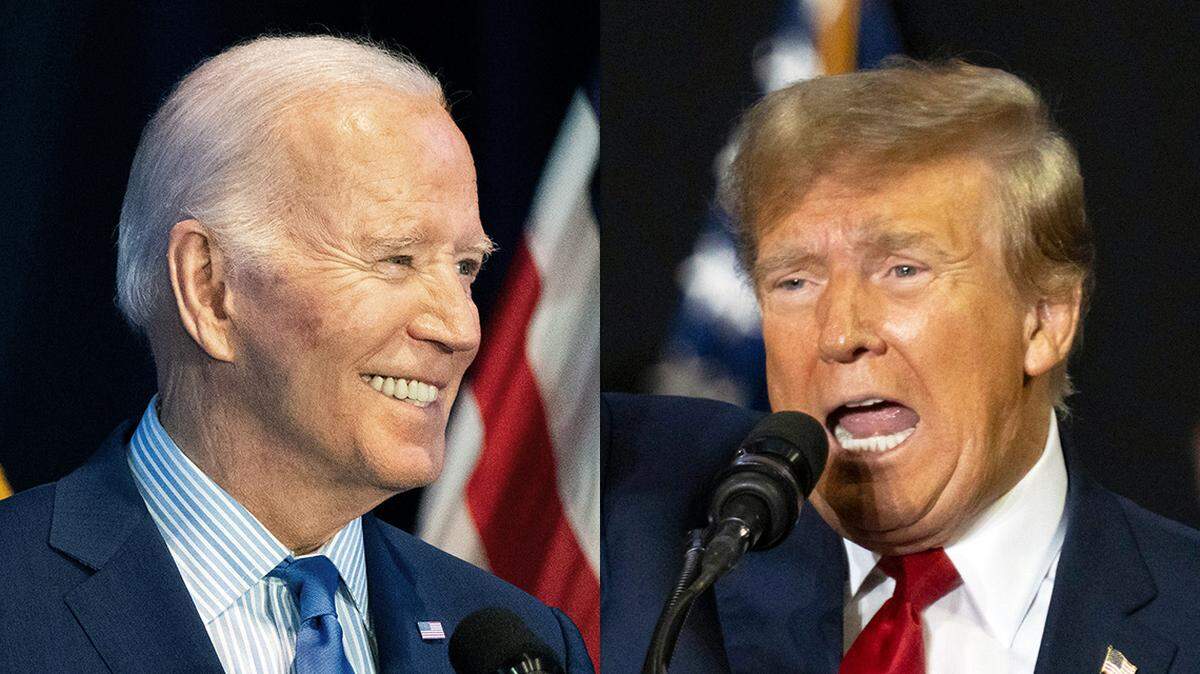
Former President Donald Trump and President Joe Biden secured their party’s nominations last week. Every remaining major opponent in both parties has suspended their campaigns.
Taxpayers will foot an estimated bill of up to $5 million for the primaries.
Was it worth it?
Kansas has, with very few exceptions, spurned presidential primaries in favor of party-run caucuses. The state has held presidential primaries just twice before – in 1992 and 1980.
But the Republican-controlled Legislature a year ago authorized a primary for the 2024 election cycle. Supporters cast a primary as more democratic, making it easier for more voters to participate. Instead of a potentially chaotic caucus featuring speeches by campaigns or candidate surrogates, voters simply show up at their polling site and cast a ballot like any other election.
Opponents of a state-run primary said taxpayers shouldn’t pay election officials to do what political parties did themselves in the past. The estimated $4-5 million cost represented funds better spent on other, more urgent needs.
A year later, some opponents said they feel their concerns have been vindicated.
“We’re going to be spending taxpayer money on primary elections that basically have no meaning,” Rep. Jerry Stogsdill, a Prairie Village Democrat, said.
Trump and Biden both became their presumptive party nominees last week after Trump swept contests in Georgia, Mississippi and Washington, and Biden won Georgia.
As an incumbent president, Biden faced minimal serious opposition for the nomination, despite concerns among some Democrats about his age. Trump, on the other hand, faced significant challenges from Florida Gov. Ron DeSantis and former South Carolina Gov. Nikki Haley amid an onslaught of criminal and civil cases against him. Still, Republican voters handed Trump a nearly uninterrupted string of victories and Haley, his last remaining serious opponent, dropped out in early March.
Despite the all but certain outcome on Tuesday, supporters of the primary system said they still supported the decision to move Kansas – at least for 2024 – away from caucuses.
“We’ve heard from the people all over the rest of the country who get the benefit of going before us, but the people of Kansas – Democrats and Republicans – are still American citizens. They still have the right to say this is who we choose,” Jeanna Repass, chair of the Kansas Democratic Party, said.
Repass said the primary results, even if the winners are a “foregone conclusion,” will provide useful information on support for alternative and write-in candidates. And it offers some window into voter enthusiasm, though she cautioned it’s not a great metric this far out from the November election.
“I think it’s 100% worth it,” Repass said.
Kansas election officials are somewhat ambivalent about the decision, which eats up time that could be spent preparing for the August and November elections. A spokeswoman for Kansas Secretary of State Scott Schwab, a Republican, hinted at the mixed feelings in a statement on Monday.
“Secretary Schwab has said in public statements that he believes this should be a party function, but we find fulfillment knowing both the Kansas Republican and Democrat leaders found trust in Kansas’ election system to encourage this to be a state-run election instead of a caucus,” Schwab spokeswoman Whitney Tempel said in an email.
The Legislature almost didn’t approve primaries. In April 2023, the House initially rejected a bill authorizing primaries, before lawmakers reconsidered the vote the following day and passed the measure. The vote, both for and against the legislation, didn’t break down cleanly across partisan lines.
At the time, some Republicans were concerned about Kansas Republican Party Chair Mike Brown’s ability to organize a successful caucus, after Brown was elected to lead the party in a divisive leadership contest. Trump was also expected to face a more challenging path to the nomination, and a primary election was thought to make it more likely that infrequent and disaffected voters who support Trump would show up to vote.
Brown didn’t respond to questions about the primary on Monday.
The Legislature approved holding presidential primaries in 2024 only, so lawmakers will have to again act if they want Kansas to move permanently to a primary system. Some of the staunchest supporters of primaries are already signaling they want to at least hold them again in 2028.
Sen. Mike Thompson, a Shawnee Republican who spearheaded the effort to authorize a primary, acknowledged the 2024 race – with a relative lack of competition – has been unique. But he cautioned against moving away from primaries because of this year’s election.
“I think in the future it may become more important when you don’t have this kind of a situation,” Thompson said, adding that “I don’t think we can use this as a fair judgment of the right way, of whether or not it’s a valid way to do it.”
Thompson said he would like Kansas to use the system one more time “and see what the next one looks like after that.”
If lawmakers act within the next two years, Democratic Gov. Laura Kelly would have the power to sign or veto any proposal to authorize future presidential primaries. Kelly signed the bill last year to authorize primaries in 2024.
But Kelly told reporters on Monday that she likes caucuses. She called them “great fun” when she was a state senator, noting that she presided over caucuses.
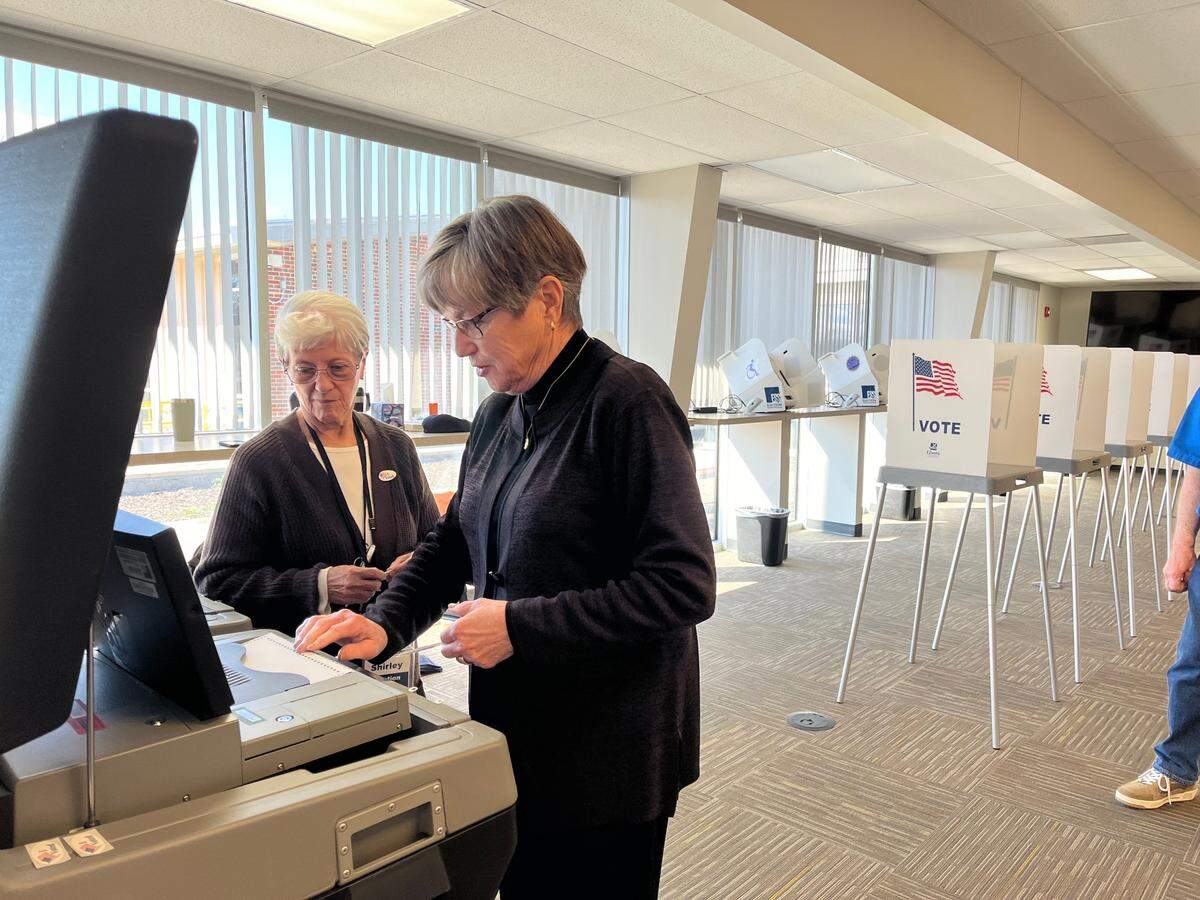
“I liked the energy and the excitement that they create and I wasn’t very enthusiastic about the presidential primary. But it is what it is,” Kelly said after casting an advance ballot in Topeka.
“The Legislature voted for this and so I’m just here because I think it’s my responsibility even though the outcome is already known.”