Early voting starting for Royals & Chiefs stadiums tax. Here’s what we still don’t know
Reality Check is a Star series holding those in power to account and shining a light on their decisions. Have a suggestion for a future story? Email realitycheck@kcstar.com.
Early voting started Friday on the stadiums sales tax ballot issue in Jackson County, with overseas military members able to cast the first ballots. Absentee voting starts Tuesday, and Election Day is April 2.
The outcome will determine the fate of a proposed 40-year sales tax to pay an unspecified portion of the costs of a new downtown ballpark for the Royals and major renovations at Arrowhead Stadium.
Yet early voters are making their decisions without key details available to them.
As of late Friday afternoon, the county’s top lawyer had no documents spelling out the terms of the teams’ new leases or exactly how the new tax money would be spent. The county also couldn’t provide estimates of how much it would need to borrow for the teams’ projects.
The county legislature had only a joint letter of intent from the teams broadly explaining their proposals when legislators voted 7-2 to put the tax on the spring ballot.
County Counselor Bryan Covinsky said that as of 4:45 p.m. Friday he had not seen a negotiated agreement from the Royals on what the terms of the lease would be for a new county-owned ballpark to replace Kauffman Stadium. Nor did he possess a copy of a long-term lease for the Chiefs’ use of county-owned Arrowhead past its expiration date in 2031.
And the Chiefs have yet to give specifics of what renovations they plan for Arrowhead.
Covinsky said he was told to expect some documents Friday. When he does get them, he said he does not know when they might be made available to the voting public.
Agreements on wages, housing and other promises to the community
One thing is for certain: Community benefits agreements with the teams won’t be part of any packet of paperwork delivered to Covinsky’s office, says Gwendolyn Grant, chief negotiator of the agreements and president of the Urban League of Greater Kansas City.
“We’re working on it, but I don’t really have much to share at this point,” she said, “because it’s not done.”
Both teams have said they are committed to signing agreements that would commit them to using union labor on their projects, as well as promising long-term benefits to stadium workers and other community benefits like a commitment to support affordable housing.
Grant said she hopes to have those negotiations finished by the end of the month.
County legislator Manny Abarca, who pushed to put the stadiums tax on the ballot before negotiations were complete, had said in a social media post on Jan. 22 that he and several of his colleagues required full details of the leases and community benefits agreements prior to the start of early voting, “or my support will not be there for the ballot initiative.”
But he backtracked on that when asked about it Friday via direct message on X, formerly Twitter.
Initially, Abarca said that his conditions had been met. But when informed of Grant’s comments, he said the teams’ failure to meet his personal deadline on the benefits agreement put more pressure on them to get it done.
“Knowing some voters will make a decision as early as today, means the teams are ‘on the clock’ and the game ends on Election Day,” he said. “We the county are leveraging the expiring ‘clock’ to pressure the teams to get this done fast and settle on more positive benefits for the community.
“Remember, no tax is collected until we authorize a lease, that would include a development agreement, and cba’s signed.”
How much will taxpayers cover?
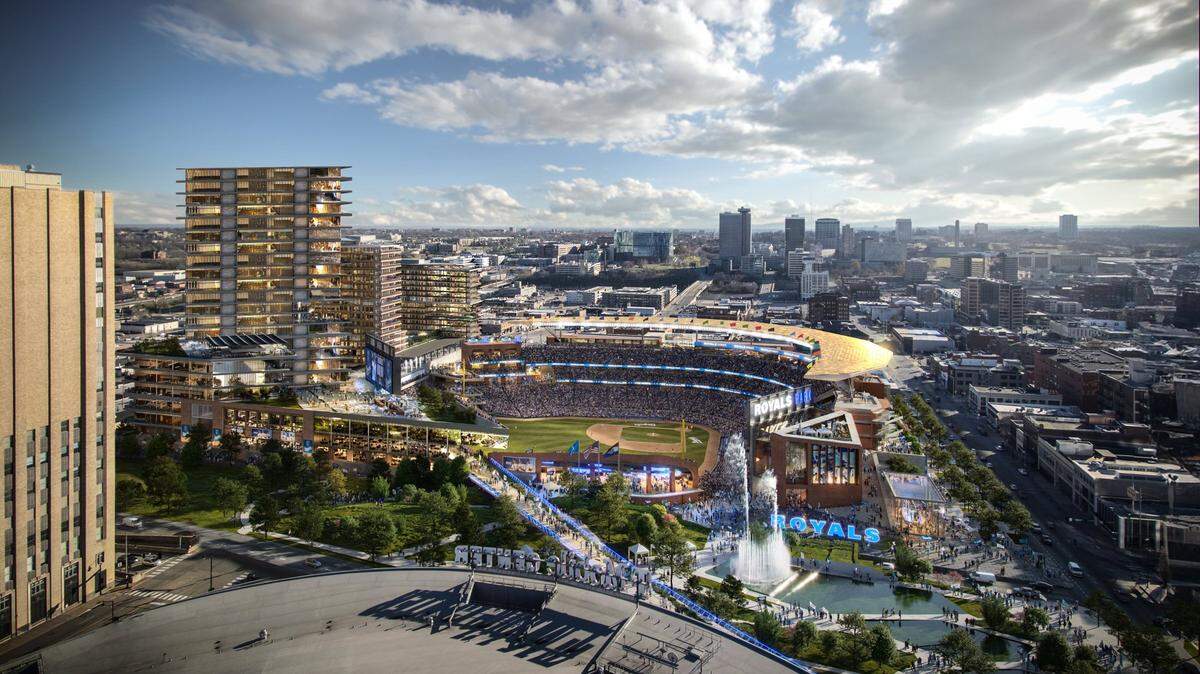
The proposed location for a new Royals stadium wasn’t decided when the tax measure was put on the ballot, either. The team removed that from the list of unknowns with the announcement on Tuesday afternoon that the team had picked the East Crossroads.
The Royals estimate the stadium itself will cost roughly around $1 billion, and the overall development project around $2 billion. But beyond the county sales tax, voters still don’t know where the rest of the money would come from.
The team says it plans to invest more than $1 billion overall.
Missouri might contribute state money to the project, but that’s uncertain. Asked whether Kansas City tax dollars will also go into the downtown stadium project, Mayor Quinton Lucas’ chief of staff said after Tuesday’s announcement that City Hall had not been asked yet.
Voters approved the stadiums sales tax that’s in place now in 2006 to raise $425 million, which was split evenly between the Kauffman and Arrowhead renovation projects. The Royals put in an additional $25 million, and the Chiefs spent an extra $125 million. The state also contributed toward those projects.
The existing tax also provides the teams with revenue for operations, repairs, management and maintenance of the venue, as would a new tax.
The current sales tax expires in the fall of 2031, several months after the current leases expire. If a new tax is approved in April, the current tax would expire then and the remaining principal owed from the 2006 bond issue (about $200 million) would be refinanced, the ballot language says.
This story was originally published February 16, 2024 at 5:51 PM.