Despite pardon, Missouri man can’t get his guns back after waving them at protesters
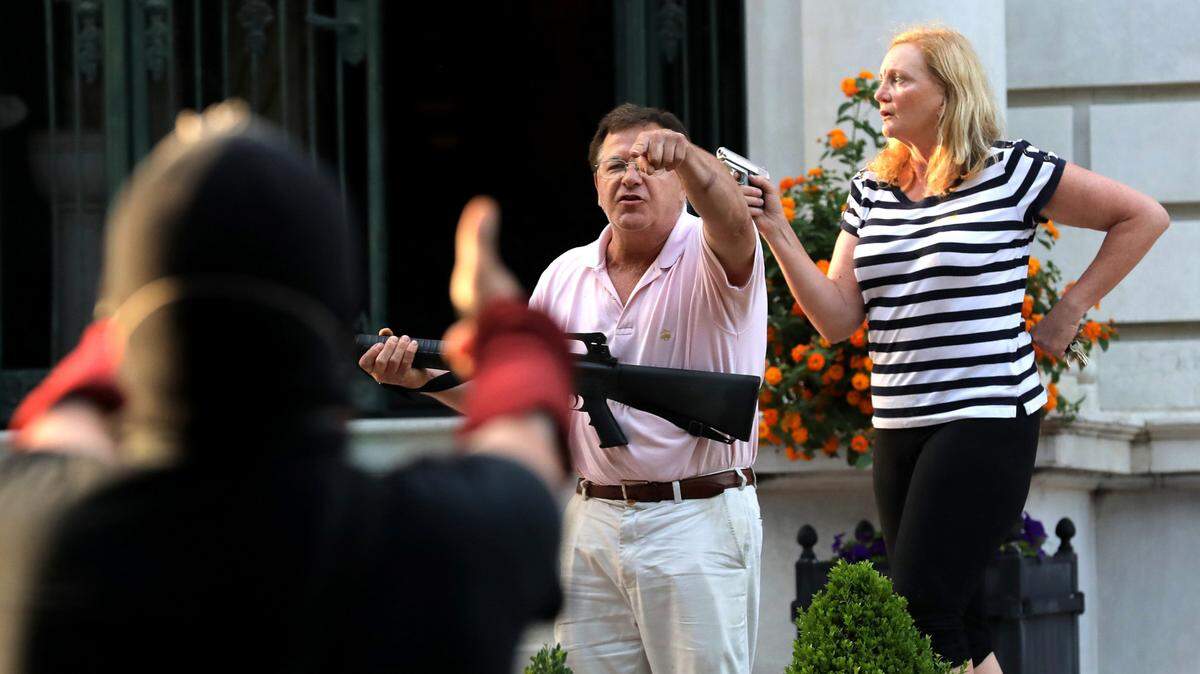
Mark McCloskey, who pleaded guilty to brandishing a gun as Black Lives Matter demonstrators marched by his St. Louis home, won’t get his firearms back despite a pardon from Republican Gov. Mike Parson, a state appeals court ruled.
The decision against McCloskey reaffirms the limits of Parson’s pardon power as he considers a different case: whether to pardon or commute the sentence — or both — of Eric DeValkenaere, the former Kansas City police detective found guilty of involuntary manslaughter in fatally shooting a Black man, Cameron Lamb, in 2019.
A three-judge panel of the Missouri Court of Appeals Eastern District on Tuesday said McCloskey, a lawyer who mounted an unsuccessful Republican campaign for U.S. Senate last year, isn’t entitled to the firearms seized during his 2020 case. The court found that while the pardon obliterated McCloskey’s conviction, it didn’t eliminate his guilt.
“The law recognizes the difference between a conviction and guilt,” the appeals court’s opinion reads.
McCloskey and his wife, Patricia, were captured on video in June 2020 holding guns on their lawn and confronting nonviolent protesters heading past their house. McCloskey was initially charged with felony unlawful use of a weapon, but pleaded guilty in 2021 to misdemeanor fourth-degree assault.
As part of the plea agreement, McCloskey forfeited a rifle and pistol that law enforcement had previously seized. Parson pardoned McCloskey about a month later.
In Missouri, pardons “obliterate” convictions and restore “all rights of citizenship” removed by a conviction. They also remove any legal obstacles that are a consequence of the conviction.
The appeals court found that because McCloskey had pleaded guilty and voluntarily surrendered his guns in exchange for prosecutors dismissing the felony charge, “his inability to recover his firearms is not a legal disqualification, impediment, or other legal disadvantage that is a consequence of his conviction.”
“Rather, the permanent forfeiture is a consequence of his guilt,” the decision says.
McCloskey said in an interview that he plans to appeal the decision to the Missouri Supreme Court. He said if he had agreed to jail time and was pardoned, he would have gotten out of jail.
“Well, my guns are in jail,” McCloskey said. “And once the governor pardoned us, just like my conviction’s gone, there’s no reason for the guns to be held anymore.”
It’s unclear whether the Missouri Supreme Court will take the case. Chuck Hatfield, a Jefferson City-based attorney, voiced doubts that the high court would accept it, but said the court may be required to take it if the case presents a constitutional issue.
“I think they’re probably not going to take the case,” Hatfield said.
McCloskey is Parson’s most controversial pardon to date, but the anger surrounding a potential DeValkenaere pardon would easily eclipse what came before. A host of Kansas City civic leaders have urged the governor not to meddle with the conviction. DeValkenaere is the first Kansas City police officer ever convicted of killing a Black man.
DeValkenaere is in prison, but Parson, a former Polk County sheriff, has said he is considering whether to take action after a public campaign by DeValkenaere’s wife. Missouri Attorney General Andrew Bailey, a Republican, has also refused to defend the conviction in court.
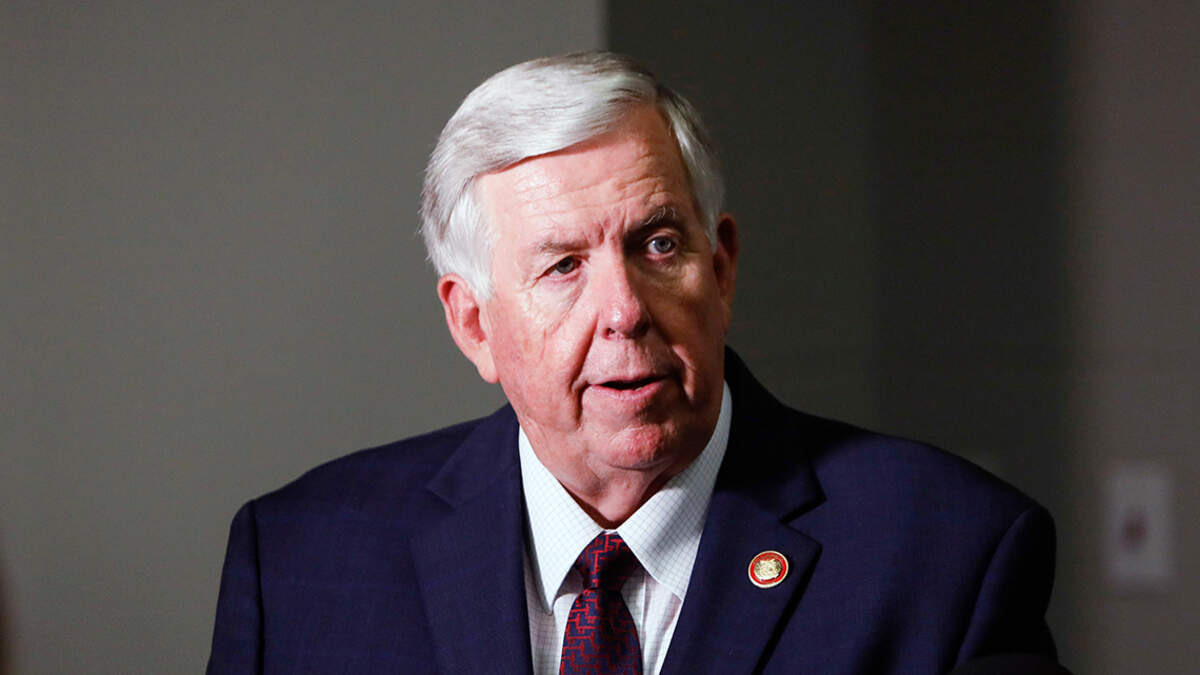
The Missouri Constitution gives Parson the power to delay, reduce or eliminate the punishment of state-level crimes. A full commutation would allow DeValkenaere to be released from prison, while a partial commutation would reduce the terms of his sentence.
A pardon would go a step further by eliminating the conviction. But it may not pave the way for DeValkenaere to return to law enforcement.
Missouri law allows state officials to revoke the licenses of law enforcement officers who have committed any criminal offense, whether or not criminal charges have been filed. Licenses may also be revoked for officers convicted of a crime or who have pleaded guilty, regardless of whether a sentence is imposed.