U.S. Supreme Court rejects Missouri request to enforce law invalidating federal gun rules
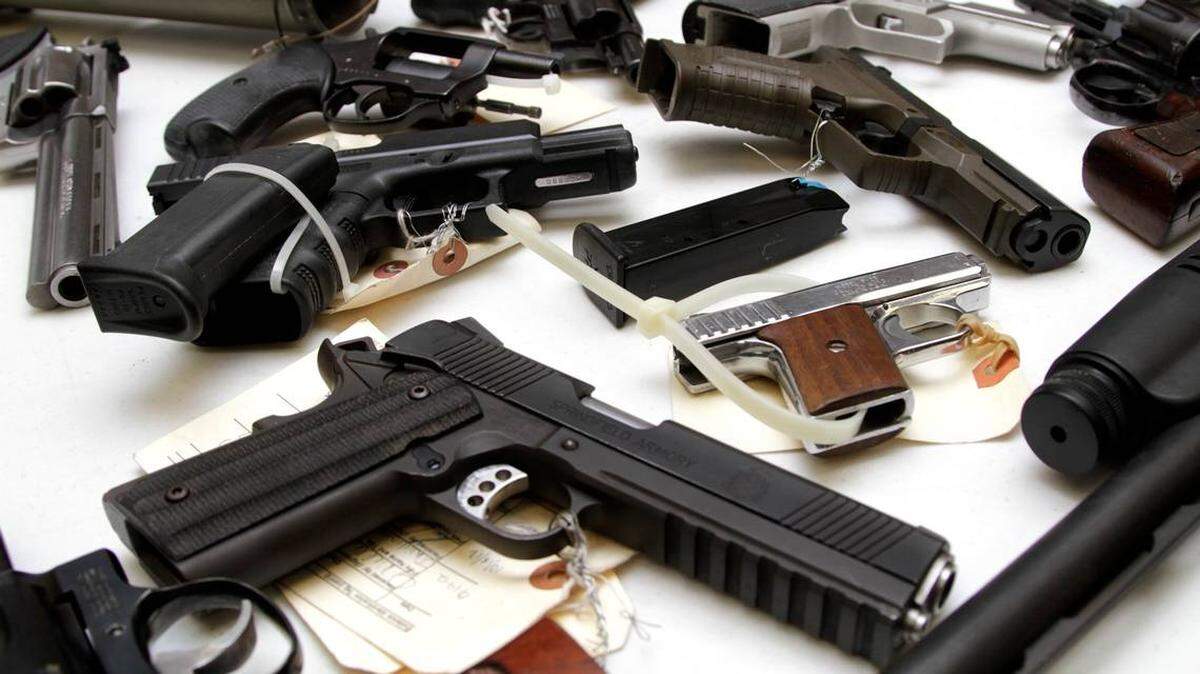
The U.S. Supreme Court rejected a request on Friday from Missouri to allow officials to enforce a state law declaring certain federal gun laws “invalid” if they don’t have a state-level equivalent.
The Supreme Court’s order denying the request comes after U.S. District Court Judge Brian Wimes in March found the law unconstitutional as part of a lawsuit brought by the U.S. Department of Justice challenging the law, which it argues has disrupted cooperation between federal officials and Missouri law enforcement.
Missouri Attorney General Andrew Bailey, a Republican appointed to office by Gov. Mike Parson in January and seeking election next year, had wanted Missouri to be allowed to implement the law, known as H.B. 85, while an appeals court considers whether to uphold Wimes’ decision.
The order denying the request doesn’t say how the justices voted, but notes that Justice Clarence Thomas would have sided with Missouri. Justices Neil Gorsuch and Samuel Alito issued a brief statement supporting the decision to deny the request, explaining the injunction only affects Missouri officials, not others who aren’t part of the lawsuit.
“With the understanding that the district court ‘prohibited’ only ‘implementation and enforcement’ of H. B. 85 by the State of ‘Missouri and its officers, agents, and employees’ and ‘any others in active concert with such individuals,’ … I agree with the denial of the application for a stay under the present circumstances,” Gorsuch wrote in a statement joined by Alito.
The Supreme Court’s refusal on Friday to wade into the fight over the Missouri law, called the Second Amendment Preservation Act, isn’t the final word on the law. Bailey’s appeal of Wimes’ decision remains pending in front of the Eighth Circuit Court of Appeals. It’s possible the Supreme Court could eventually take up the case at a later date after a ruling from the appeals court.
In his March decision, Wimes wrote that the law “exposes citizens to greater harm by interfering with the Federal Government’s ability to enforce lawfully enacted firearms regulations designed by Congress for the purpose of protecting citizens within the limits of the Constitution.”
Bailey made his request to the Supreme Court in early October. In its filing, the Missouri Attorney General’s Office said that in March, Wimes had agreed to administratively stay his injunction on the law until the Eighth Circuit ruled on a motion for a stay pending appeal.
That ruling came on Sept. 29, with the appeals court denying the stay – meaning that despite the judge’s decision, the law had been in effect until just a few weeks ago.
Bailey, in a statement from a spokesperson, said the ruling was “purely a procedural matter.”
“We look forward to defending Missourians’ Second Amendment rights at the Eighth Circuit Court of Appeals,” he said.
Senate Minority Leader John Rizzo, an Independence Democrat, in a statement to The Star criticized Republican lawmakers for passing the law over the objections of police officers.
“Since Day One, Democrats have said this law was unconstitutional, and I am glad the Supreme Court has stopped Republicans from enforcing it,” the statement said in part. “This dangerous law is another example of Republicans’ inability to govern.”
Social media case
The Supreme Court on Friday also issued a ruling in favor of the Biden administration in a separate Missouri case, temporarily blocking an order from the lower courts that prevented the White House from communicating with social media companies about online misinformation.
Justices Alito, Thomas and Gorsuch dissented.
Both of the rulings are setbacks for Bailey, who is seeking a full term in 2024.
“This is the worst First Amendment violation in our nation’s history,” Bailey said in a statement. “We look forward to dismantling Joe Biden’s vast censorship enterprise at the nation’s highest court.”
The social media case, originally filed by Sen. Eric Schmitt when he served as attorney general, argues that the Biden administration violated the constitutional right to free speech when it urged social media to take down certain posts that questioned the administration’s COVID-19 policies -- often shared by conservative media personalities.
The Supreme Court will likely hear the case in the spring, bypassing further decisions from lower courts on the issue, which asks the courts to determine if the federal government asking social media companies to censor posts violates the first amendment right to free speech.
This story was originally published October 20, 2023 at 3:57 PM.