Johnson County transit needs reworked. Will officials ‘invest’ or do the ‘bare minimum’?
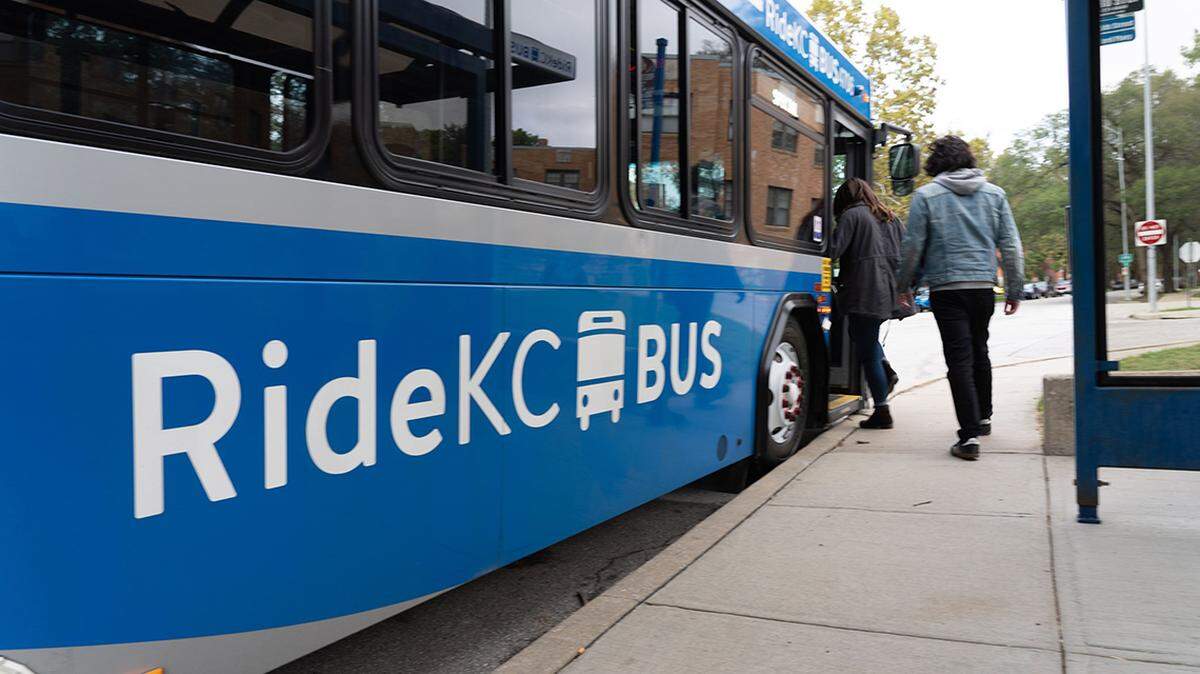
Johnson County is poised to start losing money on its transit system in the next couple of years, with rising costs and a loss of funding projected to bring the program’s budget into the red.
That’s led officials to consider some immediate steps, such as cutting a few low-ridership bus routes, raising rates on its Uber-like microtransit program and bringing back fares on the K-10 connector route to the University of Kansas in Lawrence.
But that would only be the start. Officials agree the county needs a long-term plan for a more efficient transportation system.
The county has used temporary federal dollars to test out new routes and expand microtransit, which officials say continues to grow in popularity. Residents for years have urged the county to build a more robust, effective transportation system across the booming Kansas City suburbs. And as bus routes have been cut over the years, some have worried about further eliminating transportation options for lower income workers and elderly or disabled residents.
“What we need to do is decide are we actually going to invest in transit in Johnson County? Or are we just going to give it lip service and do the bare minimum?” Commissioner Janeé Hanzlick said last week. “And that’s a policy decision we have to make.”
County warns of budget shortfall
Josh Powers, director of the county’s transit division, told commissioners last week that with revenue losses and other issues, the county expects the transportation budget to “run into problems pretty quickly in 2024” if nothing changes.
Last summer, the county took over management of its transit program, ending its contract with the Kansas City Area Transportation Authority. The county had paid KCATA an annual management fee of $584,000. The program now falls under the county’s public works department.
Powers said there has been ongoing revenue loss since Kansas City eliminated bus fares for service from the KCATA in 2020, a change on both sides of the state line that included Johnson County. The county has maintained free fares since taking over management last year.
Since implementing free fares, the county has not collected about $1 million annually, said Anne Christiansen-Bullers, a county spokeswoman.
The county also used more than $15 million in federal COVID-19 dollars to expand some programs, but does not have new revenue to replace that temporary funding. In addition, Powers said labor and contract costs continue to go up amid worker shortages and supply chain issues.
And the demand continues to grow for the county’s expensive, ride-hailing microtransit program, which Powers said is “very popular because of its premium nature of service, but does cost a pretty penny.”
If the county does nothing, Powers expects the program to be over budget by $2.4 million next year, while maintaining about $1 million in reserves. But in 2025, it could be in the red by $6 million.
“We know we wouldn’t continue to barrel ahead under these conditions,” Powers said. County commissioners directed staff to explore several interim solutions and move forward with a strategic planning process.
“If we’re going to have a level of transit that people can rely upon and utilize as our community continues to grow, we need to explore ways to actually fund it efficiently,” Johnson County Chairman Mike Kelly said.
The county took advantage of temporary, federal COVID-19 funding to test out some new bus routes and expanded service, hoping to learn whether the changes would make it easier for residents to choose public transportation.
One goal was expanding bus service to include Saturdays, but Powers said the county has yet to implement that due to labor challenges.
As part of the plan, the county is using $6 million in federal funds to expand the service area for the microtransit program and offer it seven days a week with an increased fare. While maintaining bus ridership on some routes remains a struggle, officials say that demand continues to rise for microtransit.
Officials have said the service is filling in the gaps in the public transportation system, allowing individual riders to hail a van via a phone app and get dropped off at bus stops or elsewhere in the service area. Since it’s been expanded last summer, trips are available from 6 a.m. to 8 p.m. each day, with a fare of $3 within the county’s service area. The fare for rides outside the area, such as to the Country Club Plaza, are $5. The program costs the county about $29 per ride.
Powers said there were 163,000 microtransit rides from July 2022 through last month, hovering between 8,000 and 12,000 rides a month. He said the program netted about $350,000 in revenue during that time. That’s up from the 3,000 trips per month the county was averaging a few years ago.
Cutting routes, raising fares
Officials have been trying to find the right balance between maintaining fixed bus routes while investing in the pricier microtransit.
The county would save $4 million if it paused the microtransit service for one year during the strategic planning process, Powers said, but officials are not recommending that.
Instead, commissioners voted unanimously to direct staff to study charging higher fares and consider capping the number of trips a single user can take. The county could charge “premium” rates for curb-to-curb service, potentially up to $12 each way for a trip, and a lower rate for riders being dropped off at fixed bus routes.
The county also will look at an enforcement mechanism for people requesting rides but not actually taking them — there were nearly 31,000 of those over the last year, or 19% of booked trips.
Commissioners also agreed with staff that the county should explore cutting three low-performing routes, at least temporarily. They include the 482 Overland Park Flex route, which averages four riders per hour and costs $155,000 each year; the 519 Olathe Express route, with three riders per hour, at an annual cost of $300,000; and the 595 Gardner-Overland Park Express route, with three riders per hour, at a cost of $378,000.
Commissioners voted 6-1 to have staff explore cutting those routes, with Shirley Allenbrand voting against it, voicing frustrations with the idea of eliminating the 595 route in her district, connecting Kansas City to the intermodal industrial park in Edgerton.
Officials will study bringing back a $3 fare for the K-10 route connecting Johnson County Community College and the University of Kansas. And the county hopes to talk with Douglas County officials about a new funding partnership for that service.
Commissioners also voted 5-2 to consider a six-month test of offering Saturday service on certain routes.
Staff will bring forward recommendations on all of the interim steps at an undetermined date, which will require final approval from the commission. And in the meantime, officials are moving ahead with a long-term study of the transportation system.
Hanzlick said the county needs “to have a road map so that we can decide where we want to go.”
“I know there are folks out there, and I’ve been getting some emails, who are concerned about these potential changes,” she said. “But again, this is not the end of the conversation. It’s an interim step.”
This story was originally published October 20, 2023 at 6:00 AM.