University of Kansas Health System announces plans for new cancer center at KCK campus
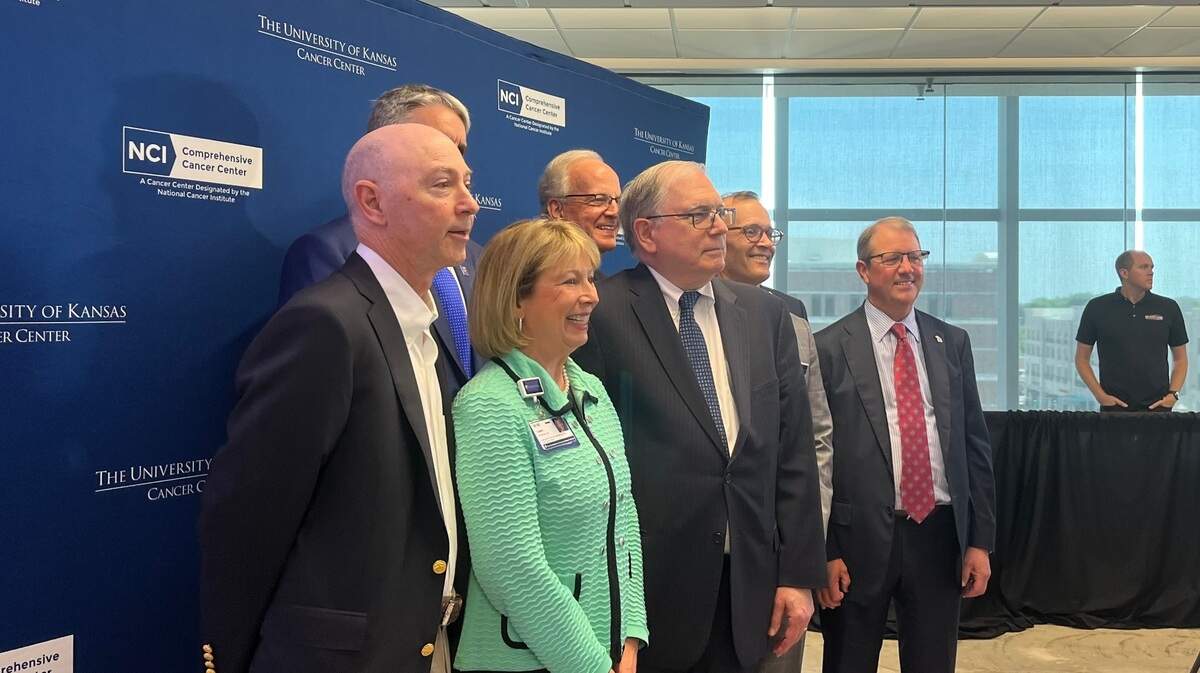
The University of Kansas Health System will build a new, centralized, cancer center in Kansas City, Kansas, using $143 million in combined private grants and federal dollars.
The health system announced the funding and facility in a celebration at the University of Kansas Health Center Campus Tuesday alongside U.S. Sen. Jerry Moran and Lawrence Tabak, the acting director of the National Institutes of Health.
Moran and leaders at the health system framed the project as a key step toward making KU an international leader in cancer care and treatment in years to come.
“People around the country and around the globe will be looking to us,” Moran said.
The Sunderland Foundation, a Kansas City-based nonprofit, provided $100 million in funding toward the center, while Moran, a Republican, secured an additional $43 million in federal appropriations bill signed into law by Democratic President Joe Biden in December.
KU Health System will continue seeking additional donations to complete the project, but Dr. Jeffrey Holzbeierlein, the physician in chief at the University of Kansas Health System, said the exact amount is unknown.
The system is planning to break ground on the project at its campus at 39th Street and Rainbow Road in the fall of 2024.
Once the project is finished, Holzbeierlein said, the goal will be to bring every employee for the University of Kansas Cancer Center, both research and clinical, into the facility. That process, he said, would happen in phases.
The consolidation, Holzbeierlein said, will aid communication across disciplines and between researchers and clinicians. The result, he said, will be better care and treatment options for patients.
KU earned its designation as a Comprehensive cancer center last year but Dr. Roy Jensen, the director of the KU Cancer Center, said the fragmented nature of the center’s staff across several facilities was challenging.
“Cancer is extraordinarily complex,” Jensen said. “That’s why it’s so important that if we want to make a difference we have to bring people together.”
Tabak, the NIH director, said the research had the potential to be transformative. He noted that the types of cancer that killed his mother, aunt and uncle could all now be cured. But Tabek said the form of cancer that killed his grandfather was still a concern without specifying it.
“There’s more work to be done,” Tabak said.
This story was originally published June 27, 2023 at 5:18 PM.