KCK Democrat delivered key votes for KS Republicans. They steered $250,000 to his project
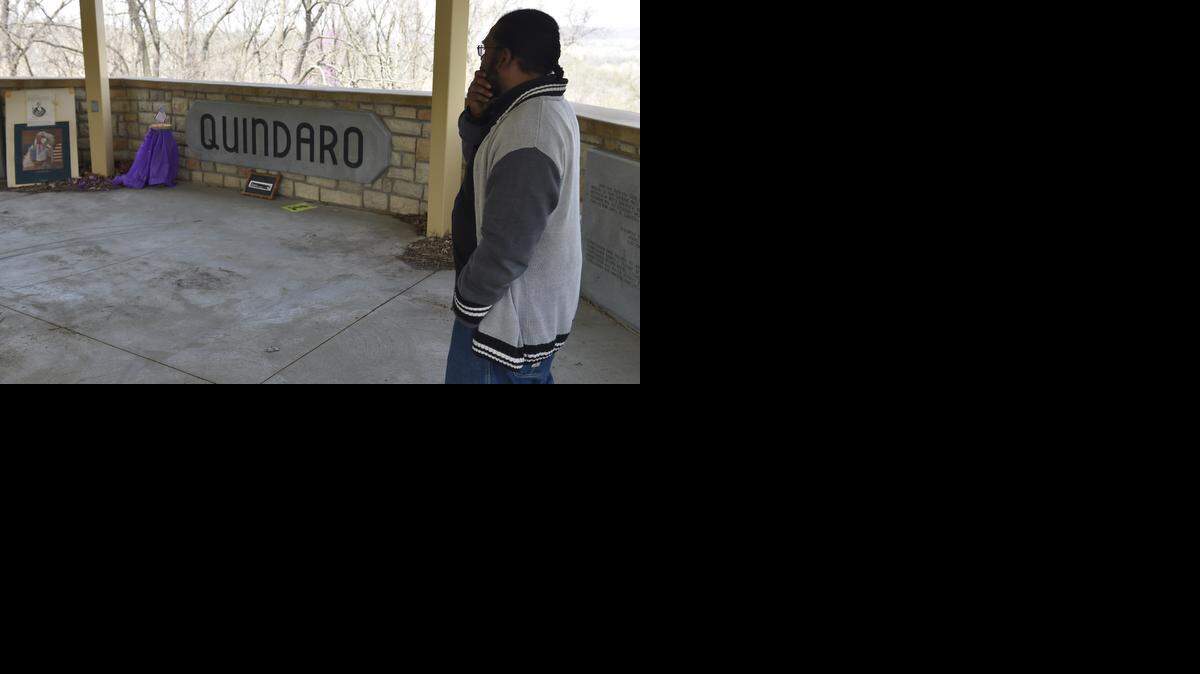
For decades state Rep. Marvin Robinson has been focused on one thing: Funding and recognition for the Quindaro ruins, a Civil War era town in Kansas that operated as a stop on the Underground Railroad.
It was the one issue the freshman Democrat from Kansas City, Kansas talked about in his 2022 campaign for office.
In the waning hours of the 2023 legislative session Republican lawmakers inserted $250,000 in funding to develop a strategic plan for the area into the state’s budget.
The funding came after Robinson, 66, cast decisive votes to help Republicans override Democratic Gov. Laura Kelly’s veto of key policies restricting the rights of transgender Kansans and increasing work requirements for food stamps.
As the Kansas House debated the budget Friday night, Democratic anger at Robinson boiled over.
Rep. Ford Carr, a Wichita Democrat, took aim at votes that he said could harm Robinson’s constituents, including his vote against Medicaid expansion and in favor of limiting food assistance.
In an incendiary speech, Carr, who is a member of the African American Legislative Caucus alongside Robinson, used the phrase “house Negro,” a pejorative phrase derived from slavery in reference to an enslaved person who worked in the “master’s house” instead of the fields. The reference implies that the person would side with the white slave owner at the expense of their fellow enslaved people.
“What I wouldn’t trade would be a vote for something like the James Crow Esquire version of critical race theory, nor would I sacrifice the vote for Medicaid expansion, nor would I sacrifice the vote of those SNAP benefits,” Carr said on the floor. “I wouldn’t support this because I would never trade my vote so that those people in my neighborhood, my constituents who I support, would never have the opportunity to look at me and think that I might be one of those house Negroes.”
Robinson denied any dealmaking, noting that the money would not go to him but to whoever the state historical society hires to develop a strategic plan for the site. After Carr’s speech, Robinson said, he leaned over and thanked him and Rep. John Alcala, a Topeka Democrat, who raised concerns about the funding on the House floor.
“At least they got the information out to the public. Complicated and inaccurate and almost cruel. But they did get the information out there,” Robinson said.
After running a minimal campaign for office in November, Robinson is now arguably the most well-known Democrat in the Kansas House after earning ire from Democrats and praise for Republicans for his votes.
In an hour long interview with The Star Robinson said he would never have run for office if he had known the session would be so dominated by debates over transgender rights — an issue he said he was unaware of despite an intense focus in last fall’s governor’s race on whether transgender athletes should be allowed to compete in girls and women’s sports.
“I would have never even signed on the dotted line to try to go to the House if I had known it was going to be so contentious and full of so many heart-breaking personal, private choices,” Robinson said.
Key override votes
Robinson, a Navy veteran, devoted decades of his life to seeing the Quindaro ruins, the site of a Civil War era port and stop on the Underground Railroad, recognized and preserved.
When his cousin, former Democratic Rep. Broderick Henderson, retired after 28 years in the Legislature, Robinson stepped in to run for his seat. His one goal was to secure recognition for the Quindaro townsite.
At the beginning of session Robinson authored a resolution to commend the U.S. African-American Burial Grounds preservation program. He said he didn’t know the funding for the Quindaro RFP would be added to the budget and was surprised to learn of its inclusion Friday.
But the funding’s inclusion nevertheless came as an indirect result of Robinson’s voting record, and the reaction to it.
Sen. JR Claeys, a Salina Republican and vice-chair of the Senate budget committee, said he asked for the funding to be included. Claeys said he sought the funding because of the way Robinson was being treated by some of his Democratic colleagues in the House, not because of the way Robinson was voting.
“I was delighted to come up with something that would allow Marvin to have a win in his first year since he was clearly being treated poorly by some select individuals,” Claeys said.
However, in his end of session newsletter Rep. Patrick Penn, a Wichita Republican, said he worked with Robinson and Claeys to secure the funding.
A handful of lawmakers voted against the budget citing the appropriation as their reasoning.
“In 20 years there hasn’t been, that I know about, a representative that voted as many times as that particular representative against the best interest of his constituents and his community,” Carr told The Star.
Former Rep. Stephanie Byers, a Wichita Democrat who was the first transgender woman to serve in the House, posted on Twitter that $250,000 was the “price to erase trans people in Kansas.”
From the beginning of session, Robinson said he felt Democratic leadership underestimated him when they told him – and other freshman lawmakers – to lay low and not expect to do much work on their own during their first session.
House Minority Leader Vic Miller said he didn’t know where Robinson got the impression he was meant to lay low.
“It’s quite the opposite, in fact,” Miller said. “We encourage (freshmen) to be active and learn — it’s a lot to jump into. Everyone but him did.”
Robinson was confused and surprised by the stringent line Democrats drew when it came to supporting transgender rights.
“I thought the definition of a woman was the cradle and portal of life,” Robinson said. “I found out that’s not what the definition is to the people of the Democratic Party.”
Though Robinson framed the focus on transgender rights as a key priority of Democrats, each bill aimed at transgender Kansans was introduced by Republican lawmakers. Republicans have tried for years to ban transgender athletes from girls sports and made the issue a top priority from the beginning of the year.
“They were the ones absolutely obsessed with anti-transgender legislation and we were forced to constantly debate their agenda,” Miller said in a statement.
Robinson cast the decisive vote last month to override Kelly’s veto on the bill banning transgender athletes from sports.
Robinson said he suggested to fellow Democrats that they pursue the creation of a new intramural league as an alternative, invoking the history of the color barrier in professional baseball.
“Allow someone to emerge like Jackie Robinson to help break up barriers over a period of time,” Robinson told The Star, contending the Negro leagues could provide an example.
“It was all or none and I got to be the villain and I never would have decided to be a villain or hurt other people,” Robinson said.
His vote drew immediate calls for his resignation from the party’s LGBTQ caucus and the Kansas Young Democrats.
“Robinson has betrayed his constituents and cemented a target on the back of already marginalized children,” the Young Democrats said in a statement.
Aphra Maria Karaya, a 27-year-old transgender woman from Kansas City, Kansas, said last month she was profoundly disappointed in Robinson. She had visited his office before he voted against the transgender athletes bill and she said he had told her he’d support trans rights.
“I blamed myself, if I had said more, or been kinder, if I had more facts and figures and if I had been able to convey that one thing and say the right sentence to him maybe he wouldn’t have flipped,” Karaya, a mortuary student, said. Over time, she said, she came to believe he had been “bought out.”
By the time lawmakers returned for the annual veto session LGBTQ advocacy groups said they had given up on lobbying the freshman representative.
Rep. Barbara Ballard, a Lawrence Democrat and Robinson’s office mate, said she had come to the conclusion that his mind was set. Though she would occasionally tell him on the floor that his vote could have negative consequences to reelection, she largely didn’t speak to Robinson about his votes.
“After it just happened repeatedly you realized this was something he was going to do. And so at that point we just didn’t have any more conversations about it,” Ballard said. Looking back she doesn’t believe anyone could have changed Robinson’s mind.
During the veto session Robinson voted consistently with Republicans —securing veto overrides on a sweeping bill limiting the lives of transgender Kansans in Kansas as well as a bill creating new work requirements for food assistance.
‘I didn’t leave the Democratic Party’
Over the course of the session Robinson said he faced “not nice” treatment from his colleagues because of his votes.
Robinson claimed one colleague told him to “go die” after his vote on transgender athletes but did not specify who. Others, he said, talked down to him. “Some of them acted like I was too ignorant to read the legislation,” Robinson said.
He also came to the conclusion that the Democratic Party had abandoned his constituents in northern Wyandotte County, one of the most economically disadvantaged sectors of the state.
“I didn’t leave the Democratic Party. The Democratic Party left our area in the shambles that it is now,” Robinson said.
Miller, the House minority leader, pointed to bills Democrats introduced on funding schools, cutting property taxes, expanding medicaid and decriminalizing marijuana that went untouched by GOP leaders.
Where Robinson felt Democrats were focused on issues that didn’t matter to his constituents he believed Republicans were pursuing an agenda that could help his constituents.
But Robinson also took votes that could hold a negative impact on his constituents, including votes on food assistance and against Medicaid expansion.
According to the U.S. Census Bureau, 12.8% of Wyandotte County residents are receiving federal food assistance. Statewide that number is just 7.1%.
Robinson said he made that vote because he believed it would help fill job openings in his district and wean people off assistance. He had hoped that it, combined with legislation to decrease child care regulations, would help get some of his constituents into good jobs.
“There was no malice or evil intended, not at all. But we couldn’t stay on the same course we were on,” Robinson, who used to be on food stamps himself, said.
Sen. David Haley, a Kansas City Democrat, said Robinson’s vote “shut the door on those who might need that food assistance.”
“It was very hypocritical for him to vote against that,” he said.
Robinson said he plans to run for reelection, and to do so as a Democrat. But he’s almost certain to face a primary challenge.
“He votes with the most hardline Republican members of the Kansas Legislature, again and again. His district deserves an honest Democrat — that’s who they believe they elected,” Miller said in a statement.
Robinson’s position bucking the party line, Ballard said, was rare for Democrats but not unheard of. Former State Sen. Chris Steineger, also from Kansas City, switched parties to become a Republican in 2010. Republicans, Ballard noted, consistently have members of their caucus that tend to vote with Democrats.
“It comes down to what does his district think about the votes he made and does it represent them,” Ballard said. “Ultimately they will have to make that decision in the next election.”
Reception in Wyandotte County
Haley, a Kansas City Democrat who lives in Robinson’s House district, said he wasn’t surprised by Robinson’s voting record this year. And he isn’t positive Robinson’s district will punish him for it.
Haley has known Robinson for decades. Though Haley said he hasn’t spoken with Robinson since he took office.
“Marvin has played fast and loose with conservative Republicans for many years including but not limited to supporting Kevin Yoder,” Haley said.
For years, Yoder, a Republican congressman from Overland Park, sponsored a bill in Congress to name the Quindaro ruins a national commemorative site. Republican Sen. Pat Roberts successfully worked to get the designation included in a larger public lands bill after Yoder was ousted from office.
Robinson’s key allegiance, Haley said, has always been to Quindaro. He was never vocal on other policy issues.
The votes that could hurt Robinson, Haley said, are his votes on food stamps and against Medicaid expansion. Though Robinson’s district is solidly Democratic, Haley said the voters are more conservative than the Democrats you’d find in Lawrence, Johnson County or Topeka.
Sam Stillwell, a Kansas City Republican who ran against Robinson, agreed. The pushback against Robinson, Stillwell said, seemed to be coming from the Democratic apparatus outside Wyandotte County, not within.
“Their values are family values,” he said.
When Robinson stands for reelection next year, Haley said, the securing of funds for Quindaro could help him win reelection. Attention and funding for Quindaro, Haley said, is something no one has accomplished in the Legislature until Robinson.
“If the post cards come out in the district that say Marvin Robinson voted against the rights of x trans children or Marvin Robinson voted to ban gender affirming care and then the other part says Marvin Robinson brought a quarter million appropriation to enhance Quindaro which led to a walking trail, or whatever it might be, he’s OK, he’ll be alright in the district,” Haley said. “It depends how it’s spun.”
This story was updated to include a reference Wichita Republican Rep. Patrick Penn’s newsletter.
This story was originally published May 3, 2023 at 5:30 AM.