KS House passes expansive voucher-like program, ties it with Kelly’s top education priority
The Kansas House narrowly passed the largest school choice program in state history while tying it to special education funding long sought by public school advocates and Democratic Gov. Laura Kelly.
The Republican-controlled House voted 64 to 61 Wednesday to approve the policy, which now heads to the Senate.
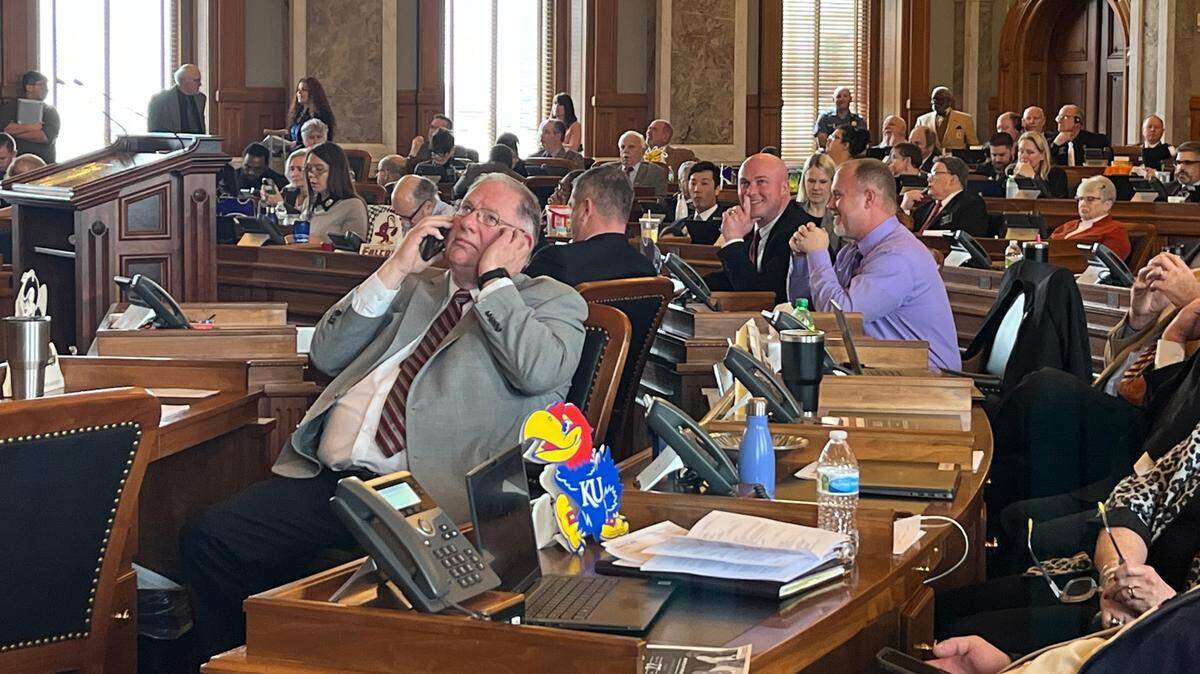
The bill only passed after about an hour in “a call of the House,” in which doors to the chamber were locked while leadership sought to persuade vote changes. Three Republicans changed their “no” votes to “yes.”
The House fell far short of a veto proof majority setting up a major uphill battle if the policy reaches Kelly’s desk. But supporters are hoping the inclusion of one of Kelly’s top education priorities will earn her signature.
Last week Republicans tied together the controversial voucher-like program to special education funding, essentially daring Kelly to either approve a program she has long opposed or veto additional funding for special education, which has been a key part of her second term platform. Kelly asked for $72 million in funding next year followed by an additional $72 million increase for the next five years.
Rep. Kristey Williams, an Augusta Republican, framed the inclusion of special education as a compromise since her preference would have been to study the special education funding formula before providing additional dollars.
“Bottom line, if the governor really cares about disadvantaged kids, if she wants to be different and govern from the middle of the road like she campaigned, then she should say yes,” Williams said Tuesday. “Because we’re saying yes to policies that she wants right now.”
Speaking to reporters after the vote, Kelly strongly rebuked the move to tie the two policies together.
“I don’t really react really well to game playing and bribery, whatever you want to call it,” Kelly said. “I just think it’s really, really unfortunate that there are those in the Legislature that believe that playing those kinds of games is a good idea.”
“They put their own legislative colleagues in a horrible position today and I think they will live to regret it.”
The bill mandates districts offer roughly $2,000 raises to teachers, allocates $72 million in additional funding for special education and creates educational savings accounts for public and private school students across the state. The voucher-like program creates a fund for families to use taxpayer dollars for private and homeschooling expenses.
In its first year, the program would be available to all public school students testing at the lowest grade level or receiving free and reduced-price lunch. Up to 2,000 private school students would be eligible in the first year if their family made less than 300% of the poverty line. Private school eligibility would expand the longer the program is in place.
It’s unclear exactly what the program would cost, but an initial estimate predicted the state could spend nearly $152 million on a larger version of the savings accounts bill annually if the bill becomes law. It would be established in addition to Kansas’ existing tax credit program for private school scholarships.
Williams and others in favor of the legislation have argued the savings accounts give options to students who are not thriving in their public school.
Twenty-two Republicans voted against the bill, breaking leadership. Meanwhile one Democrat, freshman Rep. Marvin Robinson from Kansas City, diverged from his party and voted yes.
In an explanation of vote a number of those Republicans, including Rep. John Eplee from Abilene and Rep. Susan Concannon from Beloit, said the potential school choice program lacked sufficient accountability and that money should instead be used on improving Kansas’ early childhood education programs.
Public education advocates opposed the legislation, arguing the educational savings accounts would pull more money away from public schools than the special education funding would infuse.
“The permanent damage that would be done by this ESA voucher program would far outweigh this one year increase in special education funding,” said Leah Filter, a lobbyist for the Kansas Association of School Boards.
This story was updated to clarify that Democratic Rep. Marvin Robinson joined Republicans in supporting the bill.
This story was originally published March 15, 2023 at 12:17 PM.