Kansas chief justice seeks pay raises for judges as GOP frustration over abortion festers
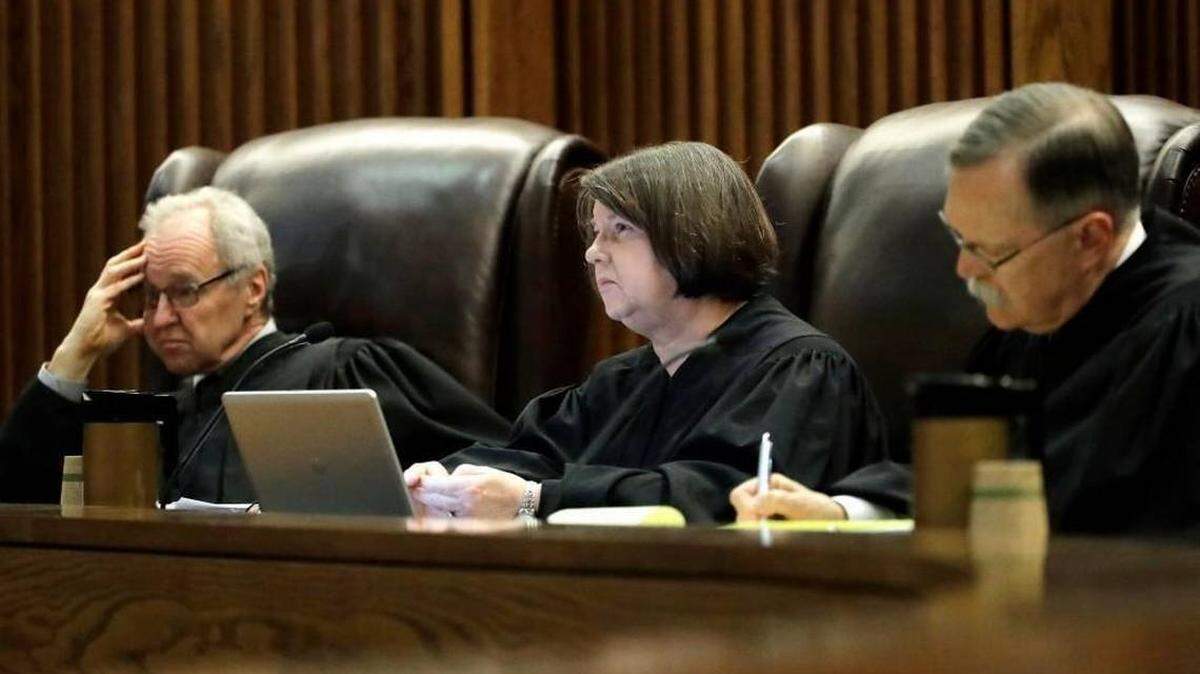
As frustration festers among GOP lawmakers over the Kansas Supreme Court’s decisions on abortion, the court’s chief justice asked Wednesday for the Legislature to raise pay for judges and judicial staff.
In her annual state of the judiciary address, Chief Justice Marla Luckert thanked lawmakers for recent efforts to increase judicial pay. However, she said more was needed as the market rate continued to increase.
Currently, she said, entry-level attorneys at Kansas City firms make more money than the judges they sit in front of on the Kansas side of the metro. Her written report cited that pay level at $170,000.
“Under the criteria you have set, those new attorneys could not apply to be a judge for at least another five years. Over those five years or more, their pay increases and the gap between what they make and what we can offer judge candidates grows wider,” Luckert said.
The judicial branch’s budget seeks a 15.29% raise for judges and an 8.5% pay increase for other judicial employees. A written report Luckert submitted to the Legislature says Kansas is 43rd in the country for judicial pay.
The increase, Luckert wrote, would bring Kansas’ judicial pay up to the average of pay in its four neighboring states and help the state recruit qualified judges.
Luckert addressed a joint session of the Kansas House and Senate with top GOP lawmakers, Senate President Ty Masterson and House Speaker Dan Hawkins, sitting behind her.
While her speech functioned primarily as an update on the finances and successes of the judicial branch, she didn’t address the topic that has hung over conversations about the court in the Legislature in recent years — abortion.
The court has been the subject of frustration from GOP lawmakers since a 2019 decision establishing a state-level right to an abortion.
In August, voters overwhelmingly rejected a constitutional amendment seeking to remove that right. And in November, voters chose to retain every justice on the ballot despite recommendations from Kansans for Life to reject all but the most conservative member.
On Jan. 30, the court will hear cases related to two abortion restrictions struck down under the law, creating an opportunity for justices to further define what the right to an abortion entails.
As Luckert spoke two anti-abortion activists stood outside the Kansas House chamber with signs urging lawmakers to ban abortion in all instances.
The dual defeats for anti-abortion activists and lawmakers have sparked renewed scrutiny of the court and discussion of changing the manner in which justices are appointed.
Under the current system, justices are chosen by the governor from a small pool selected by a committee of attorneys and non attorneys. Those justices stand for retention every four years.
Republicans have advocated for constitutional amendments that would make justices elected or subject to state Senate confirmation.
Kansas Attorney General Kris Kobach, a Republican who attended Luckert’s speech, floated changes to judicial selection during his campaign as a strategy to slowly remove existing members of the court and ensure the opinion establishing a right to abortion is overturned.
A constitutional amendment on the topic failed to get a super majority in the Kansas Senate last year but in an interview Monday Masterson said it remained a goal.
He said he wanted to see the Supreme Court answer the question of when a fetus gains the same right to bodily autonomy afforded to the pregnant woman. He said such a ruling could come from new legislation or litigation over existing abortion restrictions.
He said he expected renewed energy for a change to selection law if the court rules a fetus has no bodily autonomy.
“I’m still an advocate for it but that’s a matter of timing,” he said.
Speaking to reporters after her speech Luckert declined to offer her thoughts on the selection process, but said the key question for voters would be whether that maintained independence for justices.
“We will, as always, uphold the law as the people determine it should be,” Luckert said. “I think that voters will have to decide for themselves.”