First trial of a Missouri resident charged in Capitol riot to begin Friday in D.C.
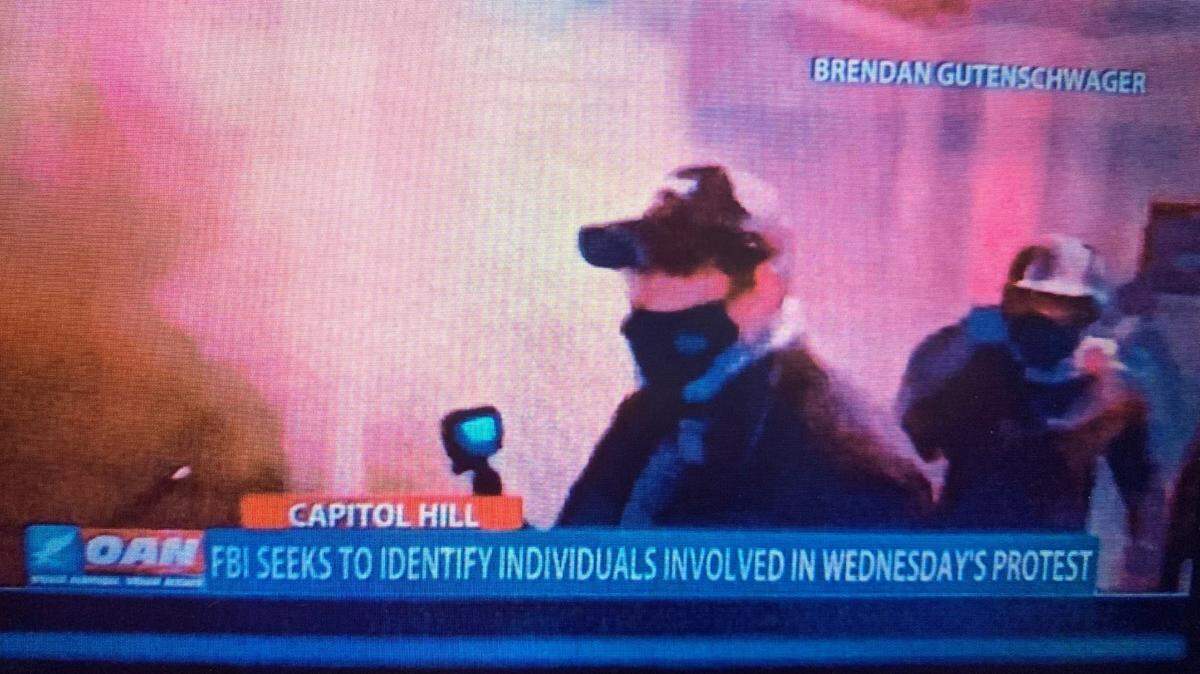
A northwest Missouri man charged in the Jan. 6 insurrection is set to go to trial Friday, the first Capitol riot defendant in the state to have a case heard by a jury.
Lloyd Casimiro Cruz Jr., 40, of Polo — about 50 miles northeast of Kansas City — faces one charge of parading, demonstrating or picketing in a Capitol building and one charge of entering or remaining in a restricted building or grounds. Both are misdemeanors.
Prosecutors say Cruz first denied breaching the Capitol, then later told the FBI that reviewing videos he took on Jan. 6 reminded him that he had indeed gone inside.
His trial is scheduled to begin Friday morning in U.S. District Court for the District of Columbia.
“Mr. Cruz maintains his innocence and wants his day in court to seek a full acquittal of these charges,” his California attorney, John Pierce, told The Star in an email Tuesday morning.
Twenty-three Missouri residents have been charged in connection with the Capitol riot. So far, 16 have pleaded guilty, and 14 of those have been sentenced. Eight got probation, four were ordered to serve 30 to 45 days of incarceration, one received 45 days in a halfway house and one received probation plus intermittent confinement.
Cruz and two others are scheduled to go to trial, and the remaining defendants are still going through the courts.
Prosecutors say Cruz entered the Capitol about two minutes after the initial breach and walked around inside for seven or eight minutes, recording with a GoPro. They said Cruz would have seen officers fighting to keep people off the northwest steps and that after those steps were breached, Cruz climbed them, filming as he went.
“When he went in the door two minutes after the breach — as you know, it was a very violent breach, windows were bashed in, officers had to retreat — the alarm was going off on the Senate wing door as he entered,” then-assistant U.S. attorney Mona Furst said at a hearing in August. “And there was a lot of screaming, yelling and chanting as he entered as well.”
According to the charging documents, records obtained through a search warrant showed that Cruz’s cellphone was in the Capitol on Jan. 6.
An FBI agent interviewed Cruz on May 19, 2021, at the Caldwell County Courthouse in Kingston, Missouri, the documents said. Cruz told the agent that he drove with friends to Washington, D.C., to attend the pro-Trump “Stop the Steal” rally. At the rally, Cruz said, former President Donald Trump encouraged the crowd to march to the Capitol, and the crowd arrived at the west side of the Capitol about 15 minutes after Trump’s speech ended.
Cruz told the agent he went onto the Capitol grounds because he saw tear gas and rubber bullets being deployed on protesters pushing through the barriers and wanted to help anyone who had been injured, according to the court documents.
He told the agent that he walked up the northwest exterior steps of the Capitol but did not enter the building. After seeing a window break, he said, he realized the situation was deteriorating and left. He said he had recorded about 15 minutes of footage with his GoPro camera and would give it to the FBI if he could find it, the documents said.
The agent interviewed Cruz again on June 1, 2021, and Cruz gave the agent a thumb drive that contained photos and videos of his trip to D.C., according to the documents. He said that reviewing the videos “reminded him that he entered the U.S. Capitol building on January 6, 2021.”
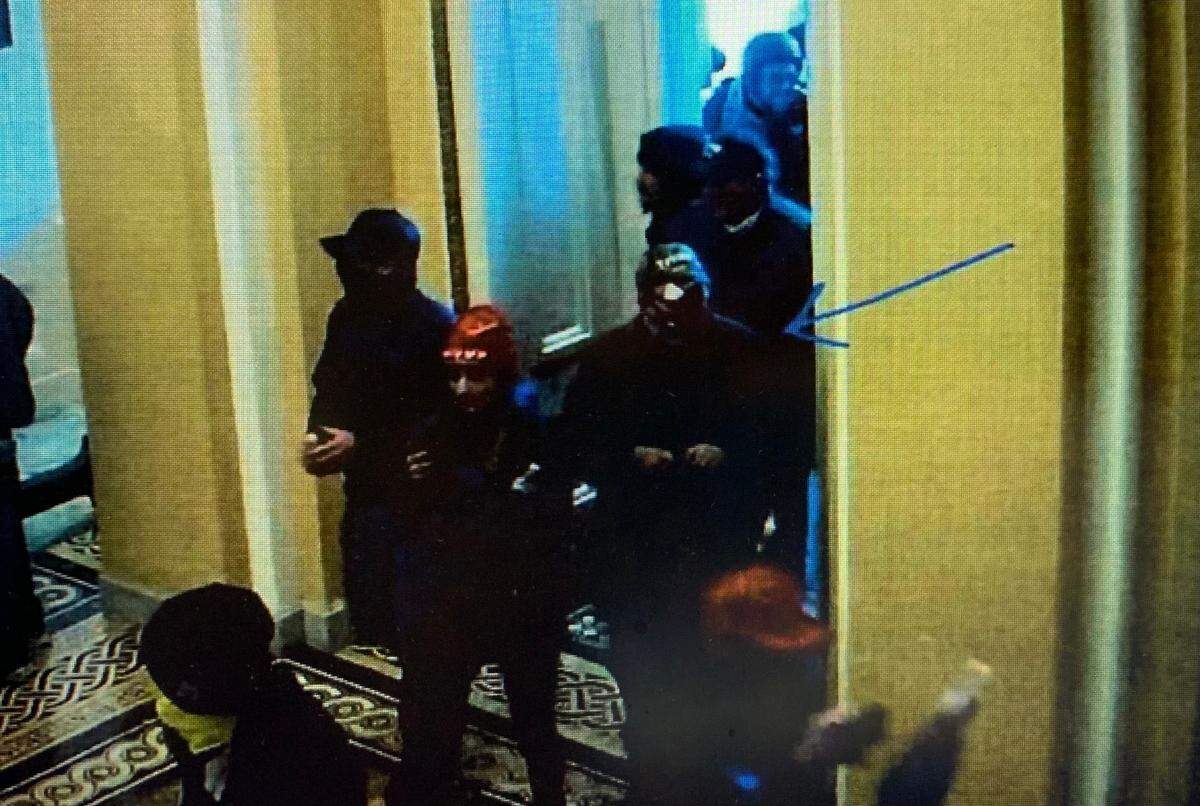
Cruz told the agent he wore a green coat, a camouflage Trump hat and a black face mask when he entered the Capitol, the documents said. He said he later saw himself on surveillance footage from inside the Capitol that had been posted on One America News Network’s website.
The agent called Cruz on July 23, 2021, the documents said, and Cruz told the agent that when he marched to the Capitol, he was under the impression that Congress was in recess and that the vote to certify the presidential election results was to be later in the day.
According to the documents, Capitol video surveillance recorded Cruz entering the building at 2:14 p.m. and exiting at approximately 2:21 p.m.
Cruz has filed two motions to dismiss his case. In one, he said the charges were “undeniably unconstitutional” and that he was merely exercising his First Amendment rights when he entered the Capitol that day.
U.S. District Judge Reggie B. Walton denied that motion on Dec. 15. In another motion, Cruz argued that the evidence obtained from the search of cellular location data should be suppressed and the case dismissed because it originated “with a massive violation of the Fourth Amendment.”
The Fourth Amendment says search warrants cannot be issued without probable cause and must describe the place to be searched and person or things to be seized, Cruz’s motion said. But when the FBI obtained the search warrant, the motion argued, “The government didn’t even know who they were searching for or even what specific crimes they were investigating.”
The charges against him, Cruz said, stemmed from “an unlawful blanket general warrant of cellphone location data” which lacked any specifics.
The government denied that it violated the Fourth Amendment in collecting the information. Cruz had no reasonable expectation of privacy, it said, inside the Capitol building on Jan. 6 or in the location information that Google and AT&T collected in their normal course of business.
But even if Cruz had standing to raise his objections, the government argued, “they fail on the merits.”
“The government obtained search warrants that were supported by probable cause and that specified their objects with particularity,” the government’s response said. “These were not impermissible ‘general warrants.’”
The judge is scheduled to hear arguments on Cruz’s motion at 9 a.m. Friday, and jury selection is to begin afterward, according to the court docket.
Pierce, Cruz’s lawyer an outspoken advocate of those accused of breaching the Capitol on Jan. 6, has made numerous headlines of his own over the past two years.
At one point, he had taken on about 18 Capitol riot defendants — more than any other attorney — raising conflict-of-interest concerns and questions as to whether he could adequately represent them all. In August 2021, his cases came to a halt after he failed to show up at a hearing for one client and prosecutors said they couldn’t find him. He reappeared in September, saying he’d been in the hospital, but provided no other details.
Pierce also represents Capitol riot defendant John George Todd III, of Blue Springs, who was charged with five misdemeanors on May 3, 2022, after he was allegedly captured on video making threatening remarks to police officers and illegally remaining within the building.
Todd’s case was originally scheduled to go to trial Nov. 14, 2022. But at a pre-trial hearing, Pierce drew sharp criticism from Chief Judge Beryl A. Howell when he said he needed more time to prepare and asked for another year.