Missouri Republicans target transgender athletes, curriculum as state Senate shifts right
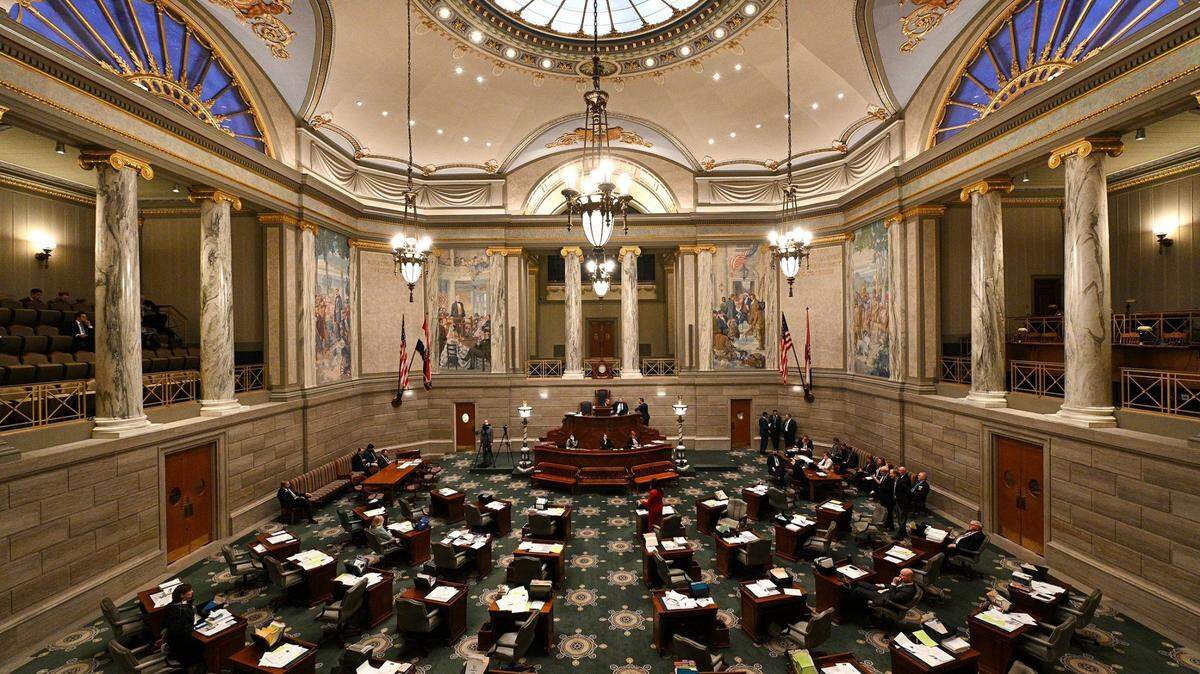
After a contentious election cycle, the Missouri legislative session will kick off Wednesday with a state Senate that is expected to shift its priorities further to the right.
In previous years, legislation crafted around culture-war debates such as bans on transgender student athletes and bills that target what kids are taught in schools have failed to pass amid bitter infighting among Republicans.
Versions of both proposals passed in the Missouri House last session but failed in the upper chamber. Missouri Senate Republicans now say some of those policies could have enough momentum this year with more hard-right members joining the upper chamber.
The Conservative Caucus, a hard-right faction of senators that frequently sparred with the more moderate GOP leadership over legislation the group felt wasn’t conservative enough, formally disbanded over the summer. The decision to disband indicated that the group believed it had enough members and support to merge its hard-right priorities with GOP leadership.
One of the Senate’s most high-profile conservative leaders is state Sen. Bill Eigel, a Weldon Spring Republican who is exploring a bid for governor in 2024. In an interview with The Star, Eigel said he’s optimistic that relationships among Senate Republicans will be better this session, paving the way for more conservative legislation to pass.
“The people of this state overwhelmingly voted to send a Republican Senate caucus that believes precisely the kind of things that the Conservative Caucus was talking about,” Eigel said. “It has moved to the right to a certain degree, probably to a large degree…and I think that’s going to trigger an acknowledgment in some of my colleagues that, hey, we’ve got to work together to get big red things done.”
During a news conference in May, Missouri Gov. Mike Parson told reporters he was disappointed that lawmakers were unable to pass bills related to both bans on transgender student athletes and school curriculum last session.
“I think we should have definitely addressed the gender, transgender issue that’s out there,” he said at the time. “I think that should have been addressed in this state so we make a clear understanding which way we’re hitting that so people know.”
Republican senators have already filed a bevy of bills that appeal to conservative voters, previewing a legislative session in which transgender bans and school curriculum bills will be at the forefront.
Democrats say that Republican lawmakers recognize the dysfunction that plagued the Senate last year. They worry Republicans have identified transgender bans and school curriculum bills as priorities in order to appeal to conservative voters.
“Those will be the first issues that they try to bring before the Senate,” said state Sen. Lauren Arthur, a Kansas City Democrat. “I can’t say I’m surprised by the number of bills or sort of the overwhelming support within that caucus on those issues. I think that’s where the Republican Party is today.”
For example, state Sen. Denny Hoskins, a Warrensburg Republican, filed a bill that would cut state funding from middle schools, high schools and colleges that allow transgender student athletes to compete in womens’ sports.
In the 2021-2022 school year, only one transgender student applied to the Missouri State High School Activities Association to compete based on their gender identity, according to an email from Stacy Schroeder, MSHSAA’s associate executive director.
Hoskins filed another bill that would ban public schools from teaching “divisive concepts.” Hoskins told The Star that his bill is targeted at “Critical Race Theory,” an academic concept that is not widely taught in Missouri’s K-12 schools, but has become a shorthand among conservatives for any lesson that delves into systemic racism’s role in U.S. history or politics.
In an interview, Hoskins said he believes there’s renewed energy among lawmakers to take up and pass versions of both measures this year.
“I think that many of the new senators that came in are on board with those and I think Republican senators that may have voted against that in the past went back this summer and listened to their constituents and found out that their constituents were very supportive of policies like that,” he said.
Some of the fear among Democrats is that the Senate GOP’s focus on conservative social issues will shift legislative priorities away from statewide problems that affect Missourians such as teacher pay, curtailing gun violence, addressing a critical shortage of staff and resources that plagues the state’s child welfare system and providing more oversight of religious schools accused of facilitating abuse.
But with Republican supermajorities in both chambers of the General Assembly, Democrats say their best bet in fighting the legislation is to get Republicans to compromise.
“We’re pretty aware that our job is to make bad things a little less bad,” said Arthur. “We’re committed to fighting against these attacks on marginalized communities in our state. But given some of the political realities, I think we have to do our best to make sure that we can limit the damage.”