Kobach’s return: New Kansas AG poised for fights over voting rights and immigration
Lincoln Wilson belongs to one of Kansas’ most exclusive clubs. He’s one of fewer than 20 people who have been prosecuted by Kris Kobach.
In October 2015, the 71-year-old Goodland businessman learned from a reporter’s phone call that Kobach, then the Kansas secretary of state, had accused him of double voting in both Kansas and Colorado.
Months earlier, state legislators had given Kobach the power to prosecute voting-related crimes. Wilson – an entrepreneur who at various points has had business interests in real estate, insurance and a hotel – was among Kobach’s first targets in a drive to prosecute voting crimes that often arise out of confusion or good faith mistakes.
Wilson, who split his time between Kansas and Colorado, said he thought he could vote on local issues in Colorado while still casting a ballot in Kansas. Kobach charged Wilson with multiple felonies, but he ultimately pleaded guilty to a misdemeanor and paid a $6,000 fine after spending $50,000 on attorneys.
“I think the part that probably hurt the most was when my granddaughter saw it, saw the article,” Wilson said recently.
Many more Kansans are about to experience law enforcement as practiced by Kobach.
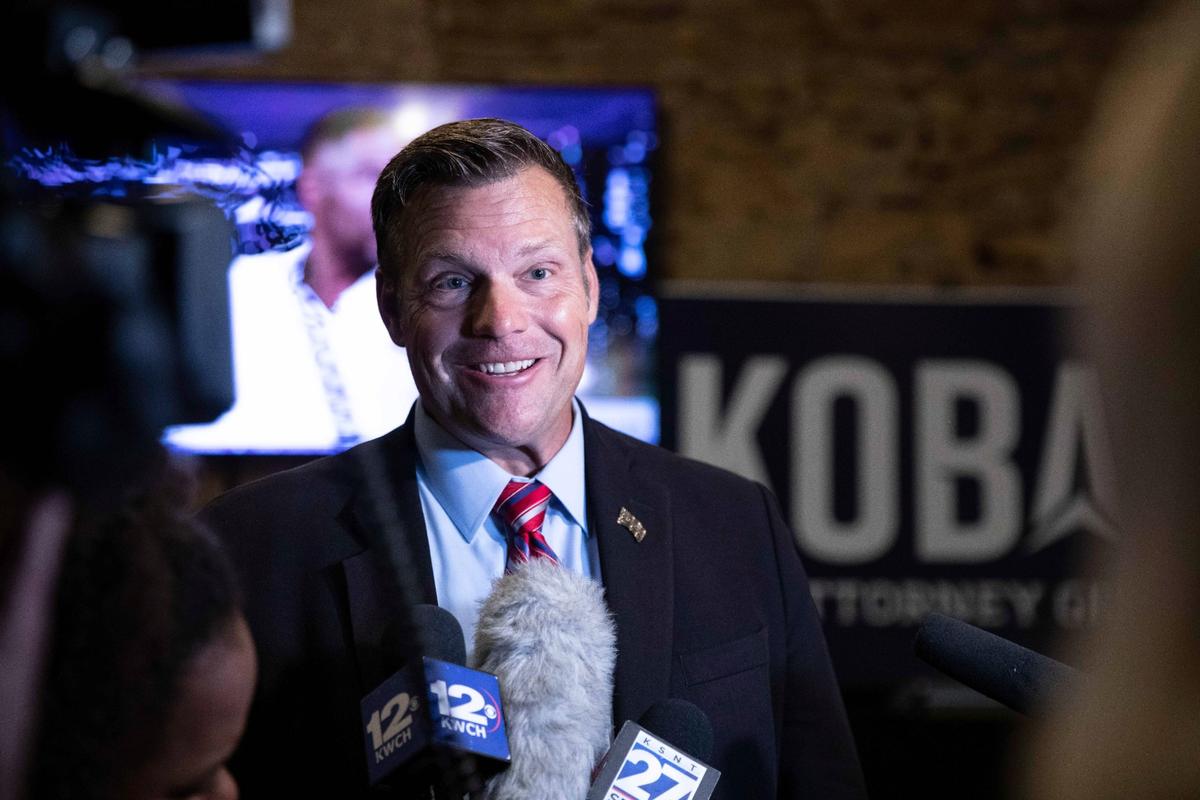
The 56-year-old Lecompton lawyer will become the Kansas attorney general on Jan. 9, making him the state’s top law enforcement official. After four years out of elected office, the Republican politician is set to wield a level of authority that far exceeds what he possessed as Kansas secretary of state, a largely administrative position.
Kobach campaigned on a promise to defend all Kansas laws in court, including laws restricting abortion, despite a state constitutional right to the procedure. He said he would seek harsher sentences for drug traffickers and form a unit dedicated to suing the Biden administration. Those are conservative priorities, but hew to the typical roles of a state attorney general’s office.
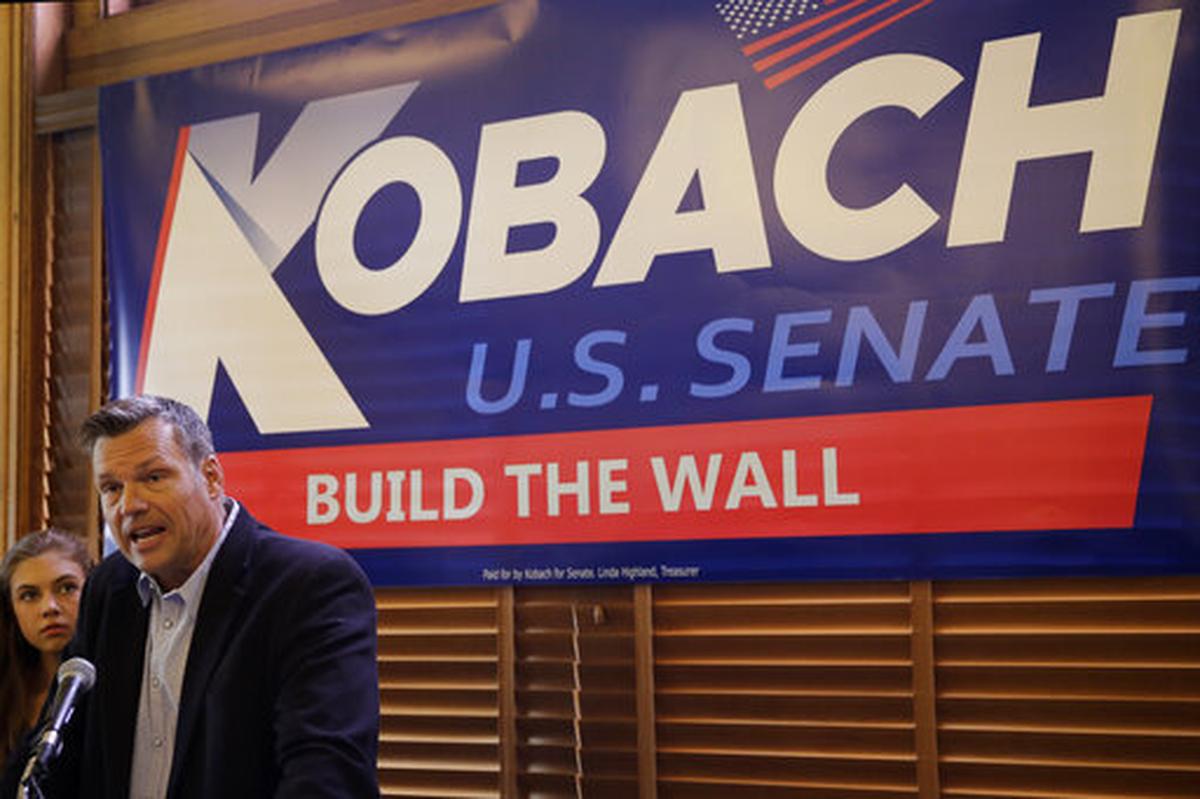
But Kobach’s entire political career also includes an intense, overarching focus on voter fraud and illegal immigration.
As Kobach prepares to take office, The Star spoke with more than 20 legislators, current and former law enforcement officials, immigration and voting rights experts and others about what to expect over the next four years. The Star combed through public comments by Kobach, including previously unreported and overlooked remarks, from throughout the campaign for insights into his plans.
What emerges from that review gives every indication that those key themes, which have shaped his years in public life up to this point, will continue to loom large as he returns to elected office.
Kobach’s transition team didn’t make him available for an interview in response to multiple requests following the November election. His transition team didn’t respond to written questions for this story.
Kobach himself has promised to use the Kansas Attorney General’s Office to prosecute voter fraud, a departure from past practice, and is expected to push for the elimination of ballot drop boxes and other changes to state election laws. While he is widely expected to file numerous lawsuits against the Biden administration, some critics and observers anticipate he will also look for additional ways to fight illegal immigration, pointing to his past support for E-Verify, a program businesses use to check the immigration status of employees.
Those who have long followed Kobach’s career suggest the past is prologue. They point to how Kobach transformed the Kansas Secretary of State’s Office, traditionally a largely ministerial agency, into a hub to prosecute voter fraud and push restrictions on voter registration. As secretary, Kobach famously insisted on personally defending the state’s proof-of-citizenship voter registration law in federal court. He lost the case and was found in contempt of court.
And they note Kobach’s extensive work outside of government for causes related to illegal immigration, including as general counsel for the ill-fated We Build the Wall fundraising effort. Kobach resigned as general counsel earlier in 2022 after former Trump adviser Steve Bannon and others associated with the organization were indicted in New York state.
“I fully expect Kobach, given his background and his rhetoric, to be one of the most aggressive AGs around,” said Paul Nolette, a political science professor at Marquette University who studies state attorneys general.
Micah Kubic, the director of the ACLU of Kansas, which has fought Kobach in court, said his organization is willing to work with Kobach if they can find areas of common ground. He mentioned criminal justice reform as a possibility.
“However, we know the issues that have been most interesting to him in the past, and those have been voting rights and immigration,” Kubic said.
“I would expect to see something on both of those fronts from him,” Kubic added. “I would expect to see something that is legally problematic, constitutionally suspect, morally wrong coming from him on each of those.”
‘A clear track record’
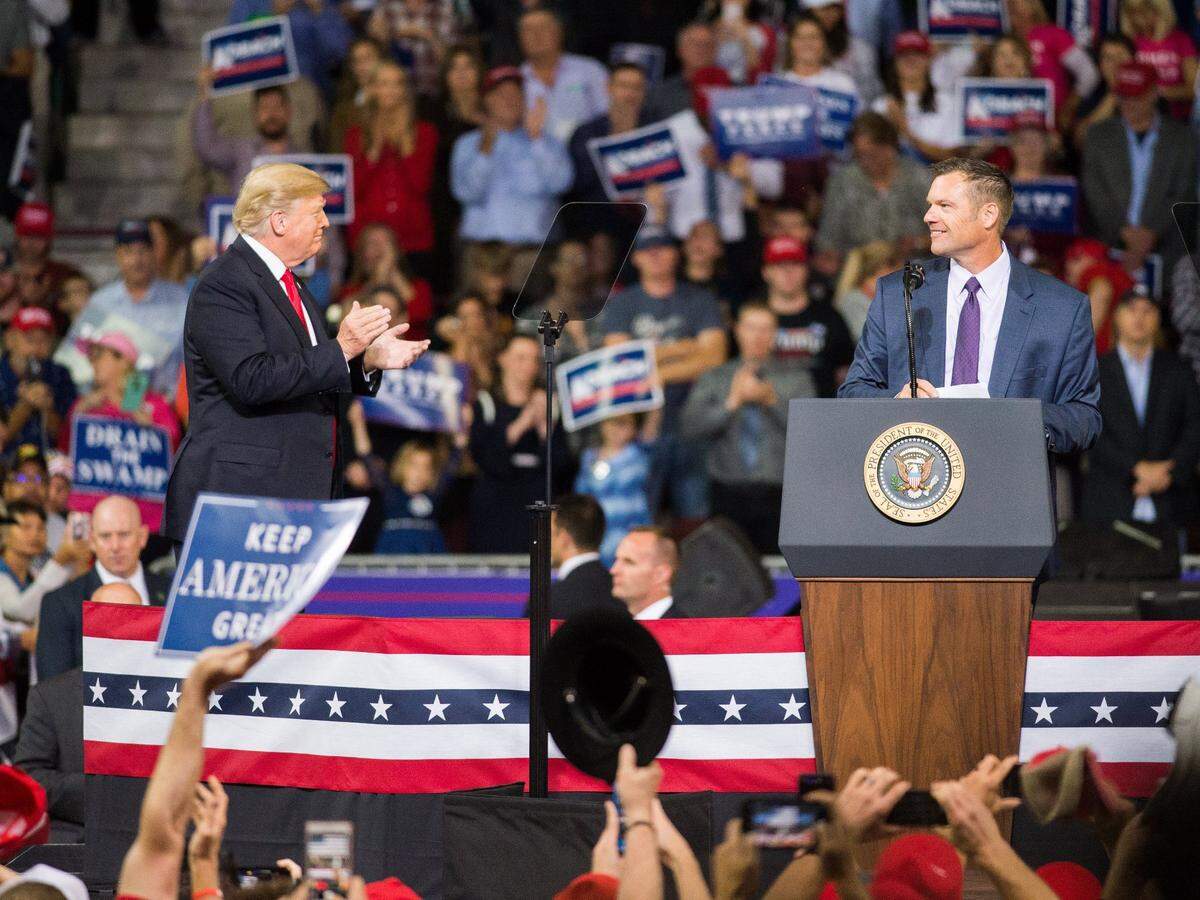
Kobach is already a well-known quantity in Kansas. He has spent more than a decade building a national reputation as a hardline conservative politician, media presence, one-time informal adviser to former President Donald Trump and, in recent years, a repeat candidate seeking a comeback.
Years before Trump and his supporters spread false conspiracy theories about the 2020 general election, Kobach elevated the specter of voter fraud, despite little evidence that it was a systemic issue across the country. After Trump falsely argued Democrat Hillary Clinton’s popular vote victory in the 2016 election was fraudulent, Kobach publicly backed him up.
For years as a private attorney, Kobach worked for municipalities across the country enacting or considering local rules aimed at discouraging undocumented immigrants from settling in their communities. When he interviewed for a job in the Trump administration following the 2016 election, he was seen carrying a paper describing a plan to revive a national program that critics likened to a national Muslim registry.
Jeremy McKinney, president of the American Immigration Lawyers Association, said Kobach’s looming term as attorney general may strike fear into non-citizens and others who know his record. However, he emphasized Kobach’s previous courtroom losses.
“This is a person that has a clear track record of losing on these issues,” McKinney said.
After one of Kobach’s signature legislative accomplishments as Kansas secretary of state, a state law requiring voters to show documents proving their citizenship in order to register to vote, was struck down in federal court, Kansas was ordered to pay $1.9 million in legal fees stemming from Kobach’s unsuccessful courtroom defense.
“If Kris Kobach proposes to once again go on the warpath against voting rights in Kansas, it will cost the taxpayers dearly, not only for the fees of organizations like the ACLU … but also for the cost to the Kansas taxpayers of filing and pursuing the litigation itself,” said state Rep. John Carmichael, a Wichita Democrat.
Still, Kobach has never before held an elected office with powers so well-aligned with the themes that have characterized his career as an attorney and his time in public life.
As he emphasized in his campaign, Kobach will have wide discretion to file lawsuits, including against federal agencies and policies. He has promised that Kansas would join the ranks of states such as Texas, which has its own highly controversial state attorney general, Ken Paxton, in challenging the Biden administration.
“When I’m attorney general, Kansas will stand shoulder to shoulder with Texas taking Joe Biden to court,” Kobach said during a debate last spring.
Kobach will also oversee the Kansas Bureau of Investigation and its force of investigators and agents. And he will decide whether to bring criminal charges in some cases, and his office will work with local prosecutors in others.
A focus on elections
As soon as Kobach takes office, he will regain the power to prosecute voter fraud.
While lawmakers gave the Kansas Secretary of State’s Office the power to prosecute voting-related crimes in 2015, the current state secretary of state, Scott Schwab, has deferred prosecutorial decisions to the attorney general, who retains the authority to bring cases.
Voting crimes are one of just a few areas where the state attorney general has original jurisdiction – allowing Kobach to file cases even if a local prosecutor decides against it. Some Republicans have said Schwab and county-level prosecutors appear reluctant to charge these crimes, either because they are difficult to prove or are the result of a simple mistake.
But Kobach is expected to be much more willing, even eager, to prosecute. He included prosecuting voter fraud in his five-point plan for the office released in May.
“Kris as AG will be actually prosecuting voter fraud as opposed to Scott Schwab who doesn’t even seem to take it seriously,” said state Rep. Samantha Poetter Parshall, a Paola Republican and longtime Kobach ally.
While secretary of state, Kobach charged 14 people in voter fraud cases. Most of the cases involved allegations that someone voted in two different places in the same election.
Like Wilson, the Goodland resident, most cases ended in guilty pleas. Wilson said Kobach’s office didn’t have overwhelming proof but won “simply because they had more resources available to them than I had to me.”
Since Kobach left the Kansas Secretary of State’s Office in January 2019, interest among Republicans and Trump supporters in voter fraud has only intensified, often curdling into unsubstantiated and false allegations and conspiracy theories surrounding recent elections.
Some individuals associated with efforts to find non-existent widespread fraud in Kansas now see Kobach as potentially their best chance for vindication.
“If Kris gets in and he’s true to his world, and he does believe in election integrity, we could take all of this evidence that we’ve accumulated against all of these people who failed to act or who acted nefariously or illegally and Kris can do the work finally,” Thad Snider, a Johnson County resident who in the past unsuccessfully sued Kansas in an effort to force a redo of the 2020 presidential election, said in a video posted to Rumble, a video site popular among the far right.
Johnson County Sheriff Calvin Hayden, a Republican, has also become a hero to conspiracy-minded residents for launching an amorphous investigation into elections in the county. Hayden has previously said he didn’t have probable cause to advance a case but his inquiry is continuing.
Hayden could eventually send whatever information he gathers to Kobach. The new state attorney general might be more inclined to attempt a case than Schmidt, the previous attorney general, or Steve Howe, a Republican and the Johnson County district attorney.
Sgt. Jesse Valdez, a spokesperson for Hayden, said there was no update on the investigation in response to questions from The Star.
Beyond voter fraud prosecutions, the debate surrounding voting rights and elections has shifted significantly since Kobach was last in office. Mail voting has become much more controversial as Trump and his allies have pressed unsubstantiated fears about the security of mail ballots and ballot drop boxes.
“I think that as we’re watching to see what Kobach does in the attorney general’s office, I think you can look at it kind of holistically as a part of the grander trends around the increased criminalization of elections,” said Liz Avore, a senior policy advisor at Voting Rights Lab, which tracks voting-related legislation nationwide.
“We’re seeing it play out in different spaces,” Avore added, “but it is all kind of a part of a trend that is essentially turning our nation’s elections into crime scenes.”
As state attorney general, Kobach will have a large megaphone to influence legislative fights over election rules and regulations. Since the 2020 election, Kansas lawmakers have held numerous hearings giving election deniers a platform to push conspiracy theories.
The most impactful legislation proposed, such as severe restrictions on ballot drop boxes and mail-in voting, didn’t pass after Schwab objected. But lawmakers did approve laws limiting how many ballots a voter could return on behalf of other voters and creating a new crime for impersonation of an election official.
New proposals are likely in the 2023 session. State Sen. Mike Thompson, a Shawnee Republican, told a group of Northeast Johnson County Republicans he was working with Snider on bills. Thompson told The Star he didn’t have anything prepared but remained concerned about mail-in voting and drop boxes in Kansas.
Kobach has said Kansas should eliminate ballot drop boxes, saying it undercuts the state’s ability to enforce a law that prohibits ballot “harvesting.” He has said he will urge lawmakers to ban counties from using them.
Ballot “harvesting” refers to individuals or groups that collect and return ballots on behalf of voters. Opponents of the practice say it opens the door to cheating while others contend it is essential to ensuring elderly and disabled voters can still cast a ballot.
“I think we have to outlaw drop boxes,” Kobach told a meeting of the Wichita Pachyderm Club, a Republican group, in September. “That should not be left to the counties to decide. We don’t need drop boxes.”
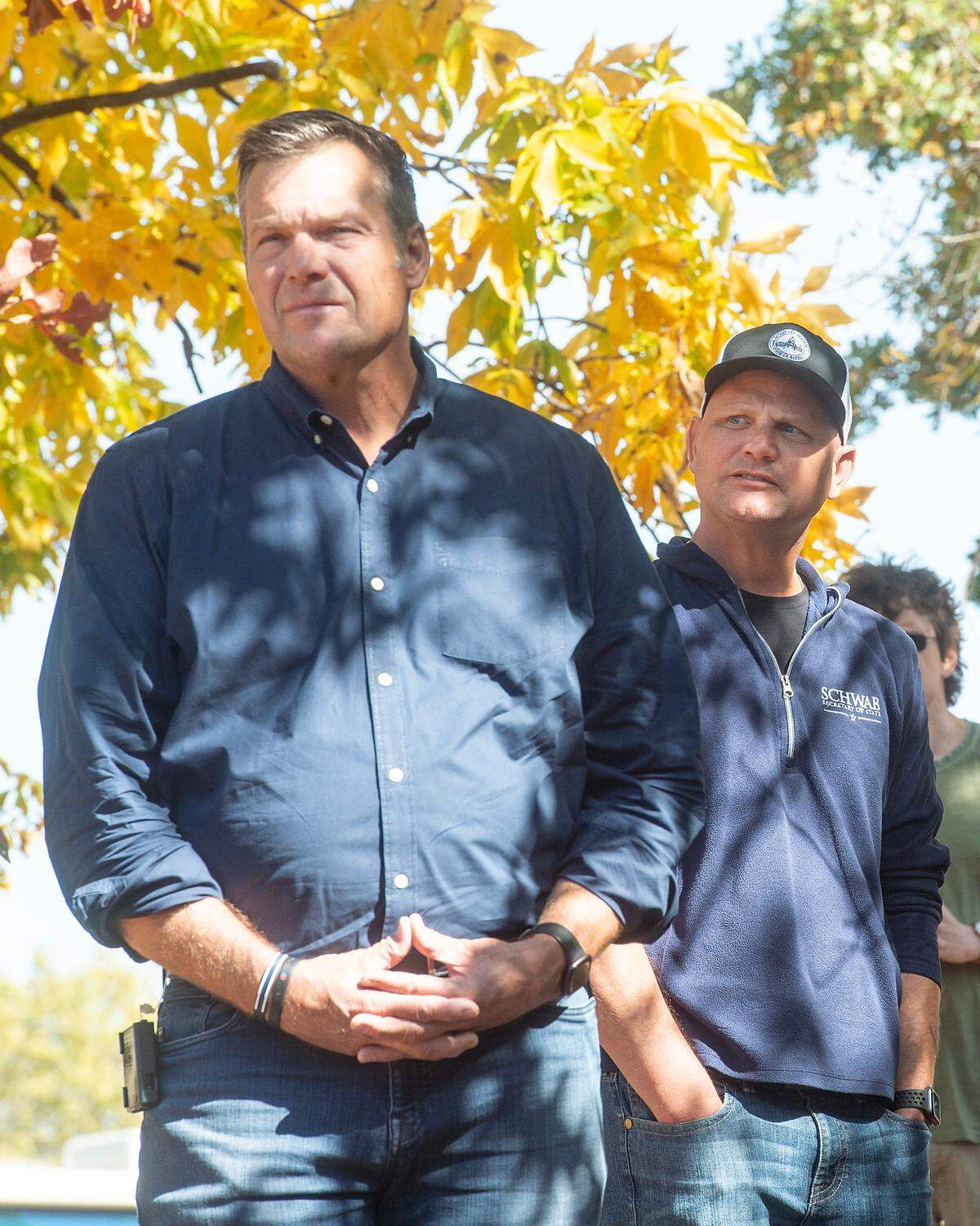
Kobach is at odds with Schwab, a vocal proponent of drop boxes. Schwab, a former state legislator, has sought to defend drop boxes to conservatives by arguing they are more secure than sending ballots through the mail.
Schwab told reporters in December that he doesn’t understand “why you’d want to force someone to give their ballot to the federal government.”
When asked if he had spoken with Kobach, Schwab sidestepped the question.
“Well, he’s no longer head of elections. And if he wants to have a conversation, we can,” Schwab said. “But at the end of the day, I don’t think he wants people to give their ballot to the federal government, either.”
Opponent of illegal immigration
Republican attorneys general have been fighting the Biden administration over immigration, and Kobach appears likely to join in. Last year, he spoke with concern about the number of migrants entering the country.
“This is our country,” Kobach told the Wichita Pachyderm Club. “I personally would like to leave our country to our children and our grandchildren. And unless there is a huge necessity, I don’t think we need to be importing people to inherit our country, and not our children and grandchildren. But that’s not the way the Biden administration sees it.”
One example of the kind of battle Republican attorneys general have been picking has been the long-running effort to block the expiration of Title 42, a Trump-era policy that allowed for the quick removal of migrants because of the pandemic.
Ira Mehlman, a spokesperson for the Federation for American Immigration Reform, a Washington-based group that supports reductions in legal immigration, expects Kobach will take an active role in fighting the Biden administration.
“As attorney general, he is essentially the people’s lawyer in Kansas and we would certainly expect that he’s going to try to represent those interests when those interests are being harmed by federal policies,” Mehlman said.
Kobach has a long history on the issue of immigration, stretching back to some of the earliest years of his legal career. Working at the U.S. Department of Justice under Attorney General John Ashcroft in the wake of the 9/11 attacks, Kobach helped develop the National Security Entry-Exit Registration System.
NSEERS was used to register non-citizens within the United States, and was criticized as effectively a registry of Muslims because most of the countries targeted were predominantly Islamic. Former President Barack Obama ended the program.
After Trump won the 2016 election, Kobach was photographed outside a meeting with the president-elect holding a paper that called for the reintroduction of NSEERS. The program was never restored, but the document underscored Kobach’s continuing interest in immigration and the presence of non-citizens within the country.
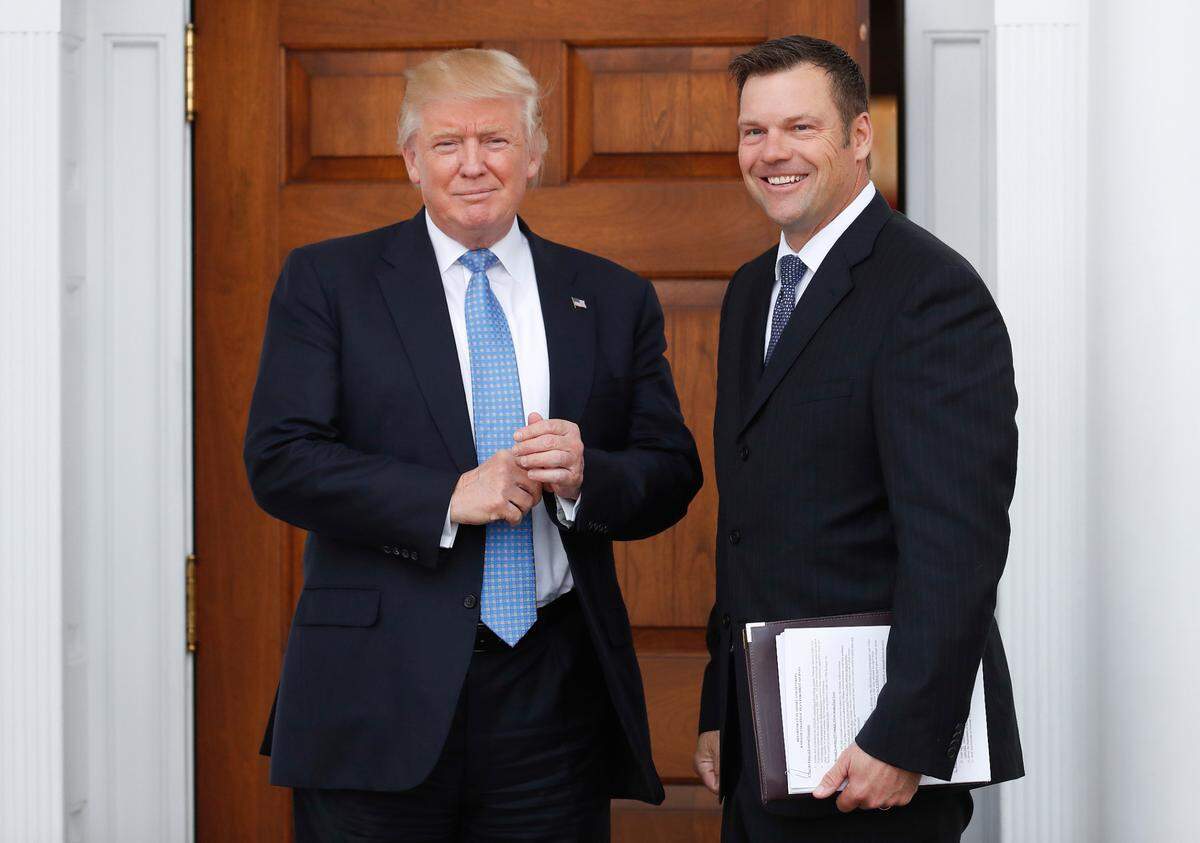
Kobach has also worked with municipalities around the country on immigration-related ordinances. He has remained on a $10,000 a year retainer in Fremont, Nebraska, to defend the city if its ordinance is ever challenged in court. The ordinance, which Kobach helped write, bans landlords from renting homes to immigrants living in the country illegally.
In 2021, the Fremont city council considered using money set aside to defend the ordinance against litigation to help pay for firefighters. Kobach, who was campaigning for state attorney general at the time, wrote to a council member, asking them to oppose the move. The Star obtained the letter recently through a records request.
Kobach wrote that “current conditions at the border, combined with new employment opportunities in the Fremont area, have created a high probability that illegal aliens will seek to reside and work in Fremont.”
The council ultimately sided with Kobach and voted against using the fund to pay firefighters, the Fremont Tribune reported.
“If we go back to classic Kobach, he’s going to be looking into empowering localities to enforce federal immigration. So I will be on the lookout for that,” said McKinney, the president of the American Immigration Lawyers Association.
In the past, Kobach has pushed for the mandatory use of E-Verify in Kansas. Businesses use the program to help identify whether their employees are legally present in the country.
Research didn’t turn up any public mentions of E-Verify by Kobach in the race for state attorney general, but the program has been frequently mentioned by him in past campaigns.
Previous attempts to require businesses to use the program haven’t advanced in Kansas. A decade ago, the National Immigration Law Center warned that requiring employers to use the program would harm the state’s economy while doing little to end unauthorized employment.
Back then, Kobach was secretary of state – a job with little to no connection to immigration policy. Now, as state attorney general, his views on the topic prove more influential among legislators.
Any new legislation could be vetoed by Kelly, though the Democratic governor last spring signed a law that largely blocked a Wyandotte County ordinance restricting police cooperation with federal immigration authorities.
New immigration-related policies could also face legal challenges.
“If he decides to use the office to create an environment of fear and harassment and intimidation for immigrants, something that he tried to do as secretary of state, a job that has literally zero to do with immigration, then we’ll be prepared on that as well,” said Kubic, the ACLU of Kansas director.
Biden litigation unit
Even if Kobach sticks to filing lawsuits – instead of pushing for new laws – his effectiveness may hinge on whether he can staff and pay for the litigation unit he has promised to create to sue the Biden administration.
The attorney general’s office already has lawyers experienced in civil litigation. Kobach could assign some of them to work exclusively on lawsuits related to federal policy and call them a unit to fulfill his promise.
But a decision to hire more attorneys, or to pay outside attorneys to work on lawsuits, could require additional funding.
Kelly, who would have line-item veto authority over additional funding to the attorney general’s office, told The Star that she was reserving judgment on whether she would oppose a request from Kobach. Some Republican lawmakers are also taking a wait-and-see approach.
“I’m not terribly excited about allocating a lot of new dollars, if that was the request,” said state Rep. Fred Patton, a Topeka Republican.
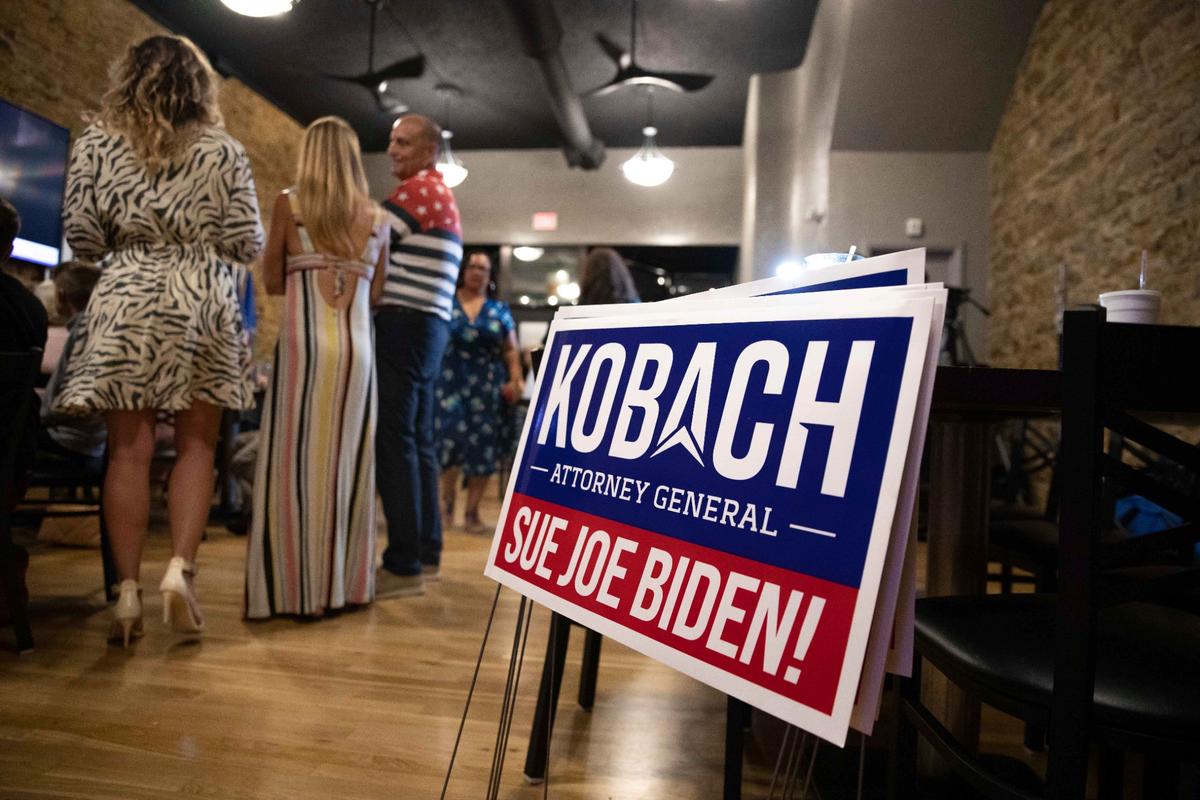
Patton, who chairs the House Judiciary Committee, said it’s important to protect Kansas from federal overreach. But, he added, “I don’t know that that’s something we need to be spending lots and lots of dollars on when we can partner with other states and those types of things to try to accomplish that.”
Kansas House Speaker Dan Hawkins, a Wichita Republican, said that if Kobach requests funding for something that is “necessary,” then lawmakers will fund it.
“I think that that was a good campaign and we’ll see how he operates,” Hawkins said. “Give him a chance. He’s not been in the AG’s office before and we’ll see how he operates.”
Wilson, the Goodland businessman who was prosecuted by Kobach for voter fraud, said the incoming state attorney general deserves respect because he was elected. But that also means Kobach has a “greater obligation to demonstrate superior integrity over that job,” he said.
“I expect him to live up to that standard,” Wilson said. “Do I have confidence that he will? It remains to be seen.”
The Wichita Eagle’s Chance Swaim contributed reporting
This story was originally published January 4, 2023 at 5:30 AM.