Want to get in on Missouri’s weed industry? What we know about getting a license to sell
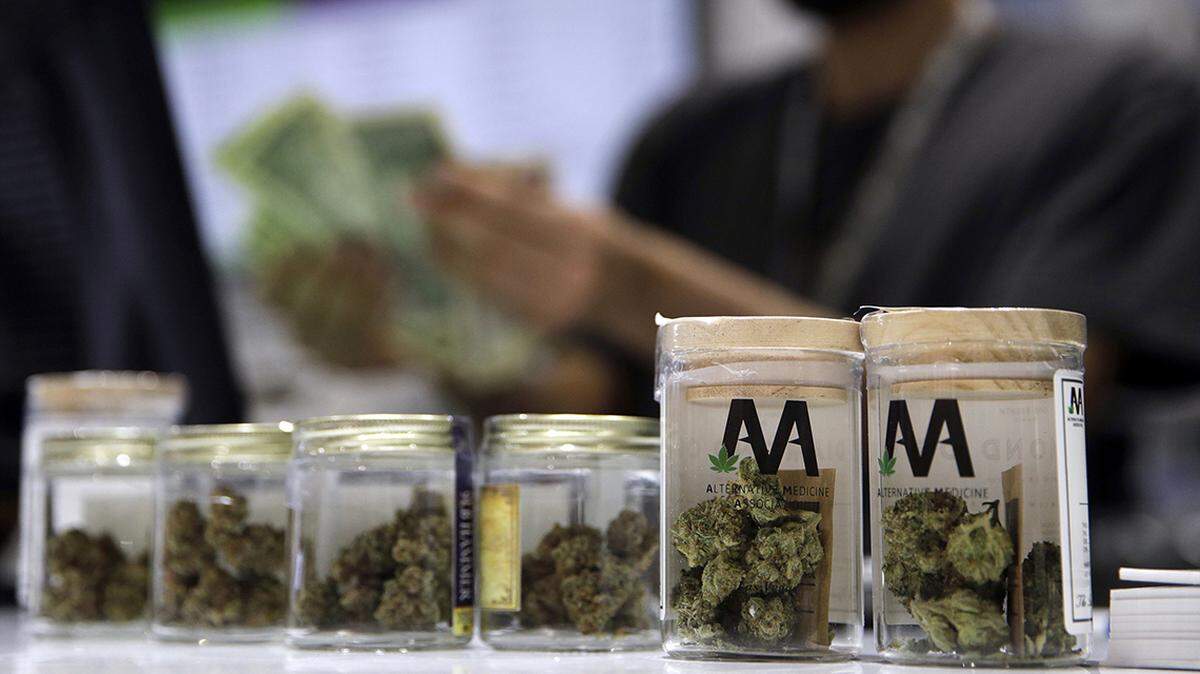
Missouri voted to legalize recreational marijuana on Tuesday, paving the way for more businesses to break into Missouri’s marijuana industry.
But who will get to benefit from the new market? Here’s what we know about the licensing process.
Who will get first dibs in the market?
Medical marijuana license holders will have the first shot applying for a license to sell, cultivate and distribute marijuana in Missouri. Those licenses are called comprehensive licenses, and medical marijuana license holders can start applying for those as soon as Dec. 8.
Currently, 63 marijuana cultivation licenses, 204 dispensary licenses and 84 manufacturing licenses have been issued under the medical marijuana program and therefore will be the first eligible for a comprehensive license. Those businesses could receive their licenses and start selling recreational weed as soon as February 2023.
The amendment will also create a microbusiness license program for smaller businesses and entrepreneurs looking to get their start in the marijuana business.
The Missouri Department of Health and Senior Services will start making applications for those microbusiness licenses as soon as June 2023.
WHAT IS A MICROBUSINESS LICENSE, AND WHAT ARE THE REQUIREMENTS?
The microbusiness license will be a way for regular people who are interested in the business to break into the recreational market. These microbusiness licenses will be distributed to two kinds of businesses: dispensaries and wholesale facilities.
When can I apply for a microbusiness license?
Not right away.
The department could make those applications available as soon as June 2023, and has to start accepting applications for microbusiness licenses as soon as September 4, 2023.
If businesses already have the infrastructure to sell or cultivate their product by then, they could technically open shop as soon as they receive their license.
The state only needs to grant six of these microbusiness licenses in each congressional district when the program launches at first.
However, the amendment calls for the creation of at least 144 licenses, but the state can decide to distribute more. Within the first 300 days after the amendment’s effective date, the health department will issue 48 microbusiness licenses, six for each of Missouri’s eight congressional districts. Two of these six licenses will be reserved for dispensaries and the other four will be available for wholesale facilities.
After another 270 days, the department will make another six licenses available (four for wholesale facilities and two for dispensaries) in each district. Eventually there the department will offer 18 licenses in each district for a total of 144 licenses. The department can choose to offer more microbusiness licenses than this, but they will not be required to.
How much will a microbusiness license cost?
The application for those licenses will cost $1,500, and qualifying applicants will be chosen based on a lottery system. Applicants that do not receive a license will be refunded their application fee.
If the application is approved, the license holder will be charged an annual fee of $1,500 for each year they are in business. These fees are the same for both micro-dispensaries and micro-whole sale facilities.
WHO QUALIFIES FOR A MICROBUSINESS LICENSE?
In order to get a microbusiness license, business owners will need to meet one of five requirements. Applicants don’t need to fit all five of the requirements to be eligible for the microbusiness license, just one.
Income
The individuals applying will need to have a net worth less than $250,000, or have an income that is less than 250% of the federal poverty level, which is around $34,000 a year for one person in 2022.
An individual qualifying for a license under the income category needs to meet this financial criteria for at least three of the past 10 years to qualify.
Location
People could also qualify for microbusiness licenses if they live in a census tract area where at least 30% of the community lives below the poverty line, or if they live in an area where the unemployment rate is 50% higher than the state’s average.
People who graduated from an unaccredited high school or live in a ZIP code that housed an unaccredited school district for three of the past five years, can also qualify for the microbusiness license program.
This would include Kansas City residents, since Kansas City Public Schools didn’t gain accreditation until 2022. This also applies to people who live outside of Missouri.
Communities impacted by marijuana prohibition
Specific groups that qualify include disabled veterans and individuals whose families have been arrested, prosecuted or convicted of a nonviolent marijuana offense.
To qualify, the charge must have occurred at least a year before the amendment goes into effect, so any time before Dec. 8, 2021. However anyone charged with providing marijuana to minors or driving under the influence of marijuana will not be eligible.
Also eligible are people who live in a community where the rate of incarceration for marijuana-related charges is historically higher than the rest of the state by at least 50%.
What if I want to start a larger comprehensive marijuana facility? When will I be able to apply for that?
For businesses that are interested in starting a new comprehensive marijuana facility from scratch for the purpose of cultivating or manufacturing non-medical weed, the process of getting license and approval could take at least a year, according to John Payne, a spokesperson for LegalMO, the campaign that pushed for this marijuana legalization initiative.
The Star’s Kacen Bayless contributed reporting.