
Kansas City debates whether to put Leon Jordan’s name on East Patrol police station
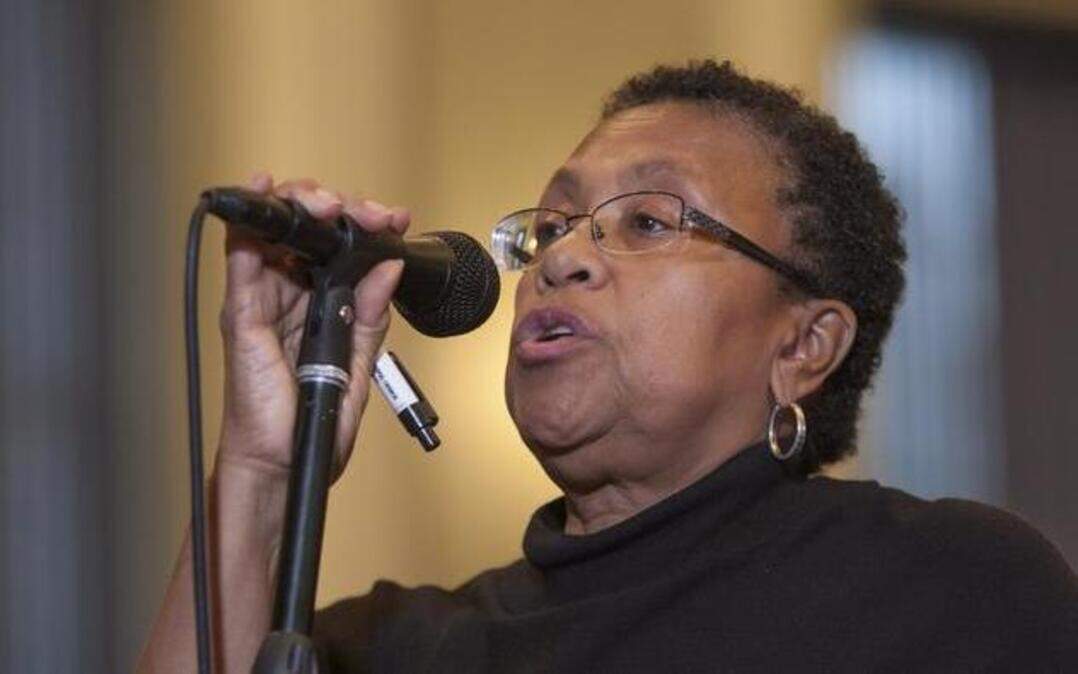
A longtime Kansas City social justice advocate calls it an opportunity Kansas City can’t afford to miss.
The mayor, however, fears it could prompt suggestions to rename more than 100 city buildings.
The question is whether to name the $74 million East Patrol police station and crime laboratory, now under construction, after an individual instead of the part of Kansas City it will serve.
Those already nominated include anti-crime activist and former city councilman Alvin Brooks, former city councilwoman Joanne Collins, 1930s bandleader Bennie Moten and former Kansas City Royals second baseman Frank White.
But hundreds of residents also have signed petitions in support of naming the facility after former African-American police detective and political leader Leon Jordan, who was assassinated in 1970 outside his Prospect Avenue tavern, which stands just north of the campus site.
“We are in a unique situation here,” said Councilman Jermaine Reed, who with Councilwoman Melba Curls organized a recent hearing on the issue.
If an individual’s name were to be given to the facility, it would represent the first time any Kansas City police station would bear a person’s name. The high-profile construction project, still more than a year from completion, already has generated a high level of public interest, Reed said.
That includes admirers of Jordan, who helped found the Freedom Inc. black political organization after retiring as a police lieutenant.
This summer, to observe the 44th anniversary of Jordan’s July 15, 1970, shooting death, admirers hung photos of Jordan in the Green Duck Lounge and Grill. They also collected petition signatures in support of naming the new police campus for him.
Just as the new facility is expected to build economic momentum for Jordan’s former midtown neighborhood, placing Jordan’s name on it would represent an appropriate honor for the political leader who put the power of the area’s black voters on the map in Kansas City and across the state, supporters said.
“He united the tribes, and he took control of the politics of the black community away from the white people who controlled it up until to the 1960s,” former councilman Richard Tolbert said during the Monday night hearing.
Mayor Sly James, however, has cautioned against the idea.
The city’s practice of naming its police patrol buildings for their locations in the city has “served us well,” James said in a statement Reed read at the hearing.
His lack of enthusiasm for naming the new building for an individual, James said, concerns the possible “ripple effects on more than 100 other city buildings” and the “logistical and practical” issues such a precedent-setting decision could prompt.
“I would prefer for the names of patrol stations to remain based on their location in our community,” James said.
He would be open, he said, to naming a community room in the new building after Jordan, or perhaps even renaming Prospect Avenue after him “if the community deems that appropriate and the council approves.”
His concern, James said, “is not indicative of my feelings about Mr. Jordan’s legacy.”
That legacy is complicated.
Kansas City police reopened Jordan’s murder case in 2010. Later the department released a 900-page report identifying the gunman as a person linked to organized crime. Because the gunman and many involved were dead, Jackson County prosecutors closed the Jordan case without filing charges.
The Star, which also looked into Jordan’s killing, revealed that Jordan’s loose associations with organized crime figures may have contributed to his murder.
None of those who spoke Monday referred to the circumstances of Jordan’s death.
“Naming a police station after a human being humanizes the Police Department itself,” said justice advocate Alvin Sykes, who requested that Kansas City police reopen the investigation of Jordan’s death.
The name would serve as a reminder to workers in the building that they are there to serve the entire community, Sykes said.
“So now we are at the fork in the road in 2014, where black people are saying to name a police station after a black man,” Sykes said. “That is the sign of the times, of how far we have come in police and community relations.
“We should not miss that opportunity.”
Jordan’s possible involvement with organized crime elements had to be viewed in context of his times, Sykes says.
“In order for Mr. Jordan to wrestle away control of the black political structure, he would have had to be engaged with the illicit people who then were controlling it,” Sykes said.
“President (Harry) Truman famously associated with (machine boss Tom) Pendergast, and we are the only city in America still with no local control of the police because of Pendergast. Nobody is asking to take Truman’s name off of any buildings.”
One East Side resident disagreed with the idea that generic names for police buildings have proved effective. That’s not true, at least in regards to Kansas City’s East Side, said Guietta Payne, a resident of the Santa Fe neighborhood.
“There has always been a stigma on the ‘East Side,’” Payne said. “Every time you see on the news when they say, ‘It happened on the East Side,’ you know automatically what that means.”
Naming the facility for Jordan would help erase such connotations, she said. And the facility, being built with public safety sales tax proceeds on a 20-acre site at East 27th Street and Prospect Avenue, also may help transform nearby neighborhoods by luring a new generation of families to live there, Payne said.
Another East Side activist, however, said she was “insulted” — not so much by the name proposal but by the time and effort devoted to discussing it.
“Instead of talking about what to name a police station, how about job creation?” said Rachel Riley, a member of the East 23rd Street PAC neighborhood organization.
A public comment period runs through Nov. 7. Afterward, Reed anticipates submitting a resolution to a council committee.
“I don’t have an opinion one way or the other at this point,” Reed said.
A statue of Jordan has stood since 1975 in a park bearing his name at East 31st Street and Benton Boulevard.
“I know there is a lot of controversy about him, and the Police Department has a somewhat dim view of him,” said Robert Farnsworth, a historian and biographer of Jordan who supports naming the new building for him.
Jordan’s ownership of the Green Duck tavern, Farnsworth said, “involved him in activities that were not the most respectable.”
One point is clear, said Bruce Watkins Jr., a son of the former council member and 1979 mayoral candidate.
“Until we introduced this concept, there were no other names being mentioned,” said Watkins, who helped organize the petition signature drive.
“We have lit a fire in the community.”
To reach Brian Burnes, call 816-234-4120 or send email to bburnes@kcstar.com.
To reach Glenn E. Rice, call 816-234-4341 or send email to grice@kcstar.com.
What do you think?
Public comments on whether an individual’s name should be attached to the new East Patrol police station, currently under construction, can be submitted through Nov. 7. Go to www.kcmomentum.com, send email to communications@kcmo.org or write to the City Communications Office, 21st Floor, City Hall, 414 E. 12th St., Kansas City, MO 64106.
This story was originally published October 11, 2014 at 5:25 PM with the headline "Kansas City debates whether to put Leon Jordan’s name on East Patrol police station."