Missouri lawmakers weigh Gov. Parson’s proposed tax cut. Here are five things to know
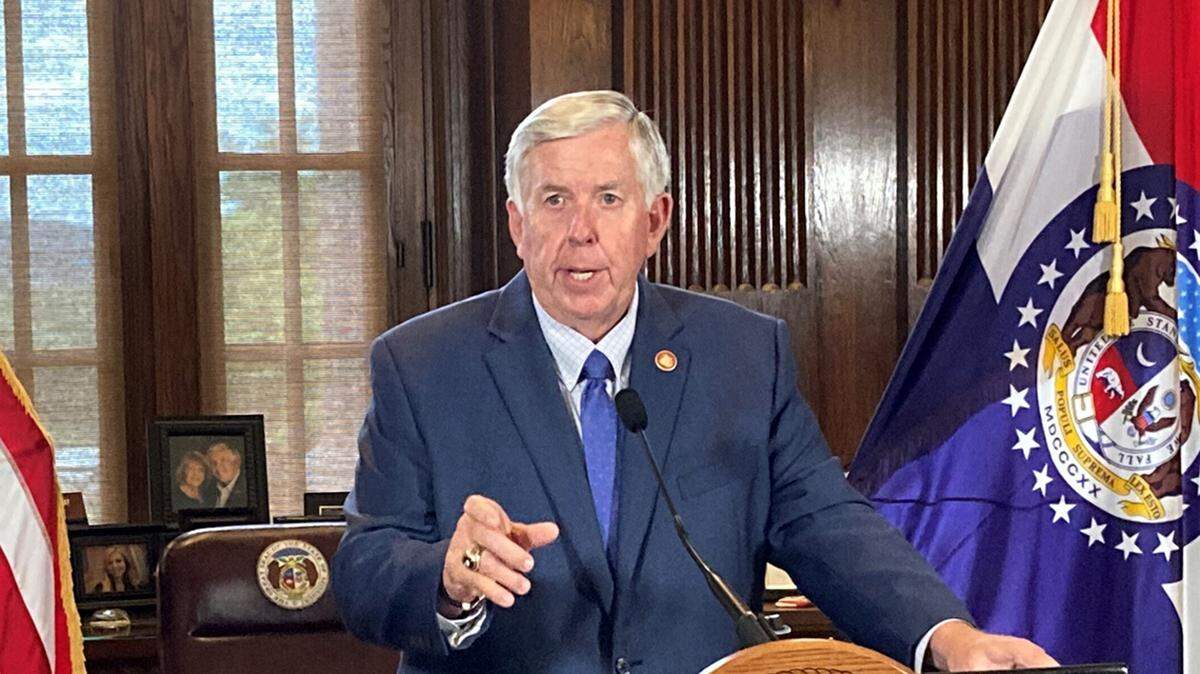
When Missouri lawmakers return to Jefferson City on Wednesday for a special session, they will try to pass a sweeping income tax cut.
Gov. Mike Parson, a Republican, has touted the tax cut as an opportunity to provide yearly savings to Missourians. It’s widely viewed as a way to curry favor with Republican voters ahead of the November election as Missourians struggle with rising inflation.
The Republican governor has championed his proposal as “the largest income tax cut in state history.”
What is Parson’s plan and who benefits?
Parson’s proposal includes a permanent income tax cut and an extension of agricultural tax credits for farmers.
The proposed income tax cut would lower the state’s top individual income tax rate from 5.3% to 4.8%. It also eliminates the bottom income tax bracket entirely. The agricultural tax credit plan would reauthorize a variety of tax credits for farmers that would expire after six years instead of the two year sunset that lawmakers approved this year.
While the agriculture plan is expected to provide a boost to Missouri’s vital farming industry, much of the discussion surrounding the upcoming special session has centered on the income tax cut.
Under the proposal, the standard tax deduction would be increased by $2,000 for individuals and $4,000 for joint filers. This means that Missourians will not have to pay income tax on their first $16,000 or $32,000 for joint filers.
What are the arguments against it?
Democrats and budget analysts argue that the plan tilts the scale in favor of wealthy Missourians. Critics also caution that it may lead to future cuts to government services if the economy struggles.
An analysis from the Missouri Budget Project, a nonpartisan nonprofit that analyzes state budget and tax issues, found that the proposal would leave out one-third of taxpayers entirely – including those on fixed incomes and low wage families with children.
According to the nonprofit’s analysis, the wealthiest 1% of Missourians would receive $6,024 on average, while the lowest income Missourians would receive just $11 under the governor’s proposal.
“The millionaires and billionaires are not having trouble filling up their gas tank, they’re not having trouble putting or affording food for the table,” said state Sen. Lauren Arthur, a Kansas City Democrat. “So I just think if we’re going to cut taxes, then it should go to those people who could really use the extra money.”
Why was the special session delayed?
Parson had initially called on lawmakers to return to Jefferson City on Sept. 6. However, lawmakers postponed it until this week after saying they needed more time to discuss the proposal.
Some Democrats argued the delay was an indication that Republicans hadn’t yet reached a consensus on Parson’s plan. There is also concern that the GOP-controlled Senate, which has been gridlocked with infighting among Republicans over the last two years, may struggle to pass the legislation.
Why is Parson pursuing this now?
Parson called for the special session after vetoing two tax-related proposals earlier this year.
The first measure would have sent one-time payments to Missourians who owed income tax in 2021 — capped at $500 for individuals or $1,000 for married couples filing jointly. Parson said the proposal was rushed and would have left out a large group of Missourians.
The second proposal would have extended tax credits for farmers with a two-year sunset provision. Parson balked at the plan, arguing that two years was not enough time for farmers to start new projects with the credits.
Why are people talking about Kansas?
Some critics worry that Parson’s plan risks the kind of budget problems that plagued Kansas just a few years ago under former Gov. Sam Brownback. Parson has rejected those comparisons.
In 2012, Brownback signed a massive tax cut that he at one point called an “experiment,” with the hope of eventually eliminating income taxes in the state.The law reduced state income tax rates across the board and eliminated them entirely on limited liability companies and other pass-through businesses.
Brownback soon ended up making significant budget cuts while raising the state sales tax rate. A backlash to the Kansas tax cuts eventually led to the election of a wave of Democratic and moderate Republicans in 2016 who rolled back the tax law the next year.
State Rep. Peter Merideth, a St. Louis Democrat, said he fears that the permanent income tax cut would put the state at a disadvantage in years where the state is not flush with cash. This year, the state’s coffers were increased by federal COVID-19 stimulus money.
“I think it’s a really dangerous move to take that situation and treat the surplus as if it’s permanent, and spend it all on a permanent tax cut,” he said. “If we have to, as I suspect, increase our budget significantly, just to keep up with inflation, then we may find ourselves making the mistake Kansas made and be in a hole in a couple of years and not be able to undo it.”