Lawmakers urge Gov. Parson to add marijuana to special session ahead of MO legalization vote
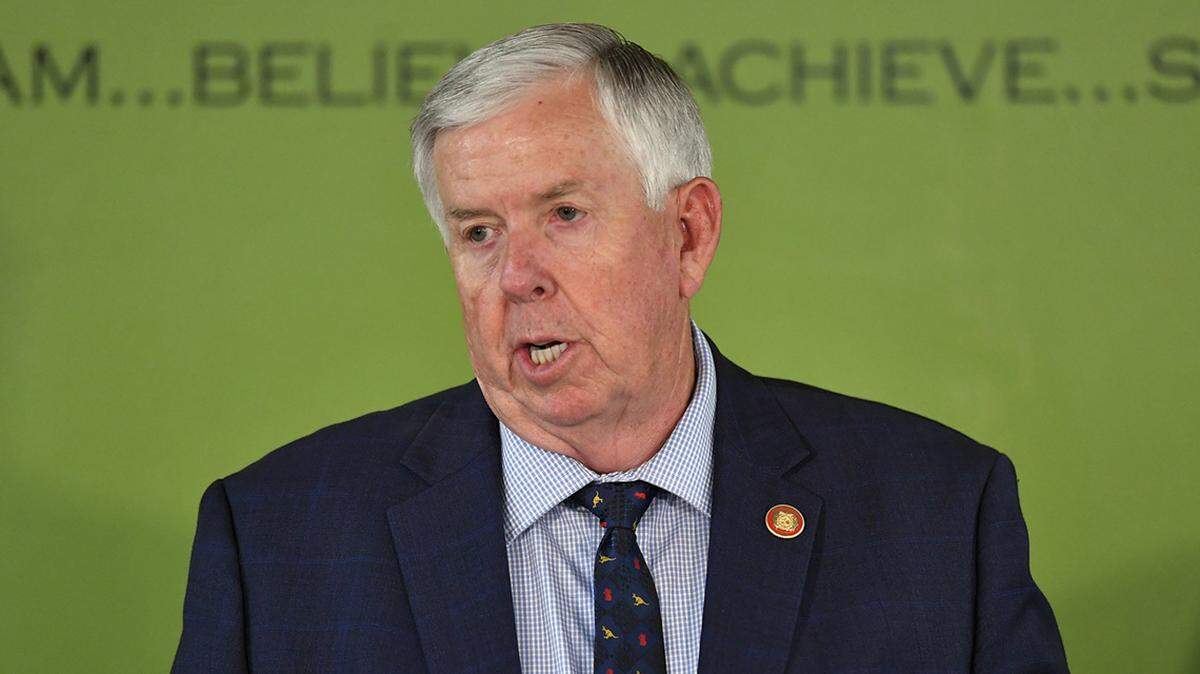
A group of Missouri lawmakers on Thursday asked Missouri Gov. Mike Parson, a Republican, to include marijuana legalization in the upcoming special session as an alternative to a Nov. 8 recreational marijuana ballot measure.
The request illustrates the divide among legalization advocates and lawmakers over how Missouri should legalize marijuana. Some advocates argue that it should be legalized through the legislature because the upcoming ballot measure would create a monopoly in the marijuana industry that favors established medical marijuana companies. They also point to the fact that the question would add civil penalties for public marijuana consumption to the constitution.
The group of lawmakers and legalization advocates have formed a new campaign to persuade Missourians to vote against the ballot question.
The group specifically asked Parson to call on lawmakers to pass a bill introduced last session that would have legalized recreational marijuana under a more free market system. Lawmakers are expected to hold a special session to pass a sweeping income tax cut and tax credits for farmers on Sept. 14.
While its unlikely for the Republican governor to add the marijuana legislation to the special session, he criticized the ballot question last week as a “disaster.” Parson’s office did not immediately respond to a request for comment Thursday.
The campaign, called No On Amendment 3, is backed by pro-marijuana legalization groups Crossing Paths PAC and the Missouri Marijuana Legalization Movement. A bipartisan coalition of Missouri lawmakers and former Lt. Gov. Peter Kinder, a Republican, are also part of the campaign, said spokesperson Eapen Thampy.
John Payne, the campaign manager for Legal Missouri 2022, the primary group supporting the constitutional amendment known as Amendment 3, attacked Thampy, a marijuana legalization lobbyist, and the group pushing the campaign in a statement to The Star. He said the amendment would ruin Thampy’s “business model of lobbying for failed marijuana legalization efforts year after year.”
Payne also touted several groups that have endorsed the amendment, including the ACLU of Missouri and the St. Louis chapter of the NAACP.
“In November, we will become the 20th state to legalize, tax, and regulate marijuana and the first state to vote for automatic expungement of past, non-violent marijuana offenses,” the statement said. “Amendment 3 will allow law enforcement to focus on serious and violent crime, while bringing millions in new revenues to Missourians.”
Kinder, in a news release about the campaign, criticized the proposed constitutional amendment.
“The Amendment 3 campaign is raising and spending millions of dollars to trick Missourians into passing a proposal that would never survive the deliberative and transparent process of the Missouri General Assembly,” Kinder said in the release. “Conservatives will be outraged by the way this proposal attempts to subvert the will of the people.”
State Rep. Tony Lovasco, a St. Charles Republican, said the ballot question was ill-suited and would monopolize the marijuana industry. He asked Parson to expand the special session to pass the bill offered by state Rep. Ron Hicks, a Defiance Republican, that would have legalized marijuana without licensing caps.
“Rather than settle for an ill-suited and monopolistic program shoehorned into our Constitution, the Missouri General Assembly has an unique opportunity to consider legislation that would legalize cannabis in a truly free market fashion,” Lovasco said in the statement.
State Rep. Wiley Price, a St. Louis Democrat, also excoriated the amendment, saying it would hurt marginalized communities.
“Amendment 3 will corner the market for those already in position and continue a long tradition of predatory behavior on minority and poor communities.,” he said in the release.
Price’s concerns echoed those of the Impactful Canna Reform Coalition, a group formed by State Rep. Ashley Bland Manlove, a Kansas City Democrat, that is urging Missourians to vote against the amendment. The coalition criticized the amendment for not offering social equity provisions and for civil penalties included in the question.