Kansas Gov. Kelly said foster care was in ‘crisis.’ Four years later, has she fixed it?
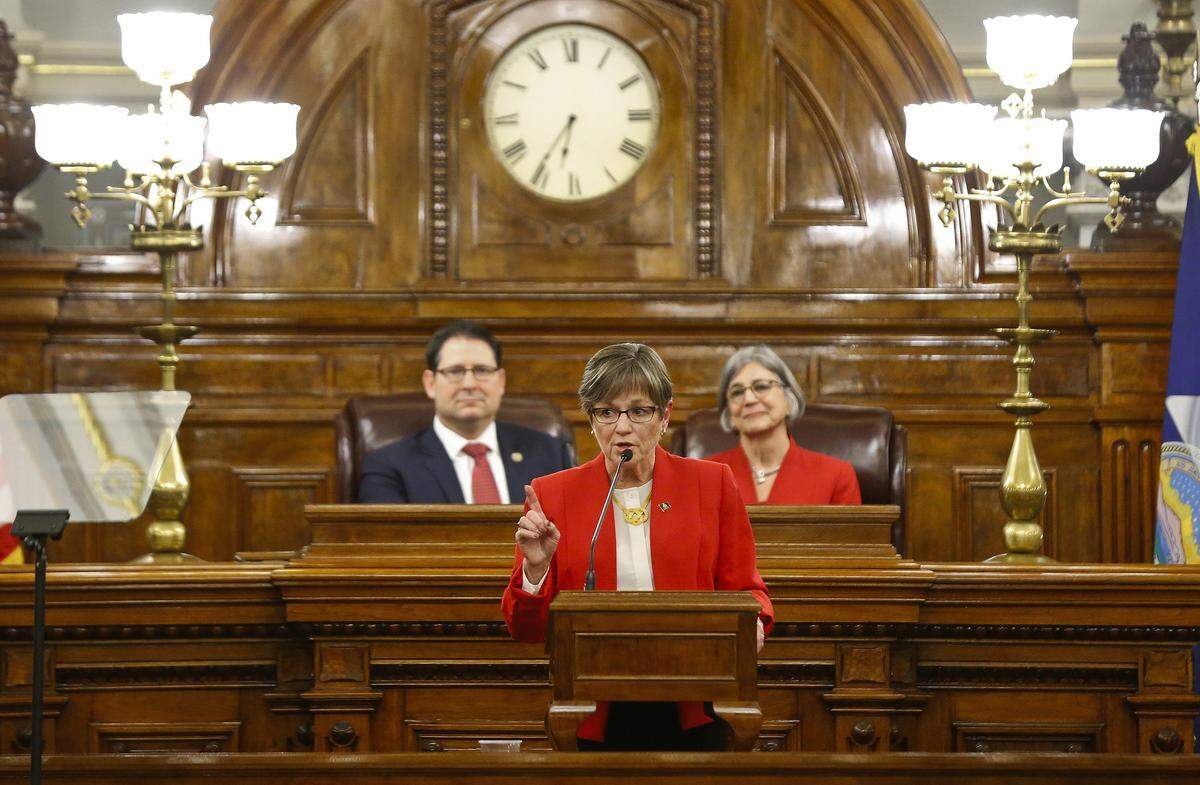
Kansas Gov. Laura Kelly, just two days after assuming office in January 2019, stood in front of state legislators and delivered a devastating indictment of the state’s foster care system.
The system — designed to care for children when they can no longer remain in their home because of abuse or neglect — had reached a “crisis point” that required immediate and considerable attention, the new governor said in her first State of the State address.
In recent years some agency leaders had demonstrated what she called a “callous disregard” toward vulnerable children and families. The number of children in the foster care system had skyrocketed, overwhelming programs designed to help children and saddling social workers with absurdly large caseloads.
“This is an emergency,” Kelly declared, adding that “we must fix this now.”
A few months earlier, as a candidate for governor in 2018, Kelly declared during a debate that “we are complicit” in the problems in the foster care system and said there was a “moral obligation” to address them.
Four years later, as Kelly’s first term nears its conclusion and she runs for reelection, the Democratic governor has moved the foster care system down the road of improvement without reaching a final destination. Her Republican opponent, Kansas Attorney General Derek Schmidt, has attacked Kelly over her handling of the foster care system in recent weeks.
After Kelly inherited a system at the breaking point, it continues to face significant challenges.
Kansas has had among the highest percentage of children who ran away from foster care, according to a federal report released earlier this year that measured runaways both before and during the Kelly administration.
Kansas was one of only four states that reached 7%, the highest percentage recorded among the states, along with Delaware, Maryland and Nebraska, said the report, released by the U.S. Department of Health and Senior Services Office of the Inspector General. Additionally, a state audit of Kansas foster care released in March found that the number of missing children had been consistent in recent years.
A review by The Star of state documents, as well as interviews with officials, advocates and others intimately familiar with the state’s child welfare apparatus shows that Kansas still hasn’t achieved several key performance standards.
“We have seen notable points of progress. We’ve seen notable changes. But the system is not fixed by any stretch of the imagination and still needs continued work,” said Mike Fonkert, director of the Just Campaign at Kansas Appleseed, an advocacy group that includes foster care as an area of focus.
The foster care system continues to move children between homes too often. Children aren’t kept with siblings or placed with relatives enough to meet federal standards. And Kansas still hasn’t fully eliminated the practice of children sleeping in the offices of contractors who operate the state’s privatized system, despite promises to end it.
The issue first received significant attention in September of 2017 when two contractors said nearly 100 children had stayed overnight in their offices so far that year. In 2021, 53 children stayed in offices, said Kansas Department for Children and Families Secretary Laura Howard, who was appointed by Kelly in 2019.
Tragic cases also emerge from time to time. In one of the latest examples, a 15-year-old foster child who ran away from a child welfare office in April was found dead a few days later in Kansas City, Kan.
Before Kelly was elected governor, she was one of the foremost advocates of foster care reform within the Kansas Legislature. A state senator from Topeka, Kelly was frequently at odds with the leaders of the Kansas Department for Children and Families, the agency that oversees foster care.
During the Brownback administration, Kelly touched off public outrage when, in October 2017, she questioned then-DCF Secretary Phyllis Gilmore about the dozens of children then missing from foster care.
Gilmore appeared caught off-guard by Kelly’s questioning, helping to cement a perception among Democrats and critics of DCF that the agency leadership was incompetently managing the foster care system. Gilmore resigned later that year.
When Kelly confronted Gilmore about missing children in 2017, more than 70 were missing – a figure that changes daily as children are found and others run away from their foster homes. During Kelly’s fourth year as governor, the number has fluctuated between the low 60s and the mid-70s in recent months, according to reports posted on DCF’s website.
“It is an issue that will always be around. But I don’t want to sit here and say I’m satisfied with it being that 60 kids or 50 kids,” Howard said.
But substantial progress has been made in some areas.
The overall number of children entering foster care every year has been falling since Kelly took office and is now at its lowest point in a decade after surging during Republican Gov. Sam Brownback’s second term. More than 1,000 fewer children are in foster care now than four years ago, when the total number approached 7,600.
Kansas has also made strides in reducing how often children are moved from foster home to foster home, even as the state continues to fall short of federal standards. Gaining ground in this area is especially crucial because foster care experts say creating stability is key to minimizing the trauma inflicted on children.
While some children continue to sleep in offices, fewer are being held there, officials say. And federal funding has helped the Kelly administration ramp up prevention services aimed at heading off the need to place a child into foster care by intervening in problematic family situations earlier.
“We have done a lot. We’ve reduced the number of kids in our foster care system by about 1,500. And as I said, are there still problems? Yes. But I can tell you in a child welfare system, just like in a corrections system, that there will always be problems,” Kelly said in a brief interview.
“It’s not that there are problems, it’s ‘What are you doing to rectify them?’”
Foster care will be a focus in tough race for reelection
Just before Kelly took office, a federal lawsuit was filed alleging numerous shortcomings within the system, including officials shuffling around children. The plaintiffs were 10 children in state care, represented in part by Kansas Appleseed.
In 2020, Kelly’s administration reached a settlement agreement that lays out improvement benchmarks the state must meet related to foster care, including how often children are moved around and whether they are staying in contractor offices. Children must also receive better mental health services.
The state must follow the agreement regardless of whether Kelly wins reelection or is defeated by her Republican opponent, Kansas Attorney General Derek Schmidt.
An expert report is expected to be filed in federal court this fall that will provide the first independent evaluation of whether Kansas is complying with the settlement agreement. The report is required by the agreement.
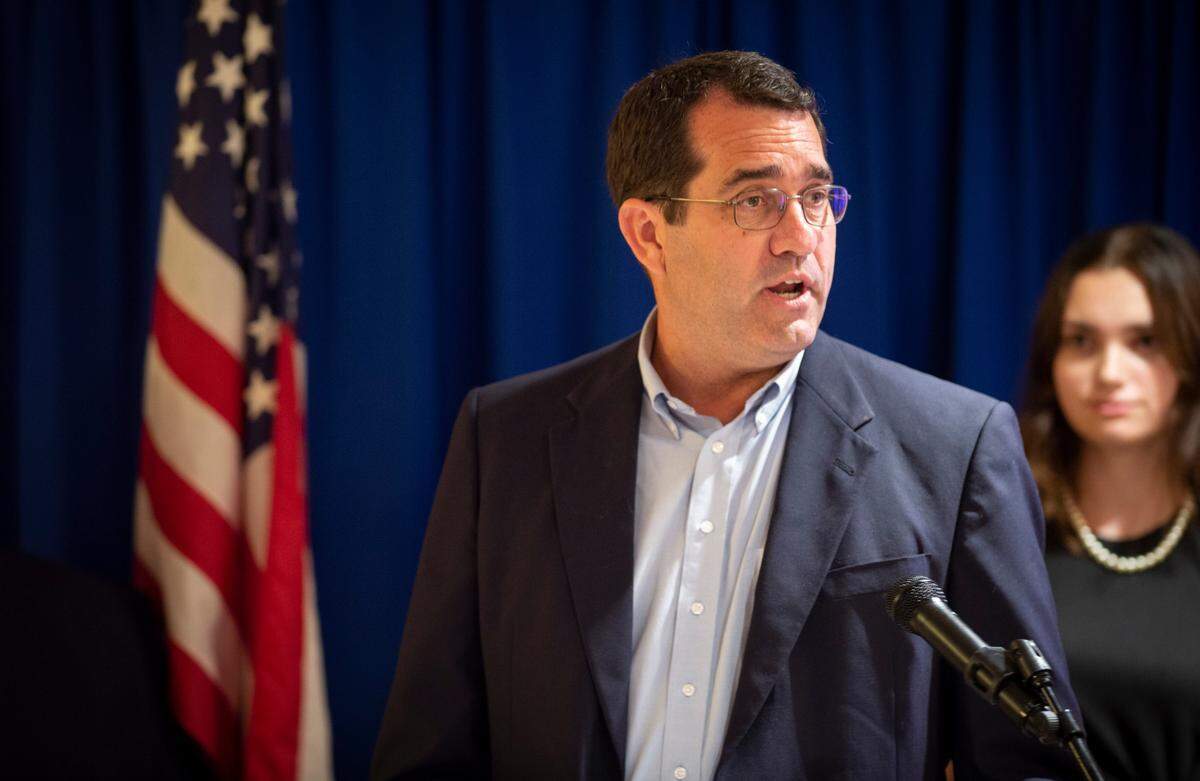
As the Nov. 8 election approaches, Schmidt and other Republicans argue Kelly has failed to fix the problems she raised during her first campaign for governor. Schmidt supports a state law to establish an independent Office of the Child Advocate, a place for individuals to take complaints about the system or individual cases. Kelly created the office through executive action in 2021.
Schmidt told reporters on Tuesday that establishing the child advocate’s office in state law — ensuring it can’t be eliminated by a future governor and giving the advocate a greater degree of autonomy — would constitute an important first step.
“There are still serious structural problems,” Schmidt said. “I think having a real Office of Child Advocate to help identify those and focus policymakers is a great first step.”
State Sen. Molly Baumgardner, a Louisburg Republican who sits on a child welfare oversight committee, acknowledged the number of children in foster care has fallen, but said the decline doesn’t represent “dramatic changes.”
“When Laura Kelly was campaigning four years, it was a top priority. But the children of Kansas who are in the foster system are not better off today,” Baumgardner said.
State Rep. Jarrod Ousley, a Merriam Democrat often focused on child welfare issues, said it was a “real stretch” to attack Kelly on child welfare, especially with the number of children entering foster care declining.
“If that’s what you’ve got to sink to to attack the Kelly administration, you’re stretching,” Ousley said.
Kelly, once a vocal critic of how the Brownback administration ran foster care, has bristled at the recent criticism and news coverage on her handling of the issue.
“It would be nice to have a little bit fairer treatment,” Kelly told a reporter last month.
Whatever the political consequences for Kelly, it is the actual children in foster care who have the most at stake in whether or not the system keeps them safe and helps them flourish.
Across Kansas, only 62% of children as of May had moved at a rate of fewer than 4.4 times in the previous 1,000 days, the federal standard for placement stability, according to data from DCF. That’s more than four homes in less than three years.
Most of the children who fell outside the standard weren’t close, either. The data indicates that about 27% had moved 8.6 times or more in the prior 1,000 days.
Kansas has also still not achieved the federal standard for getting children into permanent households. Under the standard, at least 40.5% of children are supposed to have permanent homes within a year of entering foster care. As of May, Kansas was only at 33.3%.
Ashley Schwach, who spent most of her teenage years in foster care, said her experience underscores how crucial home stability is for children in the system. Schwach, now 20, left foster care at 18 after spending about seven years in the system both before and during Kelly’s administration.
Over several years, Schwach, who grew up in Paola, had only two foster homes —first with her grandparents, and then with a family that attended her church. Both were “loving families,” she said.
“I think it was immensely important because I felt supported 100% of the time in just going to school and that helped me stay in the same school system. I still had all my outside support. I still had my church family and my regular family to support me,” Schwach said.

The stability helped combat anxiety and depression, she said.
“It’s not like I’m constantly worried about where I’m going to be sleeping, what I’m going to be eating, who are these people,” Schwach said.
But her younger sister remains in the foster care system after nearly a decade, Schwach said, adding that she’s in her fourth home.
“It’s not conducive to preparing yourself to be better if you want to go to college … It’s really hard to imagine a life outside of your day to day,” Schwach said.
Clark Peters, a professor focused on child and family policy at the University of Missouri, said children in foster care — just like children everywhere — need guidance, affection and love. If those are absent, children may sense it and potentially be disruptive.
“That sometimes can be tough. Sometimes it’s easier to move a kid who’s being disruptive or doesn’t get along rather than resolve that,” Peters said.
The current leadership of the Kansas Department for Children and Families says reducing the number of moves has been a key area of progress over the past four years. As recently as 2019, the rate of moves was 9.7 but has fallen to 5.4 as of 2021.
Placement stability is also a central element of the settlement agreement. It requires Kansas to bring itself into compliance with the federal standard of no more than 4.4 moves per 1,000 days in foster care for 100% of children. Under the agreement, the state has four years to achieve the goal.
“While we know that progress has been made on the front end of the system, reducing the number of children entering into care, for instance, much remains to be done in order to reach the outcomes set out in the settlement agreement,” Teresa Woody, litigation director at Kansas Appleseed, wrote in an email.
Howard emphasized that her agency is ahead of schedule in improving placement stability even though it hasn’t achieved the federal standard. She also stressed the importance of reducing the overall number of children in foster care.
In recent years, Kansas has added preventative programs designed to keep children out of foster care. Those programs take different shapes, but in some instances, for example, help teach parents needed skills to care for a child – making it more likely the child can stay in their natural home.
The expanded prevention focus has been fueled in part by the Family First Prevention Services Act, a 2018 federal law that provides federal funding to help families remain intact. With both state and federal funds, Kansas now spends $20 million a year on Family First efforts.
“There wasn’t very much work going on to divert youth from care. There had really been a lack of emphasis that had really happened in terms of engagement with families, engagement with youth themselves,” Howard said of the foster care system before she took over.
However, Howard acknowledged the state is coming up short on getting children into permanent homes.
Every county except the state’s four largest —Johnson, Sedgwick, Wyandotte and Shawnee — are already meeting the standard, Howard said. In those areas, she suggested court backlogs stemming from the pandemic had contributed to slowing down the permanency process, which involves judicial oversight.
“There’s an area of permanency where we feel like we have some important work to do in terms of that timely permanency in 12 months,” Howard said.
Has Kansas moved in the right direction?
Two other major areas of focus in recent years— the number of children sleeping in offices and how many children runaway from foster care — underscore how Kelly hasn’t fully delivered on some of the sweeping overhauls advocates want.
The office stays tend to take place when contractors aren’t immediately able to place children in a home, often because the child requires intense care. These sometimes include children exiting psychiatric treatment, Howard said. She emphasized that these contractor stays only involve offices – not hotels or other settings – and that the offices have home-like areas within them with beds.
“On the office stay side, that’s no longer the default,” Howard said, adding a short time later that office stays are “the exception, not the rule.”
At the same time, the number of children missing from foster care at any given time has proved difficult to dramatically reduce. DCF has stepped up efforts to locate missing children in recent years. It deploys a special response team dedicated to finding children, often teens, who run.
.jpg "AP20008637012765 (1).jpg")
In March, the Kansas Legislature’s auditing arm released a report that found DCF had adequate policies to locate missing foster children. Still, the report said the number of missing children has been consistent in recent years.
TFI Family Services, one of the state’s foster care case management contractors, has partnered with the University of Kansas to study why children run. Researchers found that fear among children and a lack of control over their own circumstances increased the risk of running away.
It is highly unlikely Kansas will ever entirely stop runaways. But those who study the system pay close attention to runaways because of what they reveal about how children are doing overall. Youth who run away are less likely to exit foster care to a permanent home, Becci Akin, a KU social welfare professor and co-principal investigator on the study, said when the results were announced in August.
TFI Family Services has begun making changes to lower the risk of running away, including using what it calls Placement Stability Team Decision Making, which allows both youth and family to be heard when placement decisions are made.
Schwach, the former foster child, said that as she stays in touch with her sister who remains in foster care, she’s begun to notice some improvements as Kansas works to comply with the 2020 settlement agreement.
Her sister has had the same caseworker for a while, she said, with a team of people helping her.
“I have noticed a slight shift,” Schwach said. “It’s still not perfect, but I do think that it’s taking a step in the right direction.”
The Star’s Katie Bernard and Laura Bauer contributed reporting.
This story was originally published September 11, 2022 at 5:00 AM.