Johnson County Sheriff Hayden’s election investigation ending soon, county attorney says
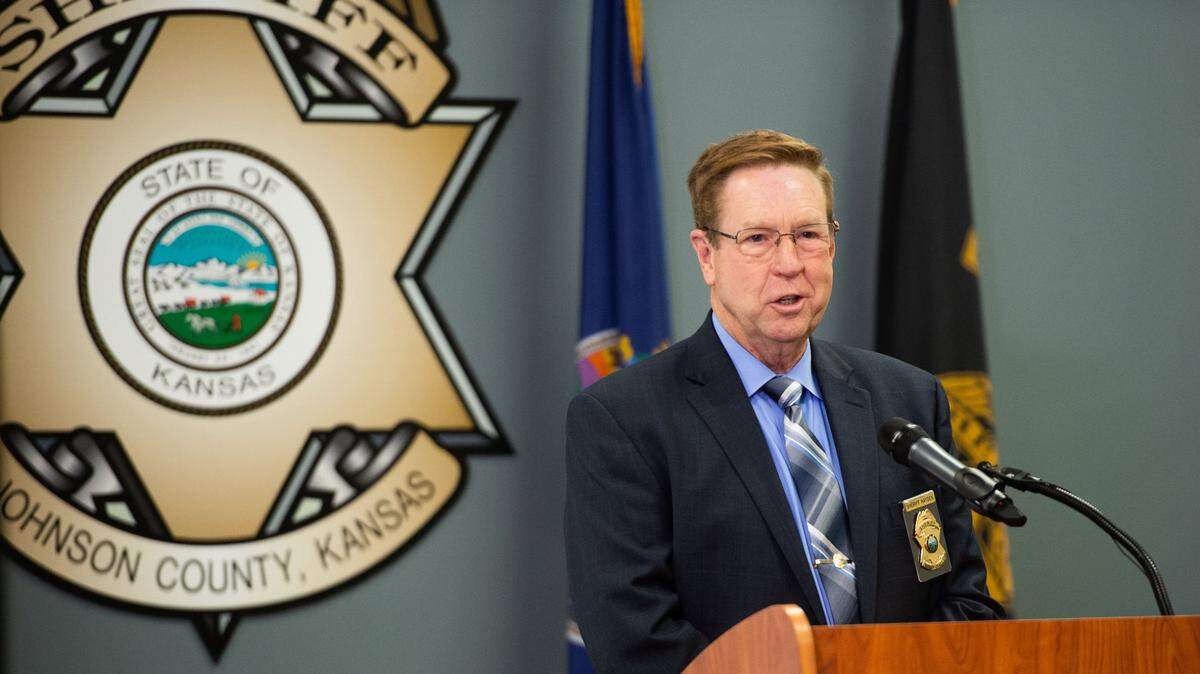
Johnson County Sheriff Calvin Hayden, who has spent months promoting an investigation into elections that has fostered baseless suspicions of voter fraud, plans to announce in the near future that he has finished his inquiry, an attorney for the county said in court Monday.
Johnson County Deputy Legal Director Cynthia Dunham told Johnson County District Court Judge James Vano during a court hearing that based on conversations with Hayden, “our understanding is that he will issue a statement in the coming weeks that his investigation is complete.”
Shelby Colburn, a spokeswoman for Hayden, wouldn’t confirm Dunham’s timeline to The Star. “I’m sure we will make it known once the investigation is complete,” Colburn said in an email.
Dunham gave no additional information about the timing of the investigation or its findings.
Dunham’s remarks came in a hearing in a lawsuit filed Aug. 4 by two Johnson County residents who are mounting an unusual and all-but-doomed effort to stop county election officials from destroying 2020 election ballots and other records. Kansas law authorizes counties to begin destroying the records in early September.
Katie Roberts and Hannah Mingucci, who filed the lawsuit without an attorney, have cited Hayden’s investigation as a reason to block the record destruction, which happens on a regular cycle after each election. In a court filing, they said voters won’t have confidence in elections until Johnson County brings computer specialists to examine election machines and hardware.
In reality, multiple layers of security exist for election equipment in Johnson County. The equipment is also tested publicly before elections.
Roberts and Mingucci reflect a small but growing contingent of Johnson County residents who since the 2020 election have raised suspicions about elections locally without offering evidence of fraud or misconduct. A majority of Johnson County voters supported Democrat Joe Biden and Democratic Rep. Sharice Davids in 2020, part of a long-term and gradual shift in the county toward Democrats.
Mingucci is an elected Republican precinct committeewoman in Olathe.
Vano indicated during the hearing that he is leaning toward dismissing the lawsuit, but said he would issue a written ruling soon. The lawsuit is one of at least two in Kansas trying to block record destruction; another has been filed in Sedgwick County but no hearing has been held yet.
The upcoming destruction of the election records, coming nearly two years after certification of the 2020 election, is part of a regular and legal process in Kansas. Storing ballots forever isn’t practical for election officials, who have limited space and need it to store records from more recent elections.
The lawsuit, while all but certain to fail, shows how Hayden’s investigation is undercutting trust in elections locally at a moment when Kansas elections are under already intense scrutiny because of the recount of the Aug. 2 landslide vote against an amendment that would have stripped abortion rights from the state constitution. The partial recount, which took place in nine counties including Johnson, finished Sunday with no significant changes to vote totals.
“This is a time sensitive matter and of upmost urgency due to the active and open investigation by the Johnson County Sheriff and the pending Kansas election audit of 2020, approved by the Kansas Legislature,” Roberts and Mingucci wrote in their complaint.
Lawmakers have approved an audit of Kansas’ election security procedures, which is being conducted by the Legislature’s auditing operation. The audit will examine policies and procedures and is not a recount.
Dunham said in court that Johnson County had already placed a “legal hold” on its 2020 election records because of Hayden’s investigation. As long as the hold is in place, the records won’t be destroyed.
Dunham emphasized that Johnson County already has extensive election security in place. She also said Roberts and Mingucci could have contested the 2020 election at the time but didn’t do that.
“This is basically a laundry list of all the distrust of elections in this country,” Dunham said of Roberts’ and Mingucci’s court filings.
Hayden’s investigation has been ongoing since last year, but it gained significant attention in July after he spoke about the investigation during a law enforcement convention in Las Vegas.
“So I didn’t know anything about elections. We’re cops,” Hayden said at the July gathering. “So we’ve been educating ourselves about elections. I’ve sent my detectives through, I’ve got a cyber guy, sent him through, to start evaluating what’s going on with the machines.”
Hayden and several sheriff’s deputies also met with Johnson County Election Commissioner Fred Sherman and other county officials on July 5 to discuss election security.
The county’s chief counsel, Peg Trent, later wrote in a summary of the gathering that Hayden had proposed his staff transport ballots from drop boxes and suggested that ballots deposited in drop boxes must be counted at the drop box site. Hayden has disputed Trent’s description of the meeting.
Hayden then accused Trent, without offering evidence, of violating a state law that limits how individuals can return advance voting ballots cast by others. Trent hasn’t commented on the allegation.