
Both ideas for the future of Kemper Arena capitalize on a booming youth sports trend
Since 2008, Independence has been home to a successful sports lodge catering to young athletes with indoor soccer, basketball, volleyball and flag football.
Lawrence just this past weekend opened its own $22 million recreation facility with space for youth basketball, volleyball and other events, plus outdoor tennis and trails.
An Indianapolis suburb has broken ground for a $20 million youth-oriented arena and an Oklahoma City suburb expects to open a $15 million complex next summer.
Youth sports has become a booming business.
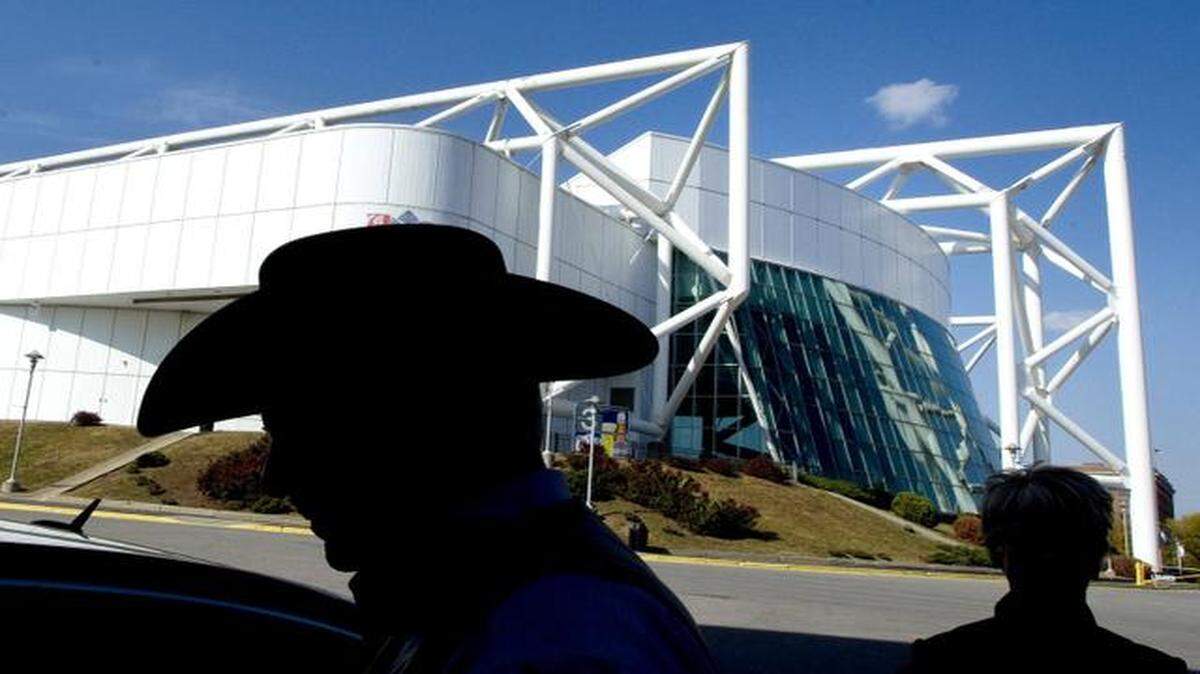
And it now figures heavily into competing, hotly debated plans for the future of Kemper Arena in Kansas City.
Just this week, a consultant’s report concluded that Foutch Brothers’ $22 million plan to acquire Kemper Arena from the city and repurpose it for youth basketball, volleyball and other athletics has merit and taps into a “sizable and growing youth sports industry.”
“The plan presented by Foutch Brothers is creative and dynamic,” the TSE Consulting firm said.
Councilman Ed Ford, who chairs a council committee trying to figure out what to do about Kemper Arena, said the findings affirmed Foutch’s vision.
“It does validate what most of us already believed, that there is a huge pent-up demand for youth facilities,” he said.
Meanwhile, the American Royal, which has a competing plan to demolish Kemper Arena and replace it with a custom-designed $50 million multipurpose building, says it could fill that building and the rest of the American Royal complex with even more youth sports offerings in partnership with Sporting Kansas City’s investor group.
American Royal leaders, in fact, sent a letter to City Council members this week, signed by 75 influential business supporters, urging them to stop dithering with Foutch and vote for the American Royal and Sporting Kansas City.
“The result would be a modern event space to jump-start economic development and neighborhood revitalization in Kansas City’s West Bottoms,” the letter said.
The City Council is still researching both options, comparing costs and trying to figure out what the city can afford before making a final recommendation late this month.
But no matter what happens, the youth sports focus taps into a promising nationwide trend.
“The theory is that there’s big money to be made in creating these facilities,” said Bob Cook, who blogs and writes about youth sports for Forbes.
In a recent article, he cited estimates of 53 million players nationally, resulting in $7 billion in annual spending.
Cook pointed out in an interview that the current burst began with the realization several years ago that youth sports was virtually recession-proof. Youth facilities aren’t nearly as expensive to build as professional sports palaces, but they attract thousands of young athletes — boys and girls — and their families, many from out of town.
“Tournaments are getting bigger and bigger, and more kids are traveling,” he said. “Business travel is going down. So hotels and restaurants are making up for it with leisure travelers and youth sports.”
Patrick Rishe, a Webster University economics professor and CEO of Sportsimpacts, which studies the economics of sports, agreed.
“Youth sports may not be as sexy as a Matt Adams home run or a Hosmer home run, but they create room nights. They still bring in visitors,” Rishe said. “Absolutely, there’s potential.”
Still, Cook and Rishe cautioned that Kansas City needs to carefully study both proposals to decide which is more financially viable.
“Generally these are new facilities,” Cook said, adding that they are usually paid for with public dollars rather than private investment. “These aren’t old arenas. … Generally when old arenas die, they’re demolished.”
Indeed, TSE Consulting said the Foutch plan is “in our experience, unique to American cities trying to determine alternatives to demolition of an outdated sports arena.”
Steve Foutch, CEO of Foutch Brothers, concedes his company’s vision is unusual. But he saw the potential to convert the arena to youth sports as he traveled multiple weekends each summer with his own teenagers, ages 13 and 16, to tournaments in places like Dallas, Minneapolis, Dayton and Denver.
The Foutch headquarters in Kansas City, North, already has an indoor soccer facility used annually by thousands of area patrons. And he said he’s had numerous basketball, volleyball and other sporting clubs talk to him about wanting a regional facility in Kansas City, convinced that Kemper Arena is the right place for it.
The plan is to add a second level where Kemper’s balcony is now, creating a total capacity for 12 basketball courts or 20 volleyball courts. The building could also house indoor soccer, lacrosse, rugby, boxing, martial arts, rowing, bicycling, indoor track, batting cages, fitness rooms and other amenities.
Foutch Brothers, specializing in historic renovations, has done numerous projects in four states, including about a dozen over $30 million each, although nothing quite like the Kemper redo.
Emil Konrath, a constuction management consultant who has worked on numerous city projects, concluded the project is doable.
“Mechanically and electrically, the facility can be operated without major upgrades,” Konrath wrote in a report to City Manager Troy Schulte. “However the introduction of an upper-level playing field will be both costly and tricky.”
He calculated a second story would cost about $16.4 million. Other upgrades bring the total estimated cost to about $22 million, which Foutch says he can finance privately with tax abatement and the help of historic tax credits if the building gets national historic designation. A decision is pending in Washington, D.C.
TSE Consulting said Foutch assumed average monthly revenue of more than $247,000 from more than 47,000 visitors, which the consultants considered “aggressive” compared with other venues but not impossible.
Representatives of two local sports organizations, Heart of America Region USA Volleyball and Agape Hoops, said they are very interested in the Foutch plan and could fill courts on many evenings and weekends throughout the year.
Currently they scrounge for space throughout the area. They said Kemper would be a great, centralized location to consolidate their events.
“What people don’t get is this is a huge growth market,” said Bertil Wamelink, president of Heart of America Volleyball, which last season had 14,500 members, mostly girls ages 8 to 18. “If you build it, we might stay in town and not go to Lawrence or wherever we can find.”
Still, Mike Mathis, general manager of the KC Sports Lodge in Independence, injected a note of caution.
He predicted filling Kemper sufficiently to break even financially could be tough. His facility attracts up to 5,000 people per event, but he said he works hard to keep it full.
The American Royal, meanwhile, says its new building and long-term lease for the American Royal complex would provide even more space than Kemper, allowing for 26 basketball courts and 52 volleyball courts, plus indoor soccer, wrestling, hockey, cheerleading and a running track — catering to up to 50,000 youths annually.
“This is no time to engage in wishful thinking or jeopardize the long-standing Kansas City asset that thrives in the West Bottoms like the American Royal,” said the letter to the council.
Still, many questions remain about each plan’s financial credibility, Ford and other council members say.
The Foutch plan is contingent on historic tax credits, which remain uncertain until the building gets historic designation. The American Royal has raised about $15 million privately for Kemper’s demolition and construction of the new building, but it still needs about $25 million from the city, plus $1 million per year in operating subsidy, plus $20 million in state tax credits — funding that is far from certain at this point.
To reach Lynn Horsley, call 816-226-2058 or send email to lhorsley@kcstar.com.
This story was originally published October 8, 2014 at 4:28 PM.