Blunt signed on to the bipartisan gun deal. The people who want to replace him are pushing back
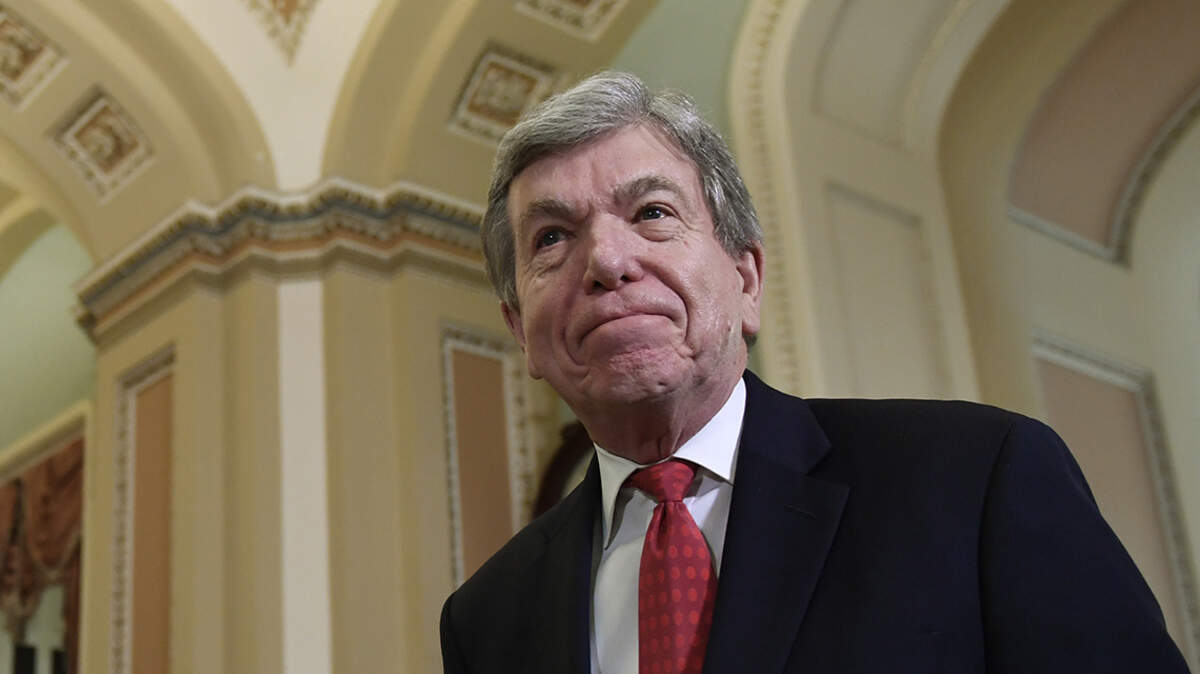
Missouri Sen. Roy Blunt joined a bipartisan group of 20 senators who signed onto a deal to address gun violence, bucking the stance of many Missouri Republicans by participating in the most significant legislative attempt to address gun violence since the 1990s.
For the past three weeks, as lawmakers chipped away at a compromise in the aftermath of two high-profile mass shootings, Blunt, a Republican who will retire in January after 25 years in Washington, has expressed that he was open to passing legislation.
A member of Senate GOP leadership, Blunt said he has warmed up to the idea of red flag laws over the past few years. He also expressed interest if the legislation including provisions that provided resources to mental health care.
On Sunday, Blunt’s name was among the 10 Republicans who signed onto a bipartisan deal to curb gun violence, potentially the most significant effort at reform since the 1990s. Four of the Republicans the group, including Blunt, are retiring at the end of the year.
But just as Blunt and the senators involved in the deal celebrated his success in securing resources for mental health, he immediately received blowback from the Republicans in Missouri running to replace him.
Former Gov. Eric Greitens called the deal “disappointing” on Twitter, while Missouri Attorney General Eric Schmitt wrote that red flag laws were “gun confiscation.” U.S. Rep. Vicky Hartzler wrote a press release last week urging Republicans in leadership not to reach an agreement.
“The right to self-defense underpins our entire country and no Republican should be negotiating with Democrats to dream up a way to undermine that right,” said Hartzler, whose congressional office circulated a pro-gun mailer last month . “The liberals do not believe in the right to bear arms and their only goal in any negotiation is to fool a few Republicans into going along with them.”
Each candidate is trying to establish their conservative bona fides in a competitive and crowded primary. But their statements show that any Republican seeking to replace Blunt would be less open to the type of bipartisan dealmaking that has come to mark his time at the U.S. Capitol.
Missouri is one of around 25 states with so-called “constitutional carry,” where adults can carry a gun either openly or concealed without a permit. It does not have any law preventing people convicted of domestic violence from possessing a weapon.
Missouri’s other Republican senator, Josh Hawley, has repeatedly said he is skeptical of a potential gun deal. Instead of participating in the talks, he introduced a bill with Arkansas Sen. Tom Cotton that would have increased the punishment for people who violate federal gun laws, but it is unlikely to pass the senate.
Pressure from the conservative base may present a challenge in getting the bipartisan proposal through Congress, along with Democrats who may feel that the deal does not go far enough in placing restrictions on gun ownership.
To balance restricting guns and respecting the rights of gun owners, the agreement focuses primarily on keeping guns away from people who may be a risk of hurting themselves or others.
Along with providing money to states to help them administer “red flag laws,” which allow law enforcement to temporarily take away weapons from someone who is deemed a threat to themselves or others by a court order, the proposal would also prevent people who are convicted of domestic violence crimes from being able to own guns.
It will also require an enhanced background check to buy a gun for people under 21, effectively creating a waiting period before younger people can get a hold of a gun, but stops short of raising the minimum age to purchase a firearm.
Because the deal has the support of 10 Republicans, it potentially has enough votes to overcome a filibuster in the U.S. Senate. It also has the support of President Joe Biden.
“Obviously, it does not do everything that I think is needed, but it reflects important steps in the right direction, and would be the most significant gun safety legislation to pass Congress in decades,” Biden said. “With bipartisan support, there are no excuses for delay, and no reason why it should not quickly move through the Senate and the House.”
Blunt focused on mental health aspect of the deal, specifically the expansion of a pilot program that created for Certified Community Behavioral Health Clinics where people can get round the clock mental health treatment.
His proposed expansion of the program, which has been stalled in the senate for more than a year, was included along with a provision that invests in telehealth mental health programs.
“Making sure people who are experiencing a mental health crisis can get treatment before they harm themselves or others is critically important to preventing another tragedy,” Blunt said in a press release.
Republicans have been firm in opposing any restrictions to the right to bear arms, while Democrats have pushed for limitations on assault weapons and lifting the age at which someone can buy semi-automatic weapons.
Instead, after some shootings, Republicans have focused on “hardening” schools by providing more security resources. The senate proposal also focuses on school safety and gives funding to implement more safety measures at schools and invests in mental health programs at schools.
This story was originally published June 13, 2022 at 10:25 AM.