How Missouri’s defense of its sweeping gun law echoes Texas abortion case strategy
Missouri is trying to stop a Department of Justice lawsuit against its aggressive gun law by contending state officials aren’t responsible for enforcing the measure— an argument that echoes Texas’ defense of its novel abortion law.
When Gov. Mike Parson signed the Second Amendment Preservation Act, or SAPA, last June, the law led to fear and confusion among police chiefs and sheriffs. It prohibits state and local law enforcement from enforcing certain federal firearms laws.
Some departments reacted by restricting cooperation with federal authorities, such as joint drug task forces, or limiting gun serial number information sent to federal databases. In one case, a Missouri State Highway Patrol trooper released a federal fugitive.
Police chiefs told The Star that nearly a year after the law was signed, uncertainty remains over its limits and requirements.
“Many departments are still struggling with the interpretation of what level of co-investigation or assistance do we work with federal entities,” Blue Springs Police Chief Bob Muenz said.
The Department of Justice sued Missouri in February, alleging the Missouri gun law hampers their activities and violates the Supremacy Clause of the U.S. Constitution, which ensures federal law supersedes state law. A major hearing in the case is scheduled for June in Kansas City.
SAPA declares certain federal gun laws “invalid” if they do not have an equivalent in Missouri statutes and prohibits local police from helping federal agents to enforce them. It isn’t enforced by any one agency. Instead, people are authorized to sue law enforcement officials over alleged violations. Fines of up to $50,000 per violation are possible.
Missouri Attorney General Eric Schmitt’s Office is now citing that set up – enforcement through lawsuits – to argue the DOJ can’t be allowed to sue Missouri.
“A state official or state defendant that has no direct role in the enforcement of a challenged law is not a proper defendant,” Deputy Attorney General Jesus A. Osete wrote in a motion to dismiss.
Schmitt, a Republican, is running for U.S. Senate. Chris Nuelle, a spokesman for the attorney general’s office, declined to comment on the motion to dismiss.
The idea that state officials can’t be sued over a law because they don’t enforce it has been central to the defense of a sweeping abortion law the Texas legislature approved just one day before the Missouri General Assembly passed SAPA in May 2021. The Texas measure bans abortion after six weeks of pregnancy, but like the Missouri gun law, is enforced through lawsuits.
The Texas law has so far successfully withstood legal challenges in part because of the difficulty of identifying defendants to sue, given that state officials aren’t allowed to enforce its provisions. The U.S. Supreme Court last year denied a request to block the law on an emergency basis.
Allen Rostron, a law professor at the University of Missouri-Kansas City School of Law, said the Missouri law doesn’t go as far as the Texas law. The Texas law empowers basically anyone to sue, while in Missouri only an “injured party” can sue.
Still, the law’s structure could make the DOJ’s legal challenge difficult.
“I think the federal government, they wanted to sue about this and make a point, I’m sure, but I feel like they probably have an uphill battle, on the federal government’s side of this, because of the way the law is written,” Rostron said.
However, Esther Sanchez-Gomez, a senior litigation attorney at the Giffords Law Center to Prevent Gun Violence, questioned Missouri’s argument. While the law does allow for lawsuits from private individuals, she said, it also requires officials to protect gun rights.
The law says it is “the duty” of courts and law enforcement agencies “to protect the rights of law-abiding citizens to keep and bear arms” within the state.
“Even if there is no specific enforcement mechanism, you could imagine that the attorney general could bring a case against a particular law enforcement group,” Sanchez-Gomez said.
Gun law hampers Missouri police agencies, officials say
In court filings, the DOJ says the Missouri law was adopted to nullify federal firearm laws and that it is “black-letter law” that under the U.S. Constitution, states can’t do that. It has also offered statements from federal law enforcement officials outlining how the law has had a chilling effect on efforts to protect public safety.
The DOJ has said that the Missouri state crime lab, operated by the Highway Patrol, is refusing to process evidence that would help federal firearms prosecutions. The Missouri Information and Analysis Center, also under the Highway Patrol, no longer cooperates with federal agencies investigating federal firearms offenses. And the Highway Patrol, along with many other agencies, have suspended joint efforts to enforce federal firearms laws.
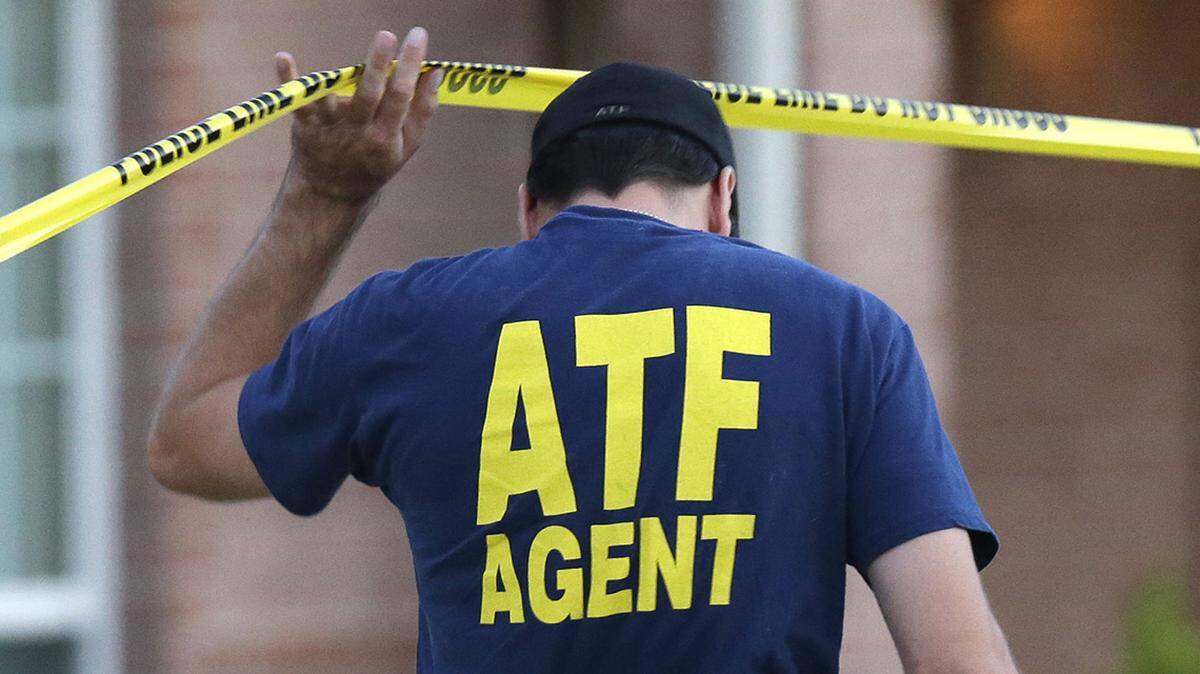
Frederic Winston, special agent in charge at ATF Kansas City Field Division, wrote in a February declaration filed in court that 13 of 53 state and local officers who had been federally deputized had withdrawn from participating in ATF task forces because of the Missouri law.
The law “has an extremely negative effect on successful law enforcement and public safety within the State of Missouri,” Winston wrote.
State laws attempting to nullify or undercut federal gun laws are not new. At least six states – including Texas and Kansas – have some form of a Second Amendment “preservation” or “sanctuary” law.
The 2013 Kansas law, which allows residents to ignore firearms laws if the guns and accessories are made in the state and don’t cross state lines, turned out to be ineffective. Two Kansas men were later convicted in federal court of having illegal silencers, despite adhering to the state law.
But the Missouri law has produced a widespread chilling effect on law enforcement activity that doesn’t appear to have happened elsewhere. Sanchez-Gomez said other laws— whether at the state or local level— in the past have often tended to be symbolic.
“I think the federal government’s case against Missouri is being watched ... it will end up being appealed however it turns out,” Sanchez-Gomez said. “But I think it will be an interesting sort of test case in terms of the relationship of the states and the federal government that could have implications not just in the Second Amendment space.”
One of the gravest concerns of Missouri law enforcement, Ellisville Police Chief Steve Lewis said, centers on how the state law has discouraged officers from sending information about firearms to the National Crime Information Center, which can show whether a gun is stolen or associated with a crime.
“The intent of the law everyone understands,” said Lewis, whose roughly 30-officer department covers a small area of St. Louis County.
“The intent of the law is to protect the Second Amendment rights of Missouri citizens from any new attempts to restrict the rights of citizens to own firearms,” he said. “The reality of the law is there is no clarifying statements.”
For months, Lewis and other law enforcement leaders have been asking lawmakers to amend the law. Lewis said a change as simple as making clear the law only applies to future federal gun restrictions would alleviate their concerns.
Although Parson, a Republican, at one point last year said he was open to revisiting the law, GOP legislators have shown little interest in reopening debate.
“I think the legislature spoke loudly when we passed this law. There’s no such thing as perfect law. We have to see how this operates and see how this works. I think it’s working well,” said Sen. Eric Burlison, a Battlefield Republican and a leading SAPA proponent.
With the legislative session ending Friday, Missouri Democrats mounted a last-ditch attempt Monday to change the law. Senate Minority Leader John Rizzo, an Independence Democrat, offered an amendment removing a provision penalizing law enforcement officers who investigate federal gun crimes. The amendment, according to Rizzo, would have also closed a loophole in a six-year-old law that allows domestic abusers to carry firearms.
“We’re not doing some big repeal of gun laws in the state of Missouri,” Rizzo said Monday. “This is literally listening to law enforcement tell us ‘we have an issue with some section of this bill’…it’s fixing that.”
The Missouri Senate voted it down and the failed effort means courts are likely to determine SAPA’s fate. In addition to the federal lawsuit brought by the DOJ, St. Louis, St. Louis County and Jackson County are challenging the law in state court.
The state case is proceeding slowly, however. In April, the Missouri Supreme Court ruled the counties may challenge the constitutionality of the law, sending the case back to the circuit court after a Cole County judge earlier blocked the suit.
The Star’s Kacen Bayless contributed reporting