Kansas mother had to put her health ‘on the back burner.’ New funding will change that
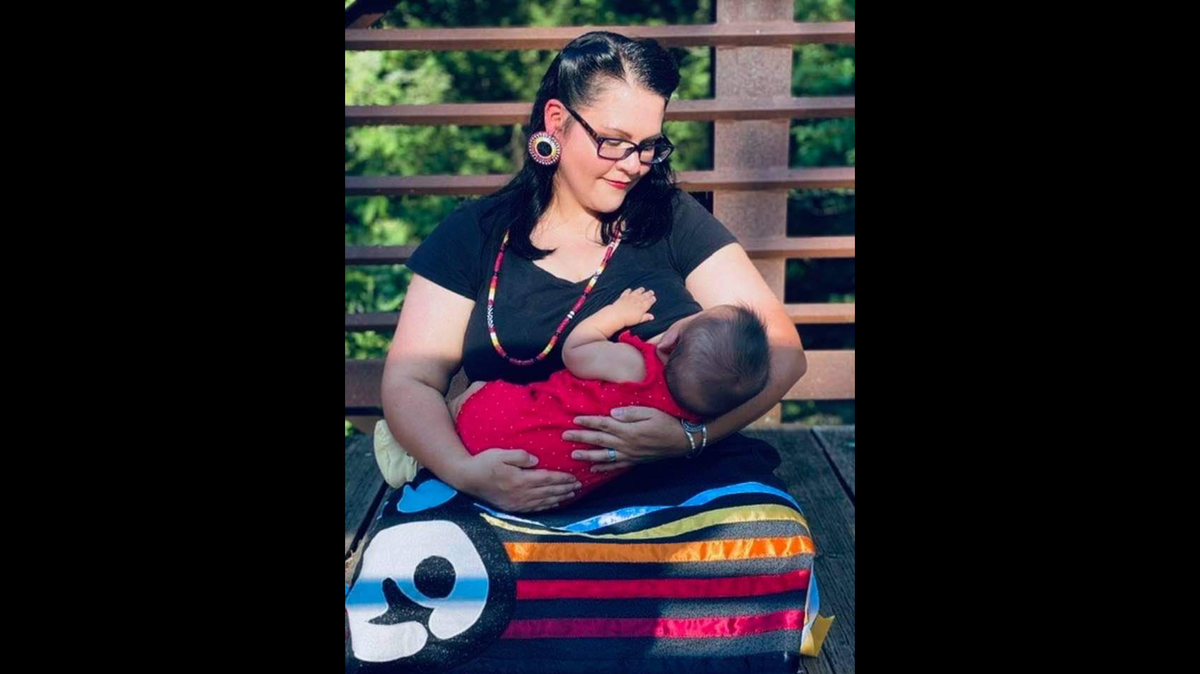
After giving birth to her third child, Stephanne Rupnicki spent the next year fighting an infection from breastfeeding.
She needed antibiotics but, like 14,000 Kansas women each year, she had gone on Medicaid during her pregnancy but lost coverage eight weeks after giving birth.
For the next 10 months, Rupnicki had to regularly decide whether she could afford to go to the doctor for antibiotics and pay out of pocket. She seldom went, needing to ensure she had enough money to care for her family’s three children.
“As a mom you kind of always put yourself on the back burner, and our health shouldn’t be put on the back burner because we are the ones taking care of our baby,” said Rupnicki, who lives in Jackson County, just north of Topeka.
“If I go to the doctor, I’m going to have this outrageous bill that I’m not going to be able to afford.”
Now, under a provision approved in Kansas’ latest budget, women like Rupnicki would no longer have to make that choice until their babies are older.
Kansas lawmakers approved a $16 billion budget that extends Medicaid coverage to new mothers from eight weeks to a full year. The $4.2 million yearly allocation was originally requested in Democratic Gov. Laura Kelly’s budget proposal in January. It gained bipartisan support.
The move follows last year’s changes to federal law that allowed states to extend coverage. According to the Kaiser Family Foundation, Kansas is one of 14 states planning to lengthen coverage to 12 months; 13 other states have already done so.
Missouri lawmakers are considering, but have not yet approved, a similar extension.
Rupnicki said the coverage would have made a world of difference through her pregnancies, which eventually numbered six.
She got a taste of it with her youngest child because during the COVD-19 pandemic, adults haven’t been removed from Medicaid.
In that time, Rupnicki attended to her health in ways she hadn’t in years. Now a mother of six, she works part time as a breastfeeding counselor. She doesn’t receive insurance through that job, and it is too expensive to join her husband’s insurance.
But in the year she kept Medicaid after her sixth child was born, she got her eyes checked and got glasses. She was treated when she had COVID.
“It was amazing not to have that stressor,” she said.

The Kansas Department of Health and Environment is submitting an application with the federal government to extend coverage. It will likely be approved and then would immediately go into effect.
That change will help 14,000 to 15,000 Kansans each year, said a spokesman for KDHE. According to the Kaiser Family Foundation, that accounts for roughly 40% of the births in the state. Currently, those mothers have retained coverage beyond the two month limit because of the federal public health emergency declaration. But the declaration is scheduled to expire on July 15.
The state’s extension of coverage was approved with little controversy or pushback in the Kansas Legislature. The near universal support was rare in the state that is one of 12 holdouts for broader Medicaid expansion based on income.
Sen. Pat Pettey, a Kansas City Democrat, said she was surprised to hear quick support from conservative colleagues.
“If we want to look at this from a financial perspective we’re saving money on later interventions, whether it’s through the courts or the hospitals or the schools if we help families, mothers early on,” Pettey said.
Sen. JR Claeys, a Salina Republican, attributed the easy support to the relatively low burden on the state compared to broader Medicaid expansion.
“It isn’t a service where we are creating a caseload adjustment issue in the future,” Claeys said. “It’s going to be a small number of people using those services.”
Rep. Brenda Landwehr, a Wichita Republican, said the need and solution were clear.
“We can see where it’s going to help a lot of women,” Landwehr said. “We’ve seen more women diagnosed with (postpartum depression). Probably because we’re much more aware of it today.”
A coalition of 29 organizations across Kansas pushed for the change for the state’s Medicaid program, known as KanCare. Some said the approval is a major win but also a first step, pointing to long-term goals of Medicaid expansion and laws allowing midwife and doula care to be covered.
In a letter to lawmakers last summer, the coalition said the approval is likely to improve health of mothers and, by extension, their children.
If a mother has coverage, the child is more likely to be brought to the doctor for their well visit, David Jordan, president of the United Methodist Health Ministry Fund, said in an interview.
“That means kids have access to health services, critical immunizations, and that’s going to make sure the kid is healthier through life,” Jordan said.
And it ensures mothers can get appropriate care for postpartum depression and family planning.
Sapphire Garcia-Lies, president of the Wichita Birth Justice Society, said the move will reduce women’s deaths from pregnancy and postpartum complications.
Kansas’ maternal mortality rate is 17.7 per 100,000 live births, placing the state just below the national average. According to the Centers for Disease Control and Prevention, Black women are three times more likely to die from pregnancy-related causes than white women.
“We are losing moms in that first year, and those deaths are happening up to 12 months out,” Garcia Lies said. “In the past when coverage ended at 60 days, these moms were left completely uninsured, without the means to go see a primary care doctor. The issues that could be dealt with at a low level way — outpatient — today wouldn’t become a huger issue that had to be dealt with (later) in an ER when you’re uninsured.”
“Mothers are able to care for their children better and are more capable of doing that when they’re in good health.”
This story was originally published May 6, 2022 at 5:00 AM.