Founder of Kansas clinic to open new facility in ‘abortion desert,’ despite Roe news
The founder of a Kansas-based organization that operates abortion clinics in Wichita and Oklahoma City is opening a facility in Wyoming next month, even as the Supreme Court appears poised to overturn Roe v. Wade.
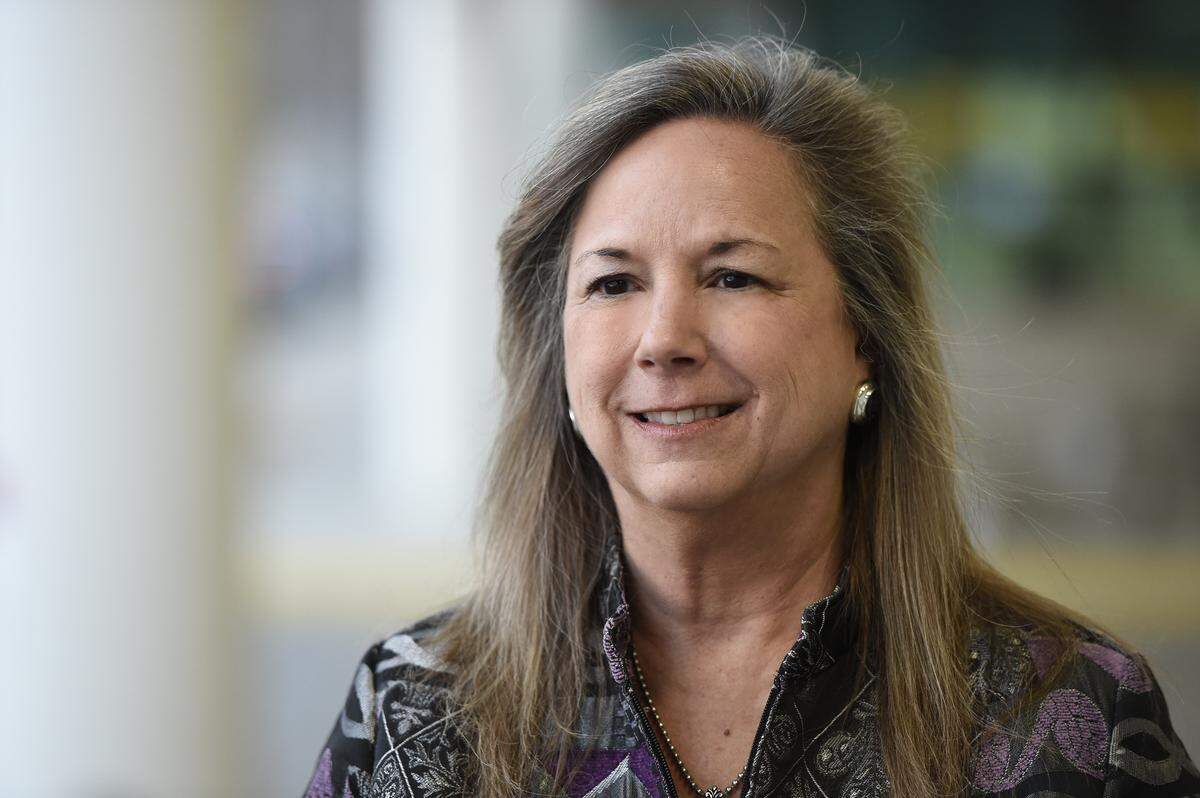
Julie Burkhart, who formed Trust Women in 2009 in the wake of the murder of Wichita physician George Tiller and later opened a clinic in his former facility, told The Star she plans to have the Wellspring Health Access clinic in Casper up and running in mid-to-late June.
“We’re really going to fight tooth and nail to make sure that people can access abortion care in Wyoming,” said Burkhart, founder and president of Wellspring Health Access, a Washington, D.C.-based organization. “We can at this point provide medication abortions and surgical abortions. And our intent will be to continue to provide those services legally.”
Burkhart stepped down as CEO of Trust Women last July and started the new organization, Circle of Hope Health Care Services. The name was recently changed to Wellspring, she said, because it “better reflected our work and better represented what our goals are.”
Burkhart said she intends to open other clinics as well, but needs to see what happens with the Roe decision before finalizing the plans.
“After this opinion comes out, we’ll have to review the landscape,” she said. “We have other ways that we’re thinking about for providing care — not only looking at bricks and mortar, which is very important, but also looking at other avenues.”
That landscape could soon be changing dramatically. In news that stunned the nation Monday night, Politico published a leaked first draft of the Supreme Court’s ruling in a Mississippi case that would strike down Roe v. Wade, the landmark 1973 decision that affirmed the constitutional right to abortion. If that happens, abortion regulations would be determined by each state, resulting in a patchwork of laws across the country. A final ruling on the case is expected this summer.
Burkhart said she decided to open a clinic in Wyoming because the state and surrounding areas make up part of an “abortion desert” in the country, with limited or no access to the procedure.
The only kind of abortion currently available in Wyoming, she said, is medication abortion, a process that involves taking a prescription medicine early in the pregnancy, which causes a miscarriage at home. In Wyoming, women can only get the medication up to 10 weeks in their pregnancy, a time when some are just learning they are pregnant.
There is one physician in the state who provides medication abortions, Burkhart said, but no one offers surgical procedures.
“We really felt that people in Wyoming, being underserved in this way, really needed to have a reproductive health provider so they can get a procedural abortion if they need one,” she said.
Burkhart said the Casper clinic is in a location that will allow those in low-access areas such as western Nebraska, western South Dakota and the southeastern corner of Montana to more easily obtain health care services.
The clinic already faces an uphill battle.
In March, Wyoming’s governor signed a so-called “trigger law” that will take effect if Roe v. Wade falls. The measure will ban abortion under most circumstances, with exceptions only for pregnancies that resulted from rape or incest, to save the mother from “serious risk or death,” or if there is a threat to a “major bodily function.”
Thirteen states, including Missouri, have such post-Roe laws on the books that would ban all or nearly all abortions, according to the Guttmacher Institute, a research and policy organization that supports abortion rights. In all, the institute says, 26 states are certain or likely to ban abortion if the court strikes down Roe.
Even before it opens, the Wyoming clinic has encountered strong opposition. Last month, dozens of abortion foes protested outside the building. This week, opponents went to the City Council to ask it to take action, but the mayor told them since abortion is still legal, the city has no jurisdiction in the matter. Some abortion opponents even voiced their complaints at a local school board meeting, Burkhart said.
“They warned them that we are going to be in the community, and they said something like we were going to be preying upon the youth,” she said.
Former Mills Town Councilman Mike Pyatt told the Casper Star-Tribune that he hoped the clinic wouldn’t even open its doors because of the resistance. But if it does, he said, the opposition would “do its best to disrupt the services with so many people out front, women and girls won’t want to come in.”
Burkhart said, however, that the clinic has had more support from the community than opposition.
“I feel the community has really embraced us,” she said. “And we have some really good partnerships.”
Battling fierce opposition is nothing new to Burkhart. She worked with Tiller — one of a handful of doctors in the country who performed late-term abortions — for years, first as chair of the Wichita Choice Alliance in 2001 and then as spokeswoman for his Women’s Health Care Services clinic from 2002 to 2006. She also directed ProKanDo, Tiller’s political action committee.
Tiller’s clinic was shuttered after he was shot to death in his church in May 2009 by anti-abortion extremist Scott Roeder, who drove there from the Kansas City area to carry out what he described as “justifiable homicide.”
Burkhart opened the South Wind Women’s Center — now called Trust Women — in Tiller’s former clinic in 2013. She then opened Trust Women clinics in Oklahoma City in 2016 and Seattle in 2017. The Seattle site has since closed.
Now, the Wichita clinic is a target of a constitutional amendment on the Aug. 2 ballot in Kansas that abortion-rights advocates say if passed could pave the way for a total ban on the procedure.
And the clinic in Oklahoma City remains open, but its future is uncertain. On Tuesday, Oklahoma GOP Gov. Kevin Stitt signed into law an abortion ban modeled after a law enacted in Texas last year that allows private citizens to enforce the measure through civil action against providers.
The “Oklahoma Heartbeat Act” goes into effect immediately and prohibits abortions once early cardiac activity can be detected in an embryo. Experts say that can occur at about six weeks into a pregnancy, which is before many women know they are pregnant. The law contains exceptions if the woman’s life is at risk or for serious medical complications but not for pregnancies that are the result of rape or incest.
And last month, Stitt signed into law a near-total ban on abortion. The measure makes performing an abortion a felony punishable by up to 10 years in prison and a $100,000 fine. The only exception is if the life of the pregnant woman is in danger. It is expected to go into effect this summer.
Burkhart said she was on a plane when news broke about the leaked Roe v. Wade opinion.
“And I kind of involuntarily shrieked,” she said. “It was a real gut punch. I feel like it opens the door to overturn a lot of the other cases that have been settled, other matters of equality. Are we now going to have to defend the right to have birth control? What about people who are same sex who want to marry?”
Still, she said, she has no intention of backing down.
“These past few years were quite tough, especially navigating an organization through the pandemic,” she said. “I felt like the pandemic really gave us a good look through that window, you know, of what would a post-Roe world look like?
“And so here we are now, with all this. But I can’t quit. This is just too important.”
This story was originally published May 5, 2022 at 9:23 AM.