Kansas is set to legalize sports betting, and use most of the proceeds to lure teams
Kansas is all but certain to legalize sports betting after the Senate narrowly approved the policy early Friday morning. And most of the proceeds could be used to lure major sports teams — like the Kansas City Chiefs — to the state.
The bill still needs approval from Gov. Laura Kelly, but the Democrat has been supportive of the policy, allowing residents to use cellphone or computer apps to bet on sporting events, or place their bets via existing casinos.
The state would impose a 10% tax on each bet. Of the revenue Kansas receives, 80% would be funneled into a special fund the state would use to lure major sports teams.
The legislation has been a longtime work in progress.
In 2018 the Supreme Court overturned federal prohibitions on sports betting.
The ruling resulted in a surge of state-level legislation to legalize the practice. But in Kansas, lawmakers have struggled to come up with a bill that could pass the House and Senate.
Conservative lawmakers worried legalization would fuel gambling addictions across Kansas. Sports teams, online platforms and casinos were at odds over how the program should be set up. COVID-19, and legislation responding to it, pulled focus from the issue and delayed its passage.
But on a 21 to 12 vote, the Senate approved the policy around 1:30 a.m and sent it to Kelly’s desk. The state was, in part, spurred along by competition with Missouri.
Missouri lawmakers were working this year to enact their own sports betting law, but the bill stalled on the Senate floor this week and lawmakers said Thursday it is all but dead.
“It’s always really tight when you have these somewhat controversial issues because you’ve got both Democrats and Republicans who oppose gaming of any kind,” said Stephanie Clayton, an Overland Park Democrat. “When we have bistate stuff, with Missouri getting close, that’s pushed us. And plus, finally the stakeholders decided to adult and come together on things.”
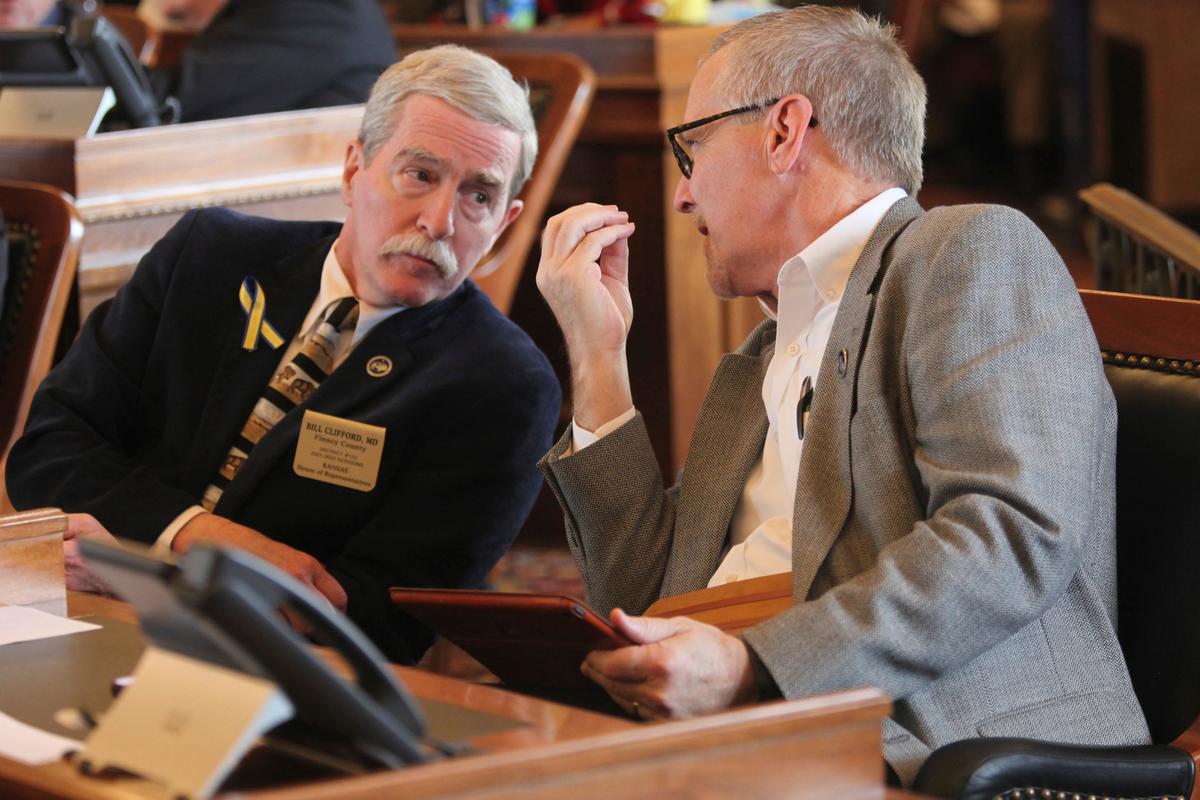
Rep. John Barker, an Abilene Republican, credited the success this year to finding a deal that Kansas’ casinos could agree to.
“I met with all of them personally,” Barker said.
Last year, Barker said, the legislation failed in the House late in the session after casino owners sent a letter to lawmakers urging a no vote.
He and other proponents insisted that Kansas needs to approve the policy quickly so the state could take in revenue it loses when Kansans gamble elsewhere. The Kansas Budget Office predicted the bill could bring $10 million to the state per year by 2025.
“We just had a national championship basketball team and we had a lot of people that gambled on that game. They did it in other states or offshore and we missed out on a piece of that,” said Sen. Rob Olson, an Olathe Republican.
Approval of the policy Friday didn’t come without hurdles.
Measures in the bill ensure that an existing fund for problem gambling isn’t diverted to other needs, but that wasn’t enough to gain support from conservative lawmakers concerned about gambling addictions.
“We will destroy peoples lives,” Sen. Mark Steffen, a Hutchinson Republican, said. “Gambling is addictive. There is a percentage of our population that cannot handle it.”
And others were frustrated by a provision that legalized historic horse racing machines in Sedgwick County. Sen. Renee Erickson, a Wichita Republican, said the measure could represent a breach of contract with the state-operated casino in Mulvane.
“It’s a vast expansion of gambling in the state. We would break a contract with an entity that’s operating in good faith,” Erickson said. “It does not make ethical sense. It does not make financial sense.”
When the bill passed in the House earlier in the month, it nearly failed over a last-minute decision to funnel much of the funds into a sports team acquisition fund. Lawmakers have said the fund would be used to lure the Kansas City Chiefs into Kansas. Team executives said last month they were considering stadium locations in the Kansas side of the metro area.
House and Senate negotiators sought to placate some lawmakers Thursday by moving control of the fund from the State Finance Council to the secretary of commerce with legislative approval. The money could be swept out of the fund and used for other purposes during the Legislature’s annual budget process.
Sen. Jeff Longbine, an Emporia Republican who has worked on the issue for years, said it will take more than the money from the fund to bring a professional team to Kansas.
“I think it’s symbolic to show them we are interested,” Longbine said.
This story was originally published April 29, 2022 at 9:16 AM.